Venezuelan Foreign Minister Yvan Gil has commended India’s "Operation Amistad," an humanitarian relief mission providing critical medical support to earthquake victims. Indian Army medical teams are treating hundreds of survivors daily at a field hospital in Caracas, demonstrating the strengthening strategic and friendly ties between India and Venezuela.
Foreign Minister Yvan Gil lauds 'Operation Amistad' for providing critical medical care to thousands following the devastating June 2026 earthquakes.
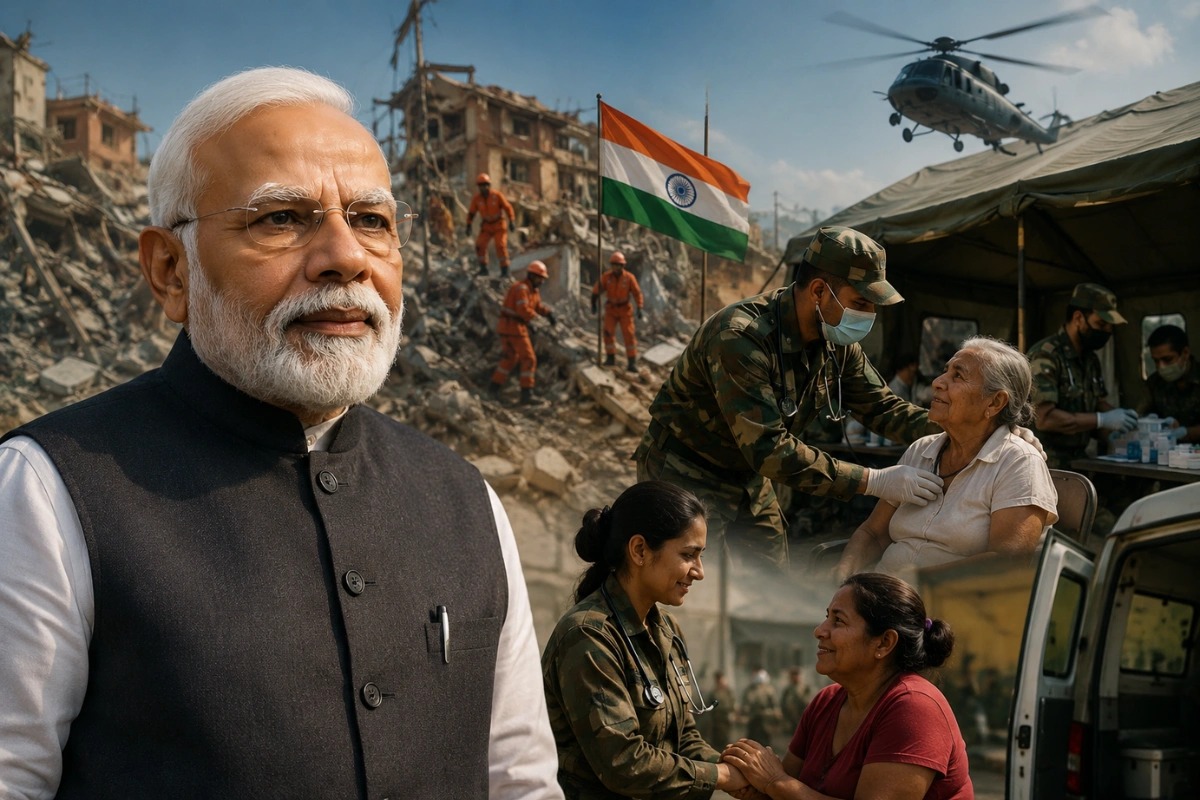
CARACAS — Venezuelan Foreign Minister Yvan Gil has publicly thanked Indian Prime Minister Narendra Modi and the Indian Armed Forces for their rapid humanitarian response following the twin earthquakes that struck Venezuela on June 24, 2026. The Minister’s praise comes as Indian medical teams under "Operation Amistad" continue to provide essential healthcare to hundreds of disaster survivors daily at a field hospital in the La Rinconada area of Caracas.
The relief mission, launched within days of the 7.2 and 7.5 magnitude earthquakes, has been hailed by local authorities as a "moving demonstration of solidarity." Minister Gil, speaking during a visit to the Indian field hospital alongside India’s Ambassador to Venezuela, P.K. Ashok Babu, underscored the depth of the partnership between the two nations, describing India as a "brotherly government" for its swift deployment of aid.
Comprehensive Care Under Operation Amistad
Operation Amistad, a Humanitarian Assistance and Disaster Relief (HADR) mission, has become a vital lifeline for earthquake-affected Venezuelans. According to official reports, the mission, spearheaded by the Indian Army’s 60 Para Field Hospital, is treating more than 400 patients every day.
The medical contingent provides a wide array of services, including:
Trauma management and emergency surgery.
X-ray and diagnostic imaging.
Dental care and minor surgical procedures.
Specialized treatment for rescuers injured during active recovery operations.
The Indian contingent arrived in Caracas via two Indian Air Force C-17 Globemaster aircraft, carrying 66 tonnes of humanitarian supplies, including medicines, medical equipment, and two AI-enabled BHISHM (Bharat Health Initiative for Sahyog Hita & Maitri) cubes—modular, portable hospitals designed for rapid disaster response.
Strengthening Bilateral Ties
The deployment of the Indian medical task force follows a period of enhanced diplomatic engagement, including a recent visit to India by Venezuelan Acting President Delcy Rodriguez. Minister Gil stated that the current assistance reflects the strengthening friendship between the two countries, emphasizing that the professionalism of the Indian medical personnel has earned widespread acclaim from the Venezuelan public.
"We have no words to thank you," Minister Gil remarked during his visit, requesting the Indian Ambassador to convey the gratitude of the Venezuelan government and its people to Prime Minister Modi.
Why It Matters
For Venezuela, the assistance arrives at a critical juncture as the nation grapples with the aftermath of its deadliest earthquake in over a century, which has left thousands dead, injured, or homeless. For India, the successful execution of Operation Amistad underscores its growing capability to function as a "first responder" in global humanitarian crises, mirroring the logistical expertise demonstrated in previous missions like Operation Dost.
Key Facts at a Glance
Mission Name: Operation Amistad.
Medical Impact: Over 400 earthquake victims treated daily at the Indian-run field hospital.
Logistical Support: Two IAF C-17 aircraft delivered 66 tonnes of aid, including two BHISHM cubes.
The Contingent: A 41-member team from the 60 Para Field Hospital, consisting of doctors, nurses, and rescue professionals.
FAQ
What is the BHISHM Cube mentioned in the reports?
The BHISHM Cube is an AI-enabled, modular medical support system that can be deployed rapidly to provide everything from basic emergency aid to advanced surgical support during mass casualty events.
How long will the Indian mission stay?
While no specific end date has been announced, Indian teams continue to coordinate with Venezuelan authorities to provide trauma care as the country transitions from the search-and-rescue phase into recovery.
Why is this mission significant for international relations?
The mission highlights India's commitment to global humanitarian aid and showcases its ability to rapidly mobilize and deploy high-end medical assets to remote regions under challenging conditions.
Official Sources