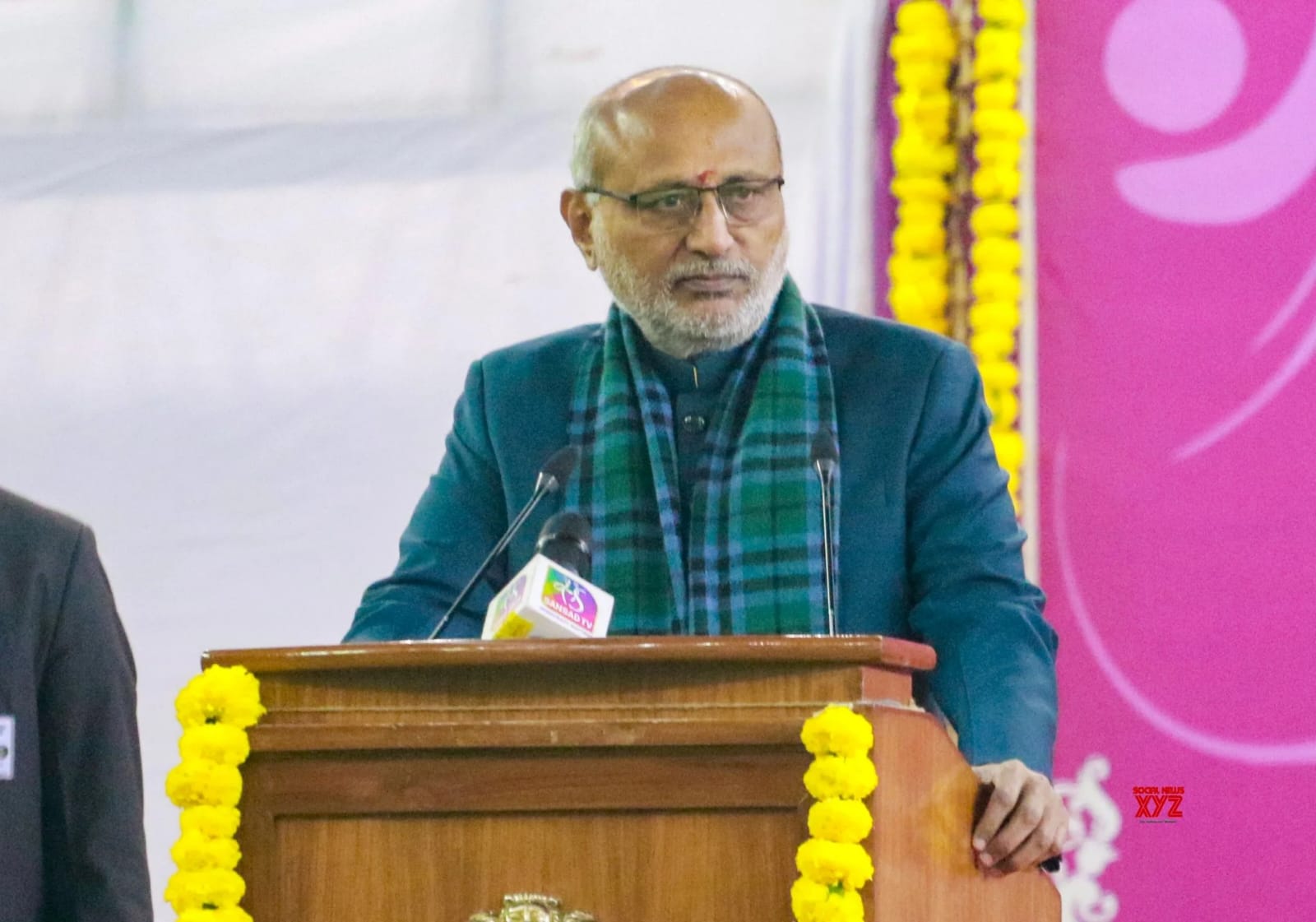
Vice President Shri C. P. Radhakrishnan has called for a unified national movement to build a drug-free India. Addressing the Nasha Mukt Bharat Conclave in Bengaluru, he emphasized deploying evidence-based addiction medicine, expanding tech-driven campus campaigns, and securing academic environments to protect the nation's youth and demographic productivity.
BENGALURU, INDIA — Emphasizing that national development relies on the health and purpose of its younger generation, Vice President of India Shri C. P. Radhakrishnan has urged unified institutional action to eliminate substance abuse. Speaking on June 28, 2026, at the Nasha Mukt Bharat Conclave in Bengaluru, organized as part of the Foundation Day of the Rajiv Gandhi University of Health Sciences (RGUHS), the Vice President detailed the systemic threats posed by substance dependency. He stated that the struggle against substance use disorders must evolve from individual resolve into a broad, coordinated public movement spanning academic, civil, and regulatory domains.
Expanding the Infrastructure of the Nasha Mukt Bharat Abhiyaan
The Vice President's address underscored the need for deep, cross-sector collaboration to expand the operational scope of the government's anti-drug initiatives. Addressing a assembly of healthcare professionals, law enforcement personnel, and students, Shri Radhakrishnan stated that a true "Nasha Mukt Bharat" (Drug-Free India) involves more than the mere suppression of illicit tracking networks.
The framework requires creating structural support ecosystems that promote informed choice, community resilience, and accessible rehabilitation facilities. The Vice President urged families, educational boards, and local health administrative units to establish permanent communication channels to identify early signs of substance reliance and intervene before addiction destabilizes local communities.
Academic Institutions Tasked as Key Frontiers
A primary focus of the national strategy involves securing educational spaces. Reflecting on his concurrent responsibilities as Chancellor of three central universities, Vice President Radhakrishnan highlighted the ongoing deployment of the Drug-Free Campus Campaign. The campaign, which was initially launched earlier this year at the University of Delhi, uses digital monitoring tools, peer support systems, and student-led enforcement wings to systematically clear academic zones of illicit substances.
According to guidelines from the Ministry of Education, all central and provincial higher educational organizations are instructed to integrate the Nasha Mukt Parisar Abhiyaan framework into their standard campus operations. This framework includes deploying mobile applications and specialized e-pledge platforms designed to track awareness benchmarks and provide immediate, confidential counseling to affected students.
Mobilizing Scientific Research and Technical Interventions
To support tactical law enforcement operations, the Vice President called on the medical and scientific communities to expand research allocations for addiction medicine and behavioral sciences. He noted that policy decisions must be guided by evidence-based data obtained through rigorous community health studies.
The administration intends to leverage emerging communication technologies, digital medical registries, and regional support networks to streamline treatment delivery. Government records indicate that linking local data collection with psychiatric counseling infrastructure can significantly lower relapse rates among recovering individuals, ensuring they successfully rejoin the workforce as productive citizens.
Official Sources Section
The policy directives, inter-departmental mandates, and campus campaign parameters were formally recorded through official releases issued by the Vice President's Secretariat and cross-validated by the Press Information Bureau (PIB) and the Ministry of Social Justice and Empowerment.
Quote Section
"A 'Nasha Mukt Bharat' is not merely about the absence of illicit substances, but about actively promoting healthy choices, informed decisions, supportive families, and resilient communities. When drugs take control of the mind, individuals lose control over their own lives. Our education system, families, and civil society must act collectively to safeguard our demographic dividend."
— Vice President Shri C. P. Radhakrishnan during his address in Bengaluru.
Why It Matters
The Vice President's policy push has concrete economic and security implications for India's domestic landscape. With a large segment of the population under the age of 35, widespread substance abuse poses a direct economic risk to national productivity and long-term GDP targets. Furthermore, by linking campus anti-drug enforcement with advanced data tracking and technology-driven policing, the administrative framework aims to counter sophisticated regional distribution networks, thereby protecting state economic corridors from the broader security challenges associated with narcotics smuggling.
Key Facts at a Glance
Institutional Command: The Nasha Mukt Bharat campaign is actively expanding across central universities through the specialized Nasha Mukt Parisar Abhiyaan platform.
Technological Integration: The government has launched a dedicated e-pledge portal and specialized mobile apps to scale anti-addiction reporting and peer support networks.
Research Mandate: Educational and medical bodies are directed to expand research in addiction medicine, behavioral sciences, and evidence-guided public policies.
Coordinated Execution: The regional campaign brings together the Ministry of Education, law enforcement, and prominent medical universities like RGUHS.
FAQ Section
What is the primary objective of the Nasha Mukt Parisar Abhiyaan?
The campaign focuses on creating drug-free educational environments across India by integrating student-led awareness, peer support networks, digital e-pledge tools, and continuous counseling mechanisms within university campuses.
How are technology platforms being used in this anti-drug initiative?
The government has introduced specialized mobile applications and an online e-pledge platform to digitize awareness efforts, track institutional participation, and provide accessible information on addiction recovery resources.
What role do healthcare professionals play in this updated policy framework?
Healthcare workers and medical institutions are tasked with leading evidence-based research in addiction medicine and mental health, ensuring that local treatment programs and state policies adapt to changing behavioral trends.
Source: Press Information Bureau, Vice President's Secretariat