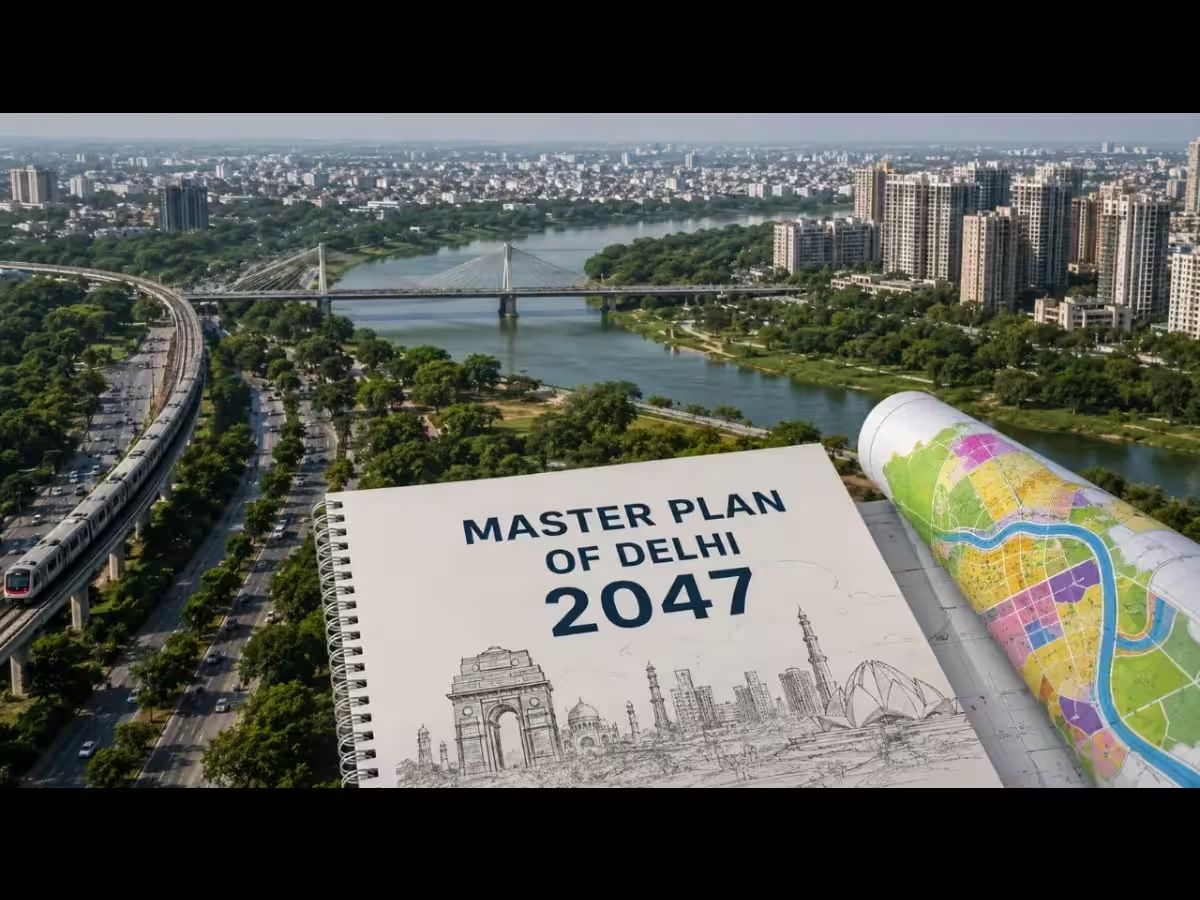
Union Minister Manohar Lal unveiled the Delhi Master Plan 2047, introducing a comprehensive blueprint targeting 40 lakh new homes, expanded metro networks, and ecological restoration. Crucially, the framework mandates a 3D digital twin application and GIS database within the Delhi Development Authority to modernize spatial planning, infrastructure monitoring, and data-driven governance.
Backed by official ministry releases, the newly unveiled Master Plan for Delhi 2047 transitions the capital's urban development into advanced 3D spatial modeling and digital twin applications.
Modernizing Urban Governance Through Spatial Digitization
As the national capital prepares for a projected population exceeding 3.2 crore by mid-century, administrative authorities are shifting away from traditional regulatory frameworks toward advanced technological integration. According to official announcements made by Union Housing and Urban Affairs Minister Manohar Lal during the unveiling of the Delhi Master Plan 2047 (MPD-2047) in August 2026, the capital is set to adopt a 3D digital twin framework alongside an integrated Geographic Information System (GIS) database.
The strategic blueprint, developed in coordination with the Delhi Development Authority (DDA) and local municipal leaders, seeks to harness artificial intelligence-based planning and data-driven decision-making. By building a precise virtual replica of the city's physical infrastructure, urban planners aim to simulate development projects, track environmental metrics, and optimize utility layouts before ground implementation.
Core Pillars of the Master Plan 2047 Framework
The comprehensive master plan addresses multiple facets of metropolitan expansion, pairing high-tech digital modeling with concrete infrastructure targets across brownfield and greenfield zones:
Housing and Redevelopment: Envisions the creation of approximately 40 lakh new affordable housing units, leveraging lower minimum area requirements for brownfield redevelopment and Transit-Oriented Development (TOD) corridors.
Integrated Mobility: Targets a 695-kilometer metro network alongside six new Regional Rapid Transit System (RRTS) corridors and a Unified Metropolitan Transport Authority to streamline public commuting.
Environmental Restoration: Proposes a "green-blue" network extending from the Aravalli Ridge to the Yamuna River, incorporating 13 ecological restoration projects across 1,700 hectares of floodplains.
Digital Infrastructure Integration: Mandates a dedicated interdisciplinary monitoring unit within the DDA backed by cross-agency data-sharing systems and AI-powered simulation tools.
Why It Matters
The integration of 3D digital twin technology and data-driven urban modeling directly impacts citizens, municipal corporations, and real-time investors by reducing project delays, optimizing traffic and utility flows, and ensuring transparent, accountable spatial management across the capital.
Key Facts at a Glance
Technological Upgrade: Introduction of a 3D digital twin and GIS database managed by the DDA.
Target Housing: Envisions 40 lakh new housing units by 2047.
Transport Expansion: Plans a 695-km metro network and six new RRTS corridors.
Environmental Focus: Ecological restoration of 1,700 hectares along the Yamuna floodplains.
FAQ Section
What is a digital twin in the context of Delhi's Master Plan 2047?
A digital twin is a virtual 3D replica of the city's physical infrastructure, utilized by planners to simulate developments, analyze utility loads, and manage spatial growth efficiently.
Which agency is spearheading the implementation of MPD-2047?
The Delhi Development Authority (DDA), working alongside the Ministry of Housing and Urban Affairs, serves as the lead agency for the capital's digital and spatial expansion.
How does the master plan address housing needs?
The plan targets 40 lakh new affordable housing units through transit-oriented development, land pooling, and incentivized brownfield redevelopment.
Where can citizens and developers access official details of the master plan?
Comprehensive documentation, policy notifications, and spatial maps are published regularly through the Delhi Development Authority (DDA) Official Portal.
Source: Press Information Bureau (PIB), Delhi Development Authority (DDA) Portal, DD News Official Releases