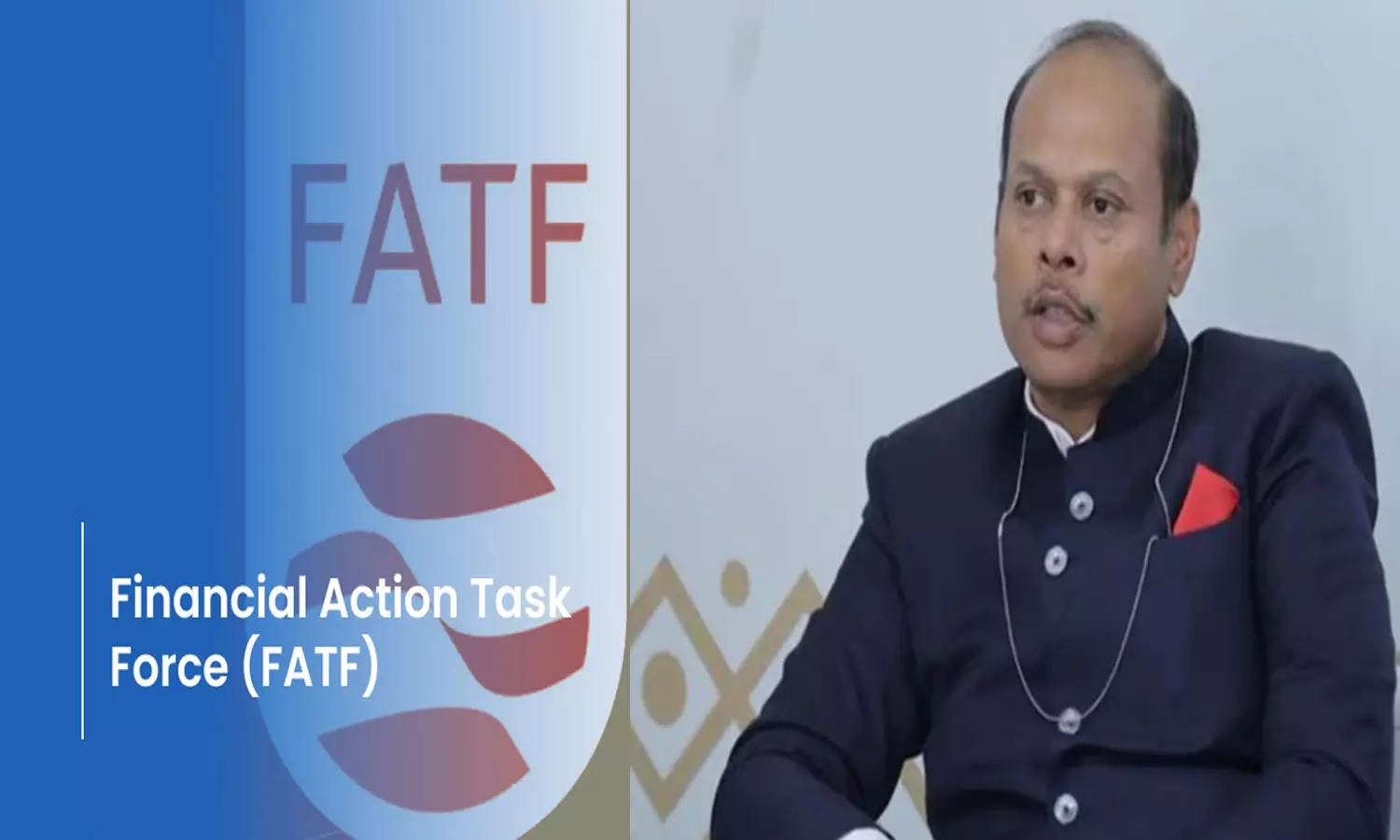
Senior Indian bureaucrat Vivek Aggarwal has been elected Vice President of the Financial Action Task Force (FATF) for the 2026–2027 term, marking a historic first for India. Aggarwal's extensive regulatory and intelligence experience will help drive global efforts against terror financing and secure international financial systems.
NEW DELHI — The Ministry of External Affairs confirmed that senior Indian bureaucrat Vivek Aggarwal has been elected Vice President of the Financial Action Task Force (FATF) for the 2026–2027 operational term. Announced following the conclusion of the FATF Plenary session held in Paris from June 17 to June 19, 2026, the strategic appointment places an Indian official at the apex of the global anti-money laundering and counter-terrorist financing watchdog for the first time in history. This development is highly critical today as New Delhi actively seeks to strengthen cross-border financial surveillance, disrupt shadow banking pipelines, and assert its economic leadership within the G20 and broader global regulatory frameworks.
Historic Elevation at the FATF Plenary in Paris
The election of Vivek Aggarwal, a 1994-batch Indian Administrative Service (IAS) officer of the Madhya Pradesh cadre, represents a structural milestone for India's diplomatic and financial statecraft. According to the official FATF declaration, Aggarwal will officially assume his responsibilities on July 1, 2026, serving a one-year tenure that extends through June 2027. He succeeds Giles Thomson of the United Kingdom, who will transition to serve as the incoming FATF President, succeeding Mexico's Elisa de Anda Madrazo.
The decision-making process took place during the mid-year FATF Plenary, where member nations evaluated global compliance frameworks, checked emerging digital asset risks, and updated international monitoring protocols. The global watchdog also adjusted its geopolitical compliance lists during this session, placing Bosnia and Herzegovina alongside Iraq under its "increased monitoring" status, commonly known as the grey list, while successfully removing Algeria and Namibia following completed action plans.
Extensive Background in Intelligence and Finance
Aggarwal brings deep structural expertise to the global oversight body. He currently serves as the Secretary to the Government of India in the Ministry of Culture, a post he assumed in April 2025. Prior to this administrative role, he worked extensively within the Ministry of Finance as an Additional Secretary in the Department of Revenue. During that period, he directly headed the Indian delegation to the FATF and simultaneously held the critical charge of Director at the Financial Intelligence Unit-India (FIU-IND).
His past performance includes coordinating the high-stakes, multi-agency team that managed India’s comprehensive FATF Mutual Evaluation cycle, which ultimately concluded with the global body highly praising India's economic security systems. Additionally, his governance record in the Ministry of Agriculture saw him direct core tech-driven initiatives, including the digital rollouts of PM-KISAN and the national Agriculture Infrastructure Fund.
Strategic Implications for Indian Markets and Trade
Economic analysts and regulatory compliance experts observe that having an Indian representative in top-tier leadership will shape international policy regarding virtual assets, decentralized finance (DeFi), and cross-border digital payment infrastructure. For Indian businesses, multinational corporations, and global investors, this appointment secures a fair regulatory outlook. It reduces the risk of arbitrary compliance barriers while improving India's sovereign trust ratings across global banking networks.
Furthermore, India’s domestic tech and fintech sectors stand to gain clear operational clarity as the FATF crafts guidelines balancing anti-money laundering protocols with digital transaction flexibility. Travelers and expatriates will benefit over time from smoother, highly secure remittance channels, as India works directly alongside international partners to dismantle illicit networks that force defensive, costly transaction checks on legitimate funds.
Official Sources Section
The underlying details regarding the appointment timeline, operational responsibilities, and plenary updates are documented in official press releases published by the Press Information Bureau (PIB) and the formal assembly summaries provided directly by the Financial Action Task Force (FATF).
Quote Section
"According to officials from the Ministry of External Affairs, this leadership role reinforces India's relentless focus on combating global terrorist financing networks and dismantling illicit financial systems. Shri Aggarwal's deep technical expertise as the former Head of India's FATF delegation and former Director of FIU-IND will heavily advance the organization's core mandate to secure global financial integrity."
Why It Matters
When a country holds a top position inside the FATF, it gains substantial power to set standard rules for global banking security. For India, this means a stronger capability to isolate cross-border networks that channel illicit funds into regional security threats, while ensuring that the country’s booming digital payment systems are fully integrated into safe, global commerce platforms.
Key Facts at a Glance
Historic Precedent: Vivek Aggarwal is the first-ever Indian official elected to hold the position of FATF Vice President.
Tenure Details: The official appointment spans a fixed one-year term starting from July 1, 2026, through June 2027.
Professional Pedigree: Aggarwal is a 1994-batch IAS officer who formerly served as Director of FIU-IND and led India’s direct FATF delegation.
Global Monitoring Shift: The same June 2026 Plenary placed Bosnia and Herzegovina and Iraq under increased monitoring, while clearing Algeria and Namibia.
FAQ Section
Q1: What exactly is the main function of the FATF?
The Financial Action Task Force is the global intergovernmental standard-setting body dedicated to preventing money laundering, terrorist financing, and the financing of proliferation threats to the international financial system.
Q2: How long has India been involved with this global watchdog?
India became an observer nation at the FATF in 2006 and was formally admitted as a full, permanent member country in 2010.
Q3: Does the Vice President replace the President of the FATF?
No. The Vice President works directly alongside the President to guide the organization's strategy, chair plenary debates, and manage evaluations of member jurisdictions.
Source: