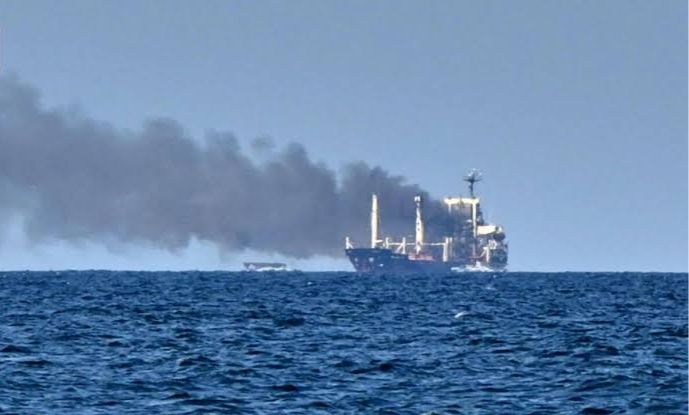
An Indian seafarer was killed following a Black Sea attack on the commercial vessel MV OMORFI, prompting strong condemnation from India's Ministry of External Affairs. The fatal incident, coupled with recent strikes near Odesa, has escalated concerns regarding the safety of civilian merchant crews and global maritime trade routes.
The Ministry of External Affairs condemns a fatal Black Sea attack on the commercial vessel MV OMORFI.
Intensifying security risks across crucial maritime trade corridors, the Ministry of External Affairs (MEA) confirmed on Friday, July 24, 2026, that an Indian national was killed following an attack on a commercial vessel in the Black Sea. The incident involving the merchant ship MV OMORFI occurred on July 18 while the vessel was transiting regional waters, reportedly inside Russian territorial sectors. Out of ten crew members aboard—including three Indian citizens—one sailor tragically lost his life, while two others were confirmed safe. The strike marks the second major maritime casualty involving Indian seafarers in the region within a week, prompting sharp diplomatic condemnation from New Delhi.
Escalating Maritime Threats and Official Response
According to official press communiques issued by the MEA, New Delhi has expressed deep concern over the systematic targeting of commercial shipping lanes and civilian crew members.
Casualty and Crew Status: The MV OMORFI was carrying a mixed crew of ten when struck on July 18. The Indian Embassy in Russia immediately engaged local authorities to facilitate repatriation protocols and provide comprehensive support to the victim's family.
Wider Regional Pattern: The attack follows closely on the heels of a July 19 incident involving the Guinea-Bissau-flagged cargo carrier MV Golden Leo near Odesa, where four Indian sailors were killed.
Diplomatic Rejection of Cargo Claims: Rejecting foreign assertions attempting to justify strikes on civilian ships carrying non-military supplies, Indian officials stressed that attacked vessels were engaged strictly in civilian commerce, such as grain transport.
Impact on Global Trade and Seafarer Security
The back-to-back security breaches in the Black Sea have heightened anxiety across international shipping lines, energy corridors, and marine insurance markets. Shipping corporations, export businesses, and maritime logistics planners face mounting pressure to reroute vessels or reassess crew safety protocols. For families of seafarers and labor organizations, the incidents underscore an urgent need for international enforcement of freedom of navigation principles and stricter adherence to humanitarian protections under international law.
Why It Matters
For global supply chains, international investors, and merchant mariners, escalating hostilities in the Black Sea disrupt vital food and commodity exports. Ensuring the protection of civilian crew members is critical to preventing severe shipping delays and maintaining safe maritime transit across contested trade corridors.
Key Facts at a Glance
Incident Date: July 18, 2026 (MV OMORFI).
Location: Black Sea, reportedly within Russian territorial waters.
Casualties: One Indian seafarer killed; two other Indian crew members reported safe.
Diplomatic Stance: Strong condemnation by India's MEA demanding adherence to safe maritime navigation.
Frequently Asked Questions
What happened to the commercial vessel MV OMORFI in the Black Sea?
The commercial vessel came under attack on July 18, 2026, while transiting the Black Sea in reported Russian territorial waters, resulting in the death of an Indian crew member.
How many Indian nationals were on board the MV OMORFI?
There were three Indian nationals among the ten total crew members on board; two are reported safe.
What was India's official response to the attack?
The Ministry of External Affairs strongly condemned the strike, calling attacks on commercial shipping unacceptable and urging all parties to secure freedom of navigation.
Source: Ministry of External Affairs (MEA), India, Reuters, The Hindu