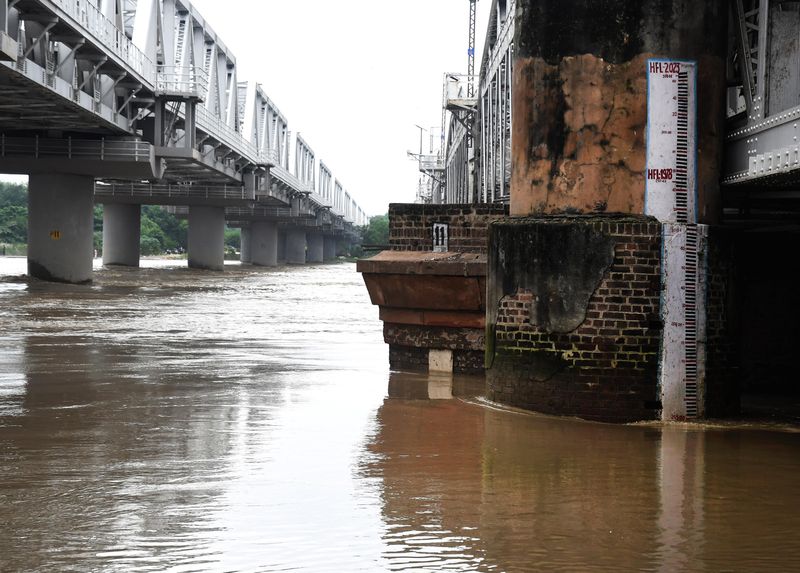
Delhi has activated its comprehensive "Flood Control Order-2026," implementing a three-stage flood warning system to manage monsoon risks. The plan features a new digital platform for real-time tracking of Yamuna water levels, extensive drainage desilting operations, and strict accountability rules for designated local waterlogging officers.
NEW DELHI — The Government of National Capital Territory of Delhi has officially operationalized its structural "Flood Control Order-2026," activating a strict three-stage flood warning plan across all vulnerable sectors. Presided over by Delhi Chief Minister Rekha Gupta during an apex committee convention at the Delhi Secretariat, the administrative mandate establishes an urgent operational framework before the arrival of the southwest monsoon rains.
The immediate enforcement of the three-tier defensive strategy is vital today as the India Meteorological Department (IMD) forecasts an acceleration of wet spells across Northwest India. To eliminate administrative delays that previously worsened civic vulnerabilities during peak downpours, the regional government has established a 24x7 Central Flood Control Room alongside district-level monitoring desks. The integrated system tracks water discharge volumes from northern barrages to prevent a repeat of historical inundations along the low-lying plains of the Yamuna River.
The Three-Stage Alert Framework and Digital Surveillance
The core of the Flood Control Order-2026 relies on a structured, three-tier alert system that monitors the Yamuna's water level with precise escalation protocols. According to the Irrigation and Flood Control (I&FC) Department, the system is divided into clearly defined operational stages based on safety thresholds:
Stage 1: The Warning Level: Triggered automatically when water accumulation at the Palla entry point or discharge calculations from the Hathnikund Barrage in Haryana cross initial baseline safety margins.
Stage 2: The Danger Level: Initiates the immediate mobilization of regional rescue personnel and requires sector commands to secure vulnerable embankments.
Stage 3: The Highest Flood Level (HFL): Mandates the immediate, forced evacuation of citizens from floodplain settlements into designated sector-wise relief camps.
To support this physical framework, the I&FC department has introduced a new digital tracking platform. This system provides automated, real-time data on the volumetric movement of water from the Hathnikund Barrage down to the capital's urban borders, allowing engineers to predict hydrological changes hours before they affect urban infrastructure.
Desilting Operations and Equipment Upgrades
During the apex review assembly, department heads reported that municipal teams have exceeded their structural desilting targets for the current cycle. Official data indicates that crews have successfully cleared more than 30 lakh metric tonnes of silt from 77 critical drainage channels, including 22 major outfall rivers.
To handle heavy localized rainfall events, the capital has expanded its mechanical drainage resources compared to previous seasons. The permanent, mobile, and tractor-mounted pump deployment matrix has been scaled up to 243 active units. Furthermore, the regional rescue pool has been reinforced with 41 heavy-duty rescue boats, 31 high-capacity motorboat engines, and 12 dedicated boat-carriage trolleys, all placed under the oversight of specialized National Disaster Response Force (NDRF) contingents.
Institutional Accountability and Sector Management
A key structural change in this year's plan is the introduction of direct personal accountability for civic officials. Chief Minister Rekha Gupta ordered that a specific nodal officer be appointed for every historically verified waterlogging choke point across the metropolis, including sensitive areas like Kirari, Mundka, Rohtak Road, and Burari. Under the new rules, these designated officers will be held directly responsible if localized pooling causes prolonged disruptions to transit or commerce.
To streamline regional operations, high-level sector committees have been formed under Cabinet Ministers Parvesh Sahib Singh, Ashish Sood, and Manjinder Singh Sirsa. Each ministerial committee oversees three to four District Magistrates, who hold full administrative authority over relief camp logistics, public health advisories, and emergency pumping operations within their respective geographical jurisdictions.
Impact on Citizens and Commuters
For daily commuters, local businesses, and transit operators, the strict enforcement of the Flood Control Order-2026 is designed to reduce the persistent gridlock that typically affects the capital during intense monsoon bursts. Joint inspection teams comprising the Public Works Department (PWD) and the Municipal Corporation of Delhi (MCD) have cleared obstructions at structural junctions where independent drainage networks meet. This targeted clearance helps prevent sudden flash flooding at underpasses and major intersections, keeping the city's key economic corridors and commercial markets functioning safely during heavy storms.
Official Sources Section
The operational details, machinery counts, and policy directives outlined in this report are based on official statutory releases from the Government of NCT of Delhi and verified proceedings from the Apex Committee on Flood Control published by the United News of India.
Quote Section
"The Government's objective is not merely to respond during disasters but to identify potential risks in advance and ensure preventive measures are in place. Negligence of any kind will not be tolerated."
— Delhi Chief Minister Rekha Gupta, addressing senior administrative officials at the Delhi Secretariat.
Why It Matters
For urban planners, logistics companies, and the millions of residents across the National Capital Region (NCR), the launch of this real-time three-stage tracking framework represents a necessary shift toward proactive urban resilience. By combining digital barrage monitoring with clear personal accountability for local waterlogging points, the city aims to prevent prolonged infrastructure failures, protect public property, and safeguard vulnerable economic supply chains from seasonal disruption.
Key Facts at a Glance
The Directive: The "Flood Control Order-2026" establishes an updated, proactive monsoon preparation framework for the capital.
The Mechanism: A three-stage alert plan linked to a real-time digital system tracking the Yamuna's water levels and northern barrage releases.
Silt Clearance: Over 30 lakh metric tonnes of accumulated silt have been removed from 77 critical drains.
Resource Scale: More than 243 high-capacity pumps and 41 rescue boats have been deployed to key locations.
Accountability: Dedicated nodal officers are assigned to specific waterlogging spots and will be held directly accountable for any localized drainage failures.
FAQ Section
Q: What are the three stages of Delhi's flood warning plan? A: The three stages are the Warning Level (initial tracking of high inflows), the Danger Level (mobilization of rescue teams and reinforcement of embankments), and the Highest Flood Level (triggering mandatory evacuations to relief camps).
Q: How is the government monitoring water levels in real time? A: The Irrigation and Flood Control Department has launched a new digital surveillance platform that tracks water flow from the Palla entry point and monitors discharge volumes directly from the Hathnikund Barrage.
Q: Which areas in Delhi are receiving special flood monitoring? A: Special monitoring and dedicated nodal officers have been assigned to highly vulnerable, waterlogging-prone areas, including Kirari, Mundka, Burari, and sections of Rohtak Road.
Source: Government of NCT of Delhi, Irrigation and Flood Control Department Registry.