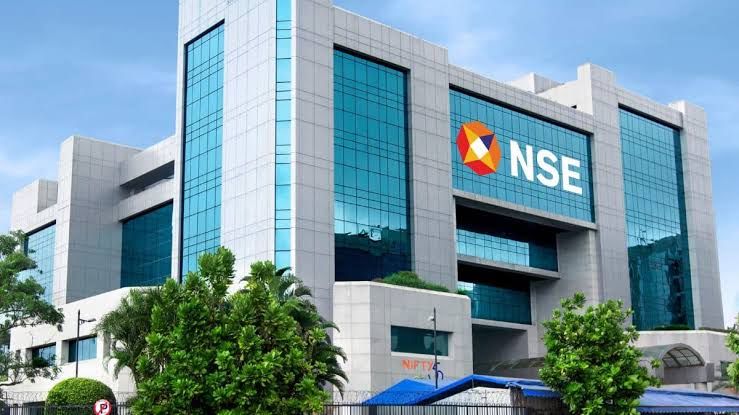
The National Stock Exchange (NSE) remains India’s most valuable unlisted company with a valuation of ₹4.86 lakh crore, according to the 2025 Hurun India 500 report. This ranking coincides with the NSE’s recent filing for a record-breaking ₹30,000 crore IPO, marking a major milestone in Indian capital market history.
MUMBAI — The National Stock Exchange (NSE) has cemented its position as India’s most valuable unlisted company, commanding a valuation of ₹4.86 lakh crore, according to the 2025 Burgundy Private Hurun India 500 report released on Wednesday, June 24, 2026. This ranking reaffirms the exchange’s dominance in the domestic financial sector, placing it ahead of prominent private entities like the Serum Institute of India and Adani Properties.
The assessment arrives at a pivotal moment for the bourse. Last week, the National Stock Exchange filed preliminary papers with the Securities and Exchange Board of India (SEBI) for an initial public offering (IPO) estimated at ₹30,000 crore. If successfully executed, this would mark the largest public offering in the history of the Indian stock market, overcoming a decade of regulatory delays.
Dominance in the Unlisted Space
The Hurun report, compiled in collaboration with Axis Bank’s Burgundy Private, highlights a trend where investors are increasingly assigning premium valuations to companies with dominant market positions and scalable business models, even before they enter the public markets. The NSE’s ability to retain its crown as India’s most valuable unlisted company highlights sustained investor confidence in the bourse's growth prospects and its central role in the nation’s economic expansion.
Beyond the financial sector, the report noted significant contributions from consumer, fintech, and renewable energy firms. Notable unlisted companies featured in the rankings include snack maker Haldiram, fintech firm Razorpay, and renewable energy giant Greenko, signaling a broader diversification of value creation across the Indian economy.
IPO Milestone and Stakeholder Activity
The NSE’s long-awaited transition to a listed entity is structured as an Offer for Sale (OFS) of 14.89 crore shares. According to the Draft Red Herring Prospectus (DRHP), existing shareholders will collectively divest nearly 6 percent of the exchange’s stake.
Key Divestments: Major stakeholders including the State Bank of India (SBI) and MS Strategic (Mauritius) Limited are set to offload significant portions of their holdings, with SBI divesting up to 2.48 crore shares.
Long-Term Strategy: Notably, the Life Insurance Corporation of India (LIC)—the single largest shareholder with a 10.72 percent stake—has confirmed it will not participate in the current share sale, signaling continued long-term institutional support.
Broader Economic Landscape
While the NSE maintains its status, the broader report indicates a period of cooling for India’s corporate giants. The combined value of the top 10 most valuable non-state-run companies in India declined by ₹11 lakh crore to ₹86 lakh crore in 2026. Despite this short-term pressure, India Inc. collectively crossed the $3.4 trillion valuation mark, with the 500 companies in the list matching the economic scale of several major global economies.
Quote Section
"According to officials, the NSE’s ranking reflects the deepening trust in India’s financial market infrastructure," stated an analyst involved in the report’s publication. "Organizers stated that the high valuation of unlisted firms like the NSE serves as a barometer for institutional appetite as these companies prepare to tap into public capital for their next phase of growth."
Why It Matters
The continued valuation growth of the NSE as an unlisted entity underscores the maturity of India’s financial ecosystem. For investors, the upcoming IPO represents a potential once-in-a-generation opportunity to gain exposure to the backbone of the Indian stock market. For the business community, it signals that market leaders, regardless of their listing status, remain the primary drivers of India's valuation growth, even as traditional sectors face short-term volatility.
Key Facts at a Glance
NSE Valuation: ₹4.86 lakh crore, the highest among all unlisted Indian companies.
IPO Magnitude: Estimated at ₹30,000 crore, poised to be India's largest public issue.
Market Scale: India Inc. has officially crossed the $3.4 trillion total valuation milestone.
Stakeholder Shift: Nearly 6 percent of the NSE stake is set for divestment via an Offer for Sale (OFS).
FAQ Section
Why is the NSE valuation considered significant?
As the primary infrastructure for trading in India, the NSE acts as a proxy for the country’s economic health. Its high valuation reflects investor confidence in the scalability of Indian financial services.
When will the NSE IPO open for bidding?
While the preliminary papers have been filed with SEBI, the official dates and pricing will be announced in upcoming regulatory updates following the approval of the draft prospectus.
Why are existing shareholders like LIC not selling their stakes?
Stakeholders such as LIC retain their positions to benefit from the exchange’s long-term growth and dividend potential, viewing their investment as a strategic asset rather than a short-term trade.
Source: Hurun India, National Stock Exchange (NSE), Securities and Exchange Board of India (SEBI), Business Standard Markets.