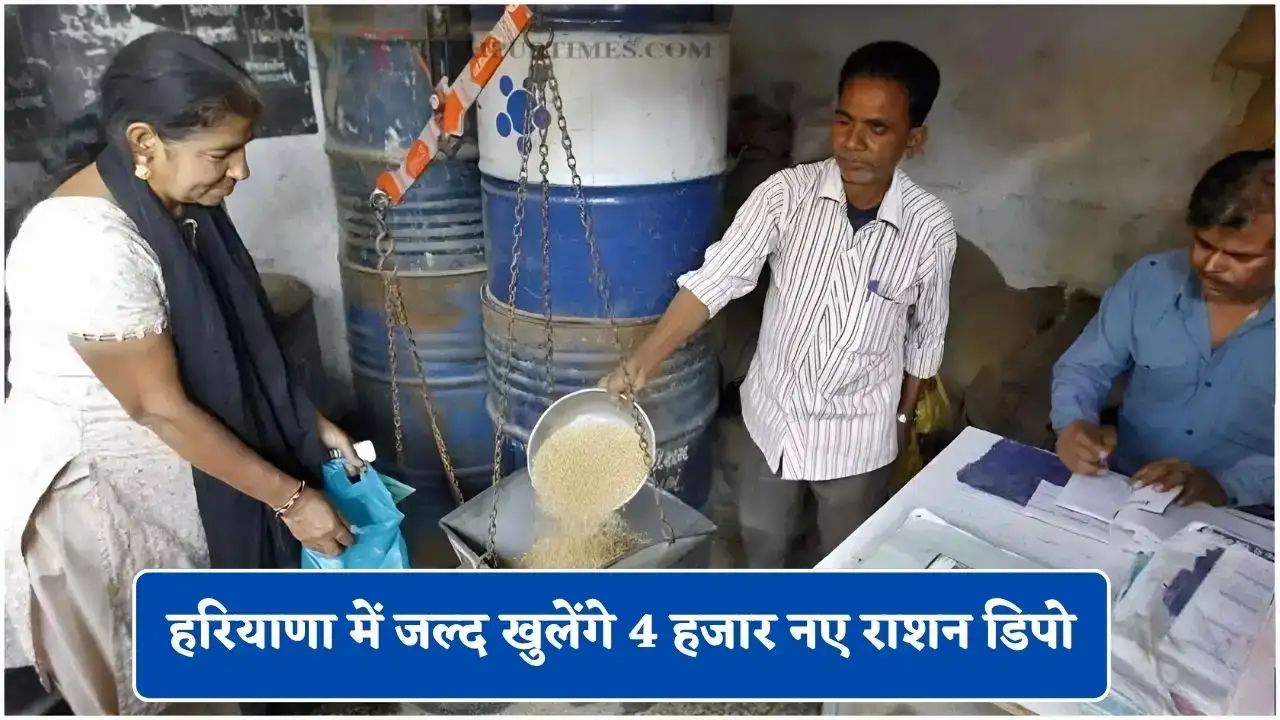
Haryana is launching 4,000 new ration depots to decentralize food distribution and improve accessibility. Minister Rajesh Nagar mandates 33% female reservation for new licenses. To combat corruption, depots will feature CCTV surveillance, OTP-based verification, and strict operational guidelines, ensuring that subsidized grains reach the state's 40 lakh eligible beneficiary families.
CHANDIGARH, India — The Haryana government, led by Chief Minister Nayab Singh Saini, has announced a significant expansion of its food security infrastructure, with plans to establish 4,000 new ration depots across the state. The move, aimed at decentralizing the Public Distribution System (PDS) and reducing the distance beneficiaries must travel to collect subsidized foodgrains, was confirmed by the state’s Food, Civil Supplies and Consumer Affairs Minister, Rajesh Nagar, on Wednesday, June 24, 2026.
This initiative follows a recent budget announcement by the Chief Minister and is part of a broader push to make the state’s ration distribution process more accessible, transparent, and technologically advanced. Officials indicated that the expansion will be accompanied by a 33% reservation for women in the allotment of new depot licenses, marking a strategic effort toward social empowerment within the supply chain.
Enhanced Oversight and Modernization
The expansion of the PDS footprint is paired with a strict mandate for increased accountability. Minister Nagar has directed department officials to expedite the rollout while simultaneously enforcing a rigorous monitoring framework.
Central to this new policy is the mandatory installation of CCTV cameras at all ration depots, both existing and new. These systems will be monitored at both district and state headquarters to prevent irregularities and ensure that subsidized rations are delivered to the intended beneficiaries without delay. The minister warned that any deliberate manipulation or "diversion" of foodgrains intended for Below Poverty Line (BPL) and Antyodaya Anna Yojana (AAY) families will face immediate disciplinary action.
Technological Transformation of PDS
The government is also moving to replace legacy manual systems with modern, "high-tech" solutions. According to state officials, the department is implementing a digital verification process, including the use of One-Time Passwords (OTP) for ration collection to ensure biometric and identity verification.
Key administrative updates include:
Immediate Communication: Depot holders are now required to notify consumers via public announcements, text messages, and WhatsApp as soon as fresh stock arrives.
Operational Efficiency: Depots must remain open for the full month or until the entire allocated stock for the area is distributed, preventing the practice of closing shops prematurely.
Anti-Collusion Measures: To prevent monopoly and corruption, the government has mandated that only one person per family can hold a license for a ration depot.
Impact on Beneficiaries
For the nearly 40 lakh ration cardholders in Haryana, these changes are expected to streamline access to essential commodities. By reducing the physical distance to the nearest fair price shop and introducing digital safeguards, the state aims to eliminate the "middleman" culture that has historically plagued the distribution of PDS supplies. The government has also initiated the use of modern silo technology for the storage of procured grains, further ensuring the quality of food distributed to the underprivileged.
Quote Section
According to officials, the expansion of 4,000 depots is a cornerstone of the Chief Minister's vision to decentralize food distribution. Organizers stated that the department is committed to "zero tolerance" for irregularities, with strict instructions issued to district-level nodal officers to act against errant depot holders.
Why It Matters
The decentralization of the PDS is a vital step in ensuring food security for the state’s vulnerable populations. By increasing the density of ration depots, the government is lowering the logistical burden on low-income families. Simultaneously, the integration of CCTV surveillance and digital authentication provides a layer of institutional oversight that protects the system from leakage and corruption, ensuring that tax-funded subsidies reach the intended recipients.
Key Facts at a Glance
Expansion Goal: 4,000 new ration depots to be allotted across Haryana.
Women's Empowerment: A 33% reservation for women in new depot license allotments.
Digital Transparency: CCTV surveillance mandated at all depots; implementation of mobile OTP-based collection.
Accountability: Depot holders must remain open for the entire month until stock is fully distributed.
FAQ Section
Q: How will the new ration depots improve access for citizens?
By opening 4,000 additional locations, the government aims to reduce the travel distance for beneficiaries, ensuring that residents in remote or underserved areas can collect their rations with ease.
Q: Are there specific measures to prevent ration theft?
Yes, the government has mandated CCTV cameras at all depots to be monitored at the headquarters level, and it has introduced OTP-based identity verification to ensure only legitimate cardholders receive their entitlement.
Q: Who can apply for a ration depot license?
Applicants must follow the official guidelines issued by the Food, Civil Supplies and Consumer Affairs Department. The government has implemented a rule that limits license holding to one person per family to prevent collusion.
Source: Food, Civil Supplies and Consumer Affairs Department, Haryana, National Food Security Act (NFSA) - Haryana State Portal, UNI News Service.