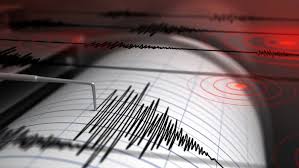
The German Research Centre for Geosciences (GFZ) has officially upgraded its reading of the massive earthquake that struck Mindanao, Philippines, on Monday, June 8, 2026. The initial estimate of magnitude 7.3 was sharply raised to a catastrophic magnitude 8.2, triggering immediate tsunami alerts and widespread regional evacuation orders.
MANILA — The German Research Centre for Geosciences (GFZ) issued a major revision on Monday, June 8, 2026, upgrading the magnitude of the powerful earthquake that struck off the coast of Mindanao, Philippines, from an initial 7.3 to a massive 8.2. The colossal undersea tectonic rupture occurred at a shallow depth of approximately 10 kilometers (6.21 miles). The significant upgrade into an "unusually great" earthquake category has completely altered emergency response priorities across the archipelago, forcing state agencies to immediately issue high-level tsunami alerts and order rapid coastal evacuations throughout the southern regions.
Technical Re-evaluation Confirms Megathrust Rupture
The recalculation by seismologists at the Potsdam-based GFZ indicates that the energy output from the tectonic event was exponentially more severe than preliminary automated telemetry suggested. Seismologists classify any seismic activity exceeding an 8.0 threshold as a major megathrust event capable of causing complete structural destruction near its epicenter.
Local coastal observation teams reported that shaking sustained across the Mindanao landmass lasted for over two consecutive minutes.
Because the central fault line fractured at such a shallow depth, the water displacement above the oceanic crust has created active deep-sea wave propagation, prompting oceanographers to tightly monitor water level disruptions across Southeast Asia.
Immediate Coastal Tsunami Threats Evacuate Communities
Following the updated data from GFZ, the Philippine Institute of Volcanology and Seismology (PHIVOLCS) shifted its stance to reflect an extreme regional emergency. Disaster response teams immediately coordinated with local government units across Davao Occidental, Sarangani, and South Cotabato to clear zero-elevation shoreline zones.
Emergency maritime channels are broadcasting warnings to all commercial shipping vessels and local fishing fleets to move to deep water immediately:
Expected tsunami wave amplitudes could exceed 3 meters along direct coastal inlets.
Localized river basins are experiencing reverse tidal surges up to 5 kilometers inland.
Intermittent communication outages are currently complicating real-time damage assessments.
Official Sources Section
The ongoing emergency response, data re-evaluations, and coastal containment strategies are dictated by continuous updates from state and global observation monitors:
German Research Centre for Geosciences (GFZ): Provided the definitive updated seismic data altering the earthquake scale from 7.3 to 8.2 magnitude.
Philippine Institute of Volcanology and Seismology (PHIVOLCS): Issued immediate local evacuation orders for vulnerable coastal barangays across southern Mindanao.
Pacific Tsunami Warning Center (PTWC): Confirmed hazardous tsunami waves are structurally possible within a 300-kilometer radius of the marine epicenter.
Quote Section
"According to officials from the regional civil defense units, community sirens were activated immediately across southern coastlines following the magnitude revision, directing residents to seek high ground at least 30 meters above sea level."
Why It Matters
The escalation of the earthquake's designated magnitude carries immense practical and structural implications across the Western Pacific region:
For Coastal Inhabitants: The upgrade converts the event from a severe localized tremor into a life-threatening tsunami crisis, making immediate vertical evacuation a critical survival priority.
For Infrastructure Operators: Structural stress thresholds for regional bridges, electrical grids, and public ports must be immediately checked for severe systemic damage following prolonged, high-amplitude seismic shaking.
For Global Maritime Logistics: Sea lanes running through the Celebes Sea and southern Philippine waters face immediate closure or lengthy rerouting schedules until local ports evaluate deep-water hazards.
Key Facts at a Glance
Magnitude Revision: GFZ upgraded the Mindanao earthquake from an initial magnitude 7.3 reading to a catastrophic magnitude 8.2.
Epicentral Depth: The massive rupture occurred at a shallow depth of 10 kilometers, significantly amplifying its surface impact and water displacement potential.
Tsunami Proximity: Marine monitoring networks indicate that hazardous waves could impact Philippine and Indonesian shorelines within hours.
Evacuation Actions: Civil defense units have initiated mandatory evacuations for thousands of residents in the low-lying provinces of southern Mindanao.
FAQ Section
Why do scientific agencies revise earthquake magnitudes after an event occurs?
Preliminary data is often calculated using automated software from the nearest available seismometers. For massive earthquakes, fully calculating the total energy released requires deeper analysis of long-period seismic waves recorded by global stations, which often leads to major upward revisions.
What physical damage is expected from a magnitude 8.2 earthquake?
A magnitude 8.2 earthquake is categorized as a "great" earthquake. It can cause severe structural collapse in built environments, extensive ground fracturing, massive landslides in mountainous terrains, and major undersea displacements that trigger dangerous tsunami waves.
Is there an ongoing tsunami threat for countries outside the Philippines?
Yes. Following an 8.2 magnitude upgrade, international bodies like the Pacific Tsunami Warning Center evaluate risks across the wider Pacific basin, including neighboring Indonesia, Palau, and southern Japan, as oceanic energy ripples outward from the epicenter.
Source: Updated global seismic logs published by the German Research Centre for Geosciences, emergency disaster declarations managed by the Philippine Institute of Volcanology and Seismology, and maritime security alerts distributed by the Pacific Tsunami Warning Center.