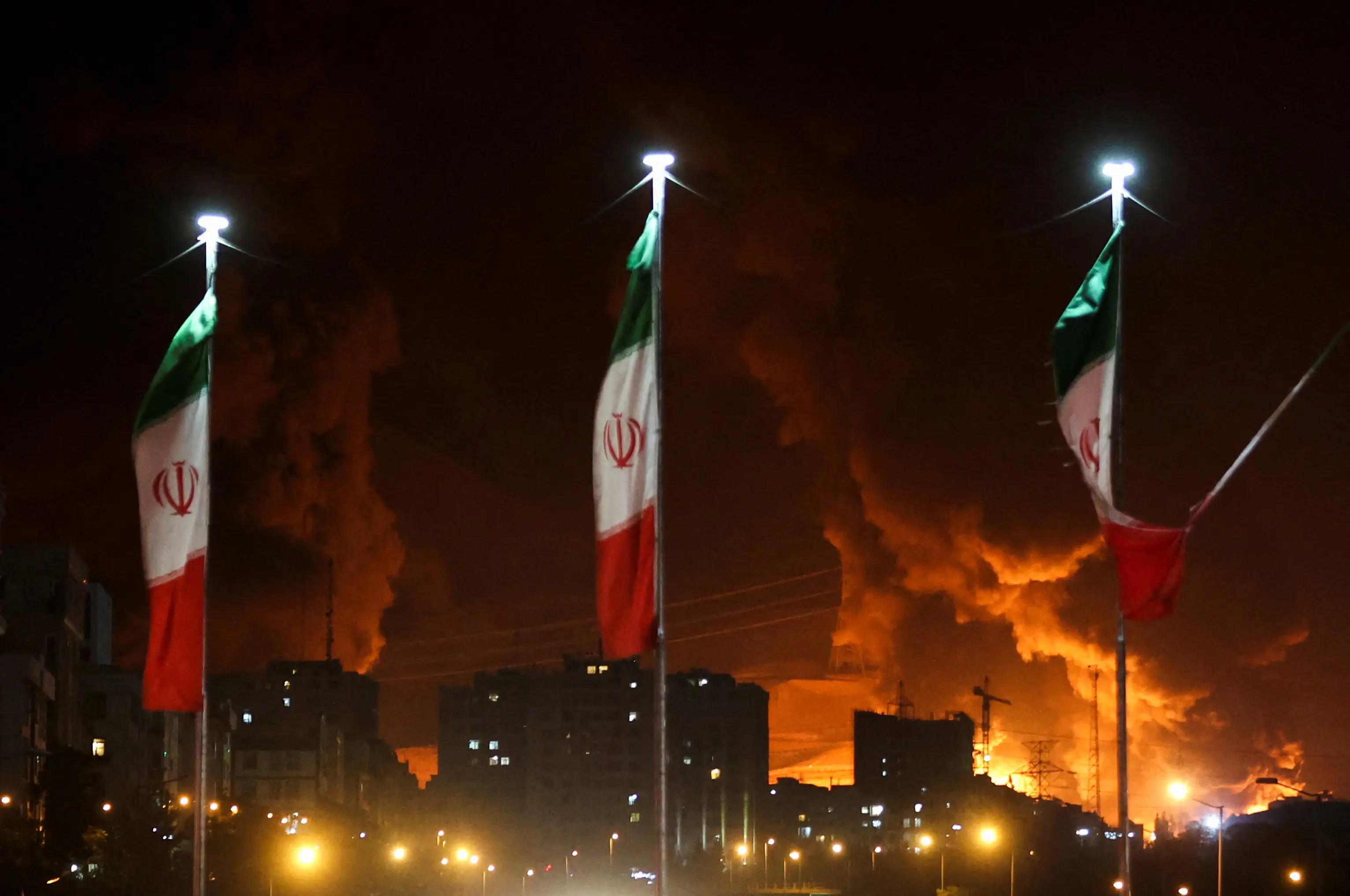
Global crude oil prices jumped over 2% on Monday following fresh Israeli airstrikes on Beirut, Lebanon. The attacks have disrupted fragile ceasefire talks and stoked investor fears of a wider West Asia conflict. Market participants remain highly concerned over the potential for extended maritime bottlenecks across critical energy chokepoints like the Strait of Hormuz.
Global crude oil prices surged by more than 2% in early trading on Monday, June 8, 2026, after the Israeli military executed targeted airstrikes against positions in Beirut. The sharp military escalation has severely dampened investor expectations for an extension of the temporary United States-Iran ceasefire agreement, reigniting deep-seated concerns regarding energy supply security across West Asia. With major maritime trade corridors facing ongoing disruptions, energy markets quickly priced in a renewed geopolitical risk premium, pushing both Brent and West Texas Intermediate (WTI) benchmarks near multi-month highs.
Geopolitical Escalation Disturbs Fragile Ceasefire Hopes
The military strikes on the Lebanese capital represent a critical inflection point for global commodities markets. According to regional tracking data and military briefings, Israeli forces advanced operations into Lebanon over the weekend, responding to cross-border rocket and drone deployments from the Iran-backed Hezbollah militant group.
The renewed hostilities come directly on the heels of high-level peace talks hosted by the United States in Washington. Analysts note that market sentiment shifted rapidly from cautious optimism to risk aversion as the prospect of a long-term diplomatic settlement between Washington, Jerusalem, and Tehran degraded.
The temporary truce, initially established to allow negotiators to resolve underlying disputes regarding regional security and nuclear programming, faces its most volatile challenge since hostilities broadened earlier this year.
Critical Shipping Chokepoints Face Heightened Risks
Energy analysts are focusing heavily on the operational stability of key marine transit routes. Financial and commodity market experts highlighted growing anxieties over defensive sea-mining risks and maritime threats inside the Strait of Hormuz. The strategic channel handles roughly 20% of the world’s total petroleum and liquefied natural gas (LNG) flows.
Industry data indicates that while regional alternative export facilities—such as Saudi Arabia’s Red Sea port of Yanbu—have absorbed some diverted tanker traffic by increasing shipments up to 1.9 million barrels per day, infrastructure risks remain high. Ongoing supply vulnerabilities continue to overshadow downcast macroeconomic indicators, including recent cooling factory and manufacturing activity data emerging from East Asian economies.
Official Sources Section
The current market movements and security updates are based upon official communications issued by state agencies and corporate market entities:
U.S. Central Command (CENTCOM): Confirmed active defensive measures over the weekend to neutralize unmanned aerial vehicles endangering international maritime commercial traffic.
Kuwait Petroleum Corporation (KPC): Reported that regional air defense systems remain on high alert following localized drone interference at primary refining facilities earlier in the conflict cycle.
The White House: Issued an executive statement confirming that while diplomatic extensions remain under active review, recent military escalations heavily complicate permanent settlement paths.
Quote Section
"According to market analysts and commodity strategists, even if a temporary diplomatic breakthrough is subsequently reached, the structural damage to regional logistics chains means the market will not see an immediate flood of unconstrained crude supply."
Why It Matters
The immediate practical implications of the West Asia escalations ripple across multiple sectors of the global economy:
For Investors: The sudden injection of a geopolitical risk premium forces asset reallocation toward traditional safe-haven instruments, causing volatility in equity markets and boosting energy commodities.
For Businesses: Escalating crude benchmarks translate directly into higher overhead costs for manufacturing, logistics, and raw material processing.
For Consumers: Sustained oil prices above $90 per barrel invariably drive up the retail cost of gasoline, diesel, and household aviation transport, applying renewed pressure to consumer price indices worldwide.
Key Facts at a Glance
Market Surge: Brent crude futures climbed 2.25% to reach $93.17 a barrel, while U.S. WTI crude futures increased 2.62% to sit at $89.65 a barrel.
Chokepoint Constraints: The Strait of Hormuz remains heavily restricted, keeping roughly one-fifth of global energy flows tightly constrained.
Diplomatic Friction: The military developments occurred immediately after regional peace negotiations concluded in Washington, fracturing expectations of a ceasefire extension.
Supply Diversion: Alternative transport links, including Saudi Arabia's Yanbu export hub, are operating at elevated capacities to bypass vulnerable waterways.
FAQ Section
Why do military strikes in Beirut cause global oil prices to rise?
While Lebanon itself is not a major oil exporter, military actions within its borders signal a broader confrontation involving regional powers like Iran. Because West Asia produces a vast percentage of the world's petroleum, any escalation increases the probability of supply infrastructure damage or transport blockades.
What is the significance of the Strait of Hormuz to energy markets?
The Strait of Hormuz is the world's most critical maritime oil chokepoint. Tankers moving oil from major Middle Eastern producers must pass through this narrow waterway to reach international markets. Any physical threat or restriction in the strait instantly reduces global oil availability.
How do these developments affect regular retail consumers?
When crude oil benchmarks rise on global exchanges, oil refineries pay more for raw material inputs. These costs are traditionally passed down to regular consumers in the form of higher fuel prices at gas pumps and increased ticket costs for commercial airline travel.
Source: Official market data aggregated via Reuters Commodity Feeds, official regional defense briefings compiled by the U.S. Central Command, and strategic economic reports provided by the Kuwait Petroleum Corporation.