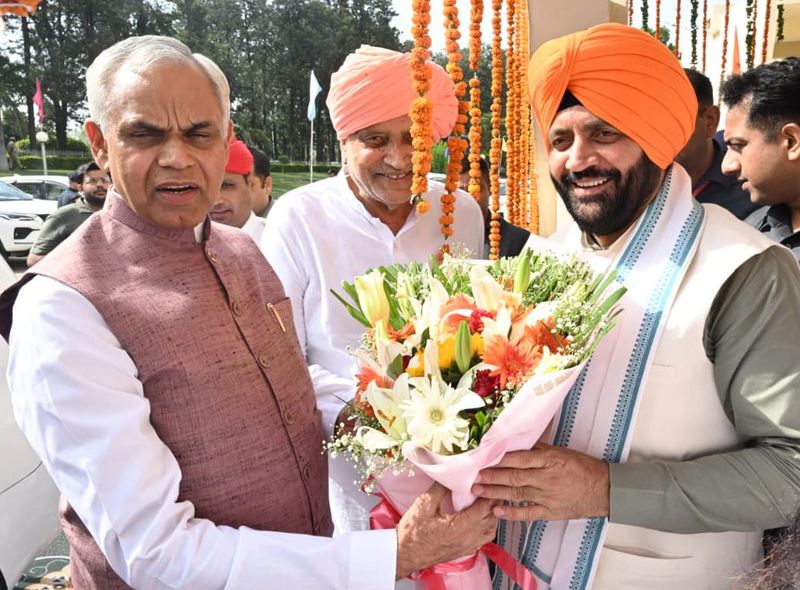
Haryana Chief Minister Nayab Singh Saini announced that the state will formulate a specialized policy to implement natural farming on panchayat-owned lands. Speaking at an agriculture workshop in Kurukshetra, Saini unveiled a comprehensive support framework, including ₹10,000 per acre annual subsidies, dedicated market spaces, and fully compensated transition clusters.
CHANDIGARH — Haryana Chief Minister Nayab Singh Saini announced on Sunday, June 7, 2026, that the state government will formulate a comprehensive, dedicated policy next year to implement natural farming on lands owned by rural panchayats. Speaking at a state-level agricultural workshop in Kurukshetra, Saini detailed a sweeping environmental mandate aimed at curbing the degradation of soil fertility caused by excessive chemical fertilizers. The newly proposed policy structure integrates long-term land leasing guidelines with targeted financial assistance, marking an aggressive transformation strategy for northern India's traditional agrarian belts.
Direct Land Leasing and Financial Incentives for Organic Cultivation
The forthcoming policy establishes structural changes in how public lands are utilized for agricultural production. According to state government reports, the Department of Agriculture and Farmers’ Welfare will lead the transition by dedicating roughly 800 acres of state-owned institutional land to chemical-free systems.
Under the direct mandate issued by the Chief Minister, this land will be leased exclusively to farmers who provide a binding commitment to practice natural farming methods for a minimum duration of 10 consecutive years.
To lower the economic barriers associated with transitioning away from synthetic inputs, the Haryana administration has devised a robust financial subsidy tier. Farmers who obtain official certification from the Agricultural and Processed Food Products Export Development Authority (APEDA) for practicing natural or organic cultivation will be granted financial assistance of ₹10,000 per acre annually. This direct benefit transfer will be guaranteed to eligible beneficiaries for a continuous period of five years.
A core pillar of the state's updated framework is the deployment of a 2,000-acre "Smart Agriculture" cluster in the Kurukshetra district. Operating in direct institutional collaboration with Haryana Agricultural University, this targeted area will fuse ancient organic methods with modern tech tracking.
Addressing long-standing farmer anxieties regarding initial yield drops during the conversion phase, Chief Minister Saini announced a complete economic safety net, stating that if participating cultivators suffer any localized output losses under this pilot program, the Haryana government will fully compensate them for the deficit.
Furthermore, the state is heavily subsidizing the foundational elements of cow-based natural farming systems:
The direct purchase subsidy for an indigenous cow has been raised to ₹30,000 for farmers holding at least one acre of land.
Direct transfers totaling ₹2.97 crore have already been cleared into bank accounts for the acquisition of 1,171 indigenous cows.
Individual asset grants of ₹3,000 are allocated to facilitate the purchase of specialized storage and raw material processing drums.
To solve logisitical hurdles, the state will designate the Haryana State Seed Certification Agency as an official organic auditing body. Verified organic farmers will receive dedicated retail market enclosures inside primary state mandis spanning major towns including Panchkula, Yamunanagar, Karnal, Sonipat, Rohtak, Gurugram, Faridabad, Hisar, Charkhi Dadri, and Narnaul.
Official Sources Section
The institutional milestones, funding outlays, and logistical targets announced for the organic transition have been verified against documentation released by state offices:
Directorate of Information, Public Relations & Languages, Haryana: Released the exhaustive policy outline and executive metrics following the Kurukshetra agricultural workshop.
Department of Agriculture & Farmers’ Welfare, Haryana: Provided verified portal logs indicating that nearly two lakh farmers have registered approximately three lakh acres of land on the state’s dedicated natural farming platform.
Quote Section
"According to officials from the Haryana Agriculture Department, the state government stands with cultivators at every stage from seed procurement to final market sales and will ensure that dedicated testing laboratories and APEDA-recognized certification centers are established directly within local mandis."
Why It Matters
The shift toward utilizing public panchayat lands for regulated organic farming holds broad structural implications for the regional community:
For Rural Panchayats: The policy transforms unused or conventionally leased village lands into highly valued, eco-certified production hubs, increasing long-term lease values.
For Cultivators & Farmers: The addition of a 100% loss-compensation clause and a ₹10,000 per acre subsidy removes the severe financial risk traditionally associated with the multi-year transition away from chemical dependencies.
For Consumers: Expanding dedicated organic blocks, such as the newly designated Morni block, ensures a reliable, locally traceable supply of chemical-free food products across major urban consumer markets.
Key Facts at a Glance
Policy Mandate: Chief Minister Nayab Singh Saini announced that Haryana will introduce a formal policy next year to enforce natural farming on panchayat-owned lands.
Long-Term Leases: Over 800 acres of state agriculture department land will be bound to 10-year organic-only cultivation lease terms.
Financial Assistance: APEDA-certified organic farmers will receive state assistance of ₹10,000 per acre per year for five years.
Zero-Loss Guarantee: Cultivators participating in the new 2,000-acre Kurukshetra Smart Agriculture cluster will be fully compensated by the state for any transition-related yield losses.
Livestock Incentives: The state has escalated the indigenous cow purchase subsidy to ₹30,000 to bolster the inputs required for sustainable, low-cost bio-fertilizers.
FAQ Section
What lands will be covered under Haryana's upcoming natural farming policy?
The upcoming policy specifically targets common lands owned by rural village panchayats across the state, alongside an initial block of 800 acres owned directly by the state's primary Agriculture Department.
How does the government plan to safeguard farmers from financial losses during the transition?
Under the new Smart Agriculture initiative launched alongside Haryana Agricultural University in Kurukshetra, the state government has legally committed to providing 100% financial compensation to farmers for any verified crop or yield losses sustained while transitioning away from chemicals.
Where can farmers sell their verified natural and organic produce?
The state government is establishing dedicated, specialized spaces inside major agricultural mandis (markets) across ten key districts, including Gurugram, Faridabad, Panchkula, and Karnal, backed by localized testing and quality certification laboratories.
Source: Official press notifications issued via the Government of Haryana Press Portal, land deployment guidelines managed by the Department of Agriculture & Farmers' Welfare, Haryana