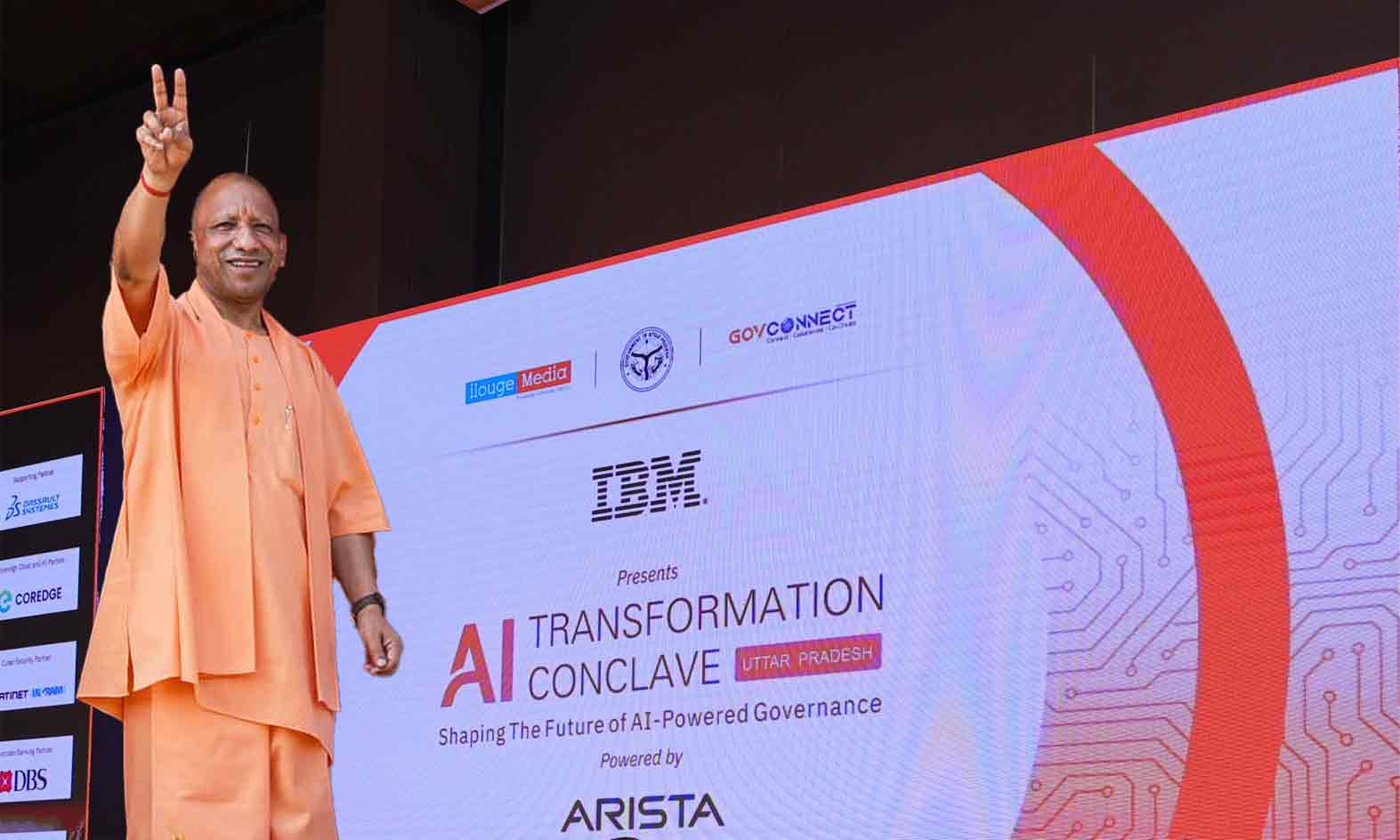
Uttar Pradesh Chief Minister Yogi Adityanath has ordered the establishment of a dedicated "Uttar Pradesh Startup Mission" and directed officials to draft the new Uttar Pradesh Startup Policy 2026. The high-level initiative specifically prioritizes targeted financial incentives and resource infrastructure for advanced artificial intelligence (AI), robotics, and deep-tech innovation hubs.
LUCKNOW — Uttar Pradesh Chief Minister Yogi Adityanath presided over a high-level review meeting on Sunday, June 7, 2026, directing state departments to formulate the comprehensive Uttar Pradesh Startup Policy 2026. As part of this sweeping executive mandate, the Chief Minister announced the formation of a dedicated institutional framework known as the Uttar Pradesh Startup Mission. This new administrative body will centrally govern, fund, and monitor the state's expanding entrepreneurial landscape, with an explicit, strategic focus on accelerating ventures rooted in artificial intelligence (AI), machine learning, robotics, and deep-tech frameworks.
Establishing an Institutional Framework for Emerging Technology
The planned establishment of the Uttar Pradesh Startup Mission signals a transition from general ecosystem support to highly specialized, technology-driven incubation. According to state administrative briefings, the standalone mission is designed to remove bureaucratic silos by consolidating promotion, financial administration, capacity building, and multi-stakeholder coordination under a professional, accountable management hierarchy.
During the state assessment, officials highlighted that Uttar Pradesh has moved from an "Aspiring Leader" classification in 2018 to the coveted "Top Performer" category within the Government of India’s National Startup Rankings.
The Chief Minister emphasized that a dedicated institutional mechanism is now necessary to scale this progress, transitioning the local workforce from job seekers into high-tech job creators.
Special Incentives Ordered for Deep-Tech and Inclusive Innovation
To position the state as a leading national hub for innovation-driven economic growth, the upcoming Uttar Pradesh Startup Policy 2026 will restructure existing financial grants. State authorities have been directed to optimize provisions governing sustenance allowances, initial prototype grants, seed capital assistance, and state-subsidized patent registration mechanisms.
The directive outlines specific technology verticals that will receive primary regulatory and financial priority:
Artificial Intelligence and Machine Learning (AI/ML)
Quantum Computing and Robotics
Semiconductors, Aerospace, and Space Technology
Deep-Tech and Advanced Health-Tech Systems
The state government will simultaneously expand its network of physical technology hubs. Key components of this infrastructure roadmap include expanding localized Centres of Excellence and fast-tracking the deployment of the proposed "U-Hubs" in Lucknow and Noida, which are designed to act as central convergence zones for institutional research and commercial market expansion.
Furthermore, the policy mandates inclusive growth, dictating special equity and resource allocations for women entrepreneurs, economically weaker sections (EWS), persons with disabilities, transgender business owners, and regional startups originating from the Purvanchal and Bundelkhand territories.
Official Sources Section
The directives, organizational frameworks, and metrics associated with this technological push have been verified via official state records:
Chief Minister’s Office (CMO), Lucknow: Issued the core executive policy mandate outlining the structural requirements of the Uttar Pradesh Startup Mission.
Department of IT and Electronics, Uttar Pradesh: Presented the preliminary draft of the 2026 startup policy guidelines, confirming that active tech exports from the state have recently crossed the ₹44,000 crore threshold.
Quote Section
"According to officials present at the high-level review meeting, the upcoming policy will build robust, transparent linkages between state academic institutions, national research laboratories, and global angel investor networks to ensure localized innovations can scale effectively to global markets."
Why It Matters
The shift toward an AI and deep-tech oriented economy within Uttar Pradesh carries major practical implications across multiple economic sectors:
For Investors: The creation of centralized U-Hubs and enhanced patent subsidies reduces early-stage operational risks, creating a highly structured environment for venture capital deployment.
For Businesses & MSMEs: Access to state-backed AI labs, localized data center infrastructure, and advanced robotics testing facilities allows small and medium enterprises to modernize their manufacturing chains cheaply.
For Citizens & Students: The state's concurrent skilling initiatives, such as the AI Pragya Program, seek to train up to one million youth, directly altering the regional employment landscape by embedding high-paying technical jobs locally.
Key Facts at a Glance
Policy Mandate: Chief Minister Yogi Adityanath ordered the drafting of the Uttar Pradesh Startup Policy 2026 to position the state as India's premier deep-tech capital.
New Mission Entity: The institutional "Uttar Pradesh Startup Mission" will be created to handle professional financial management, mentorship tracking, and incubation monitoring.
Core High-Tech Verticals: Special financial incentives and prototype grants will target AI, quantum computing, robotics, and semiconductor development.
Geographic Centers: Lucknow and Noida will host the flagship "U-Hubs" to act as central development and deployment zones for deep-tech innovation.
Inclusive Funding: The forthcoming policy integrates specific mandate clauses ensuring financial and infrastructural support for marginalized and regional entrepreneurs.
FAQ Section
What is the primary difference between the previous policy and the upcoming Uttar Pradesh Startup Policy 2026?
The 2026 policy transitions the state from general entrepreneurial support to a highly specialized focus on deep-tech fields like artificial intelligence, quantum computing, and robotics. It also establishes the "Uttar Pradesh Startup Mission" as a standalone, professional authority to manage ecosystem resources transparently.
What are "U-Hubs" and where will they be located?
U-Hubs are state-of-the-art innovation centers designed to bridge the gap between academic research and commercial industrial production. The primary deep-tech U-Hub facilities are designated for construction and expansion in Lucknow and Noida.
How does this tech policy intend to assist individual student entrepreneurs?
The policy mandates the restructuring of financial instruments, making early-stage prototype grants, seed capital assistance, sustenance allowances, and patent filing incentives far more accessible to young innovators at the inception phase of their business ventures.
Source: Official administrative directives released by the Chief Minister's Office, Uttar Pradesh, technical ecosystem reports published by the Department of IT and Electronics, Government of Uttar Pradesh, and data portfolios maintained by Invest UP.