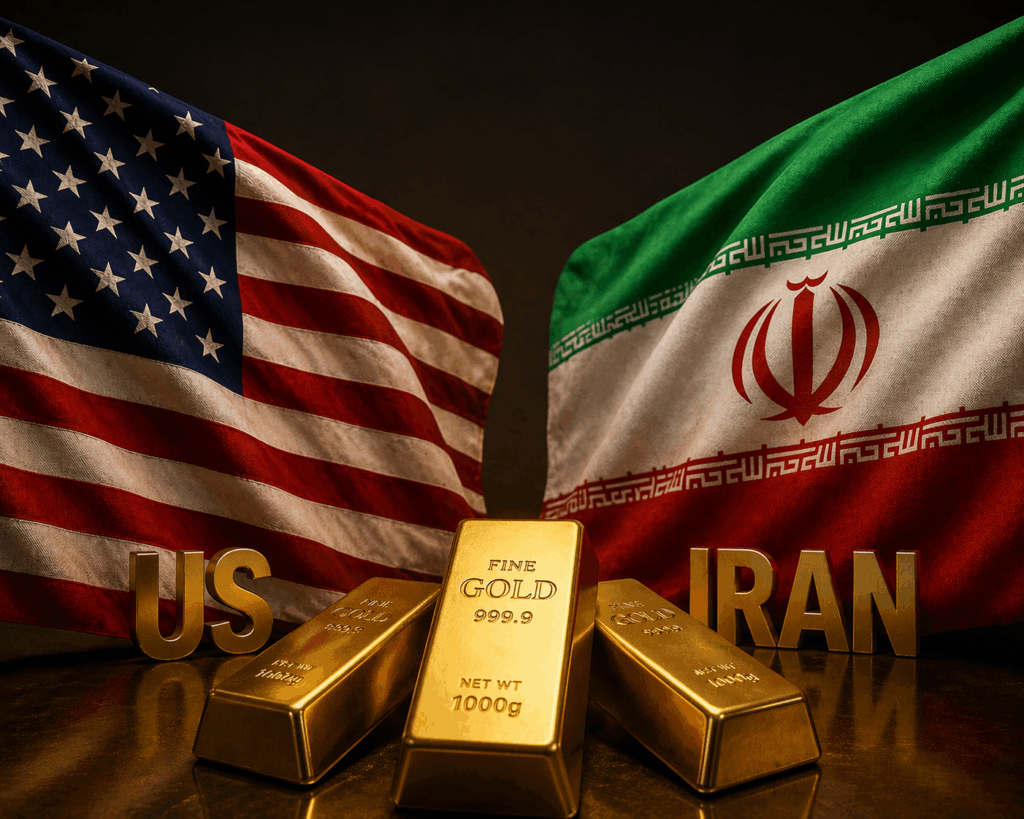
The global gold price has rebounded over 3.5% past $4,200 an ounce, staging a sharp recovery from a six-month low. The rally was ignited by easing US-Iran tensions after President Trump paused military strikes, which weakened the US dollar and Treasury yields, overriding the typical loss of safe-haven demand.
LONDON — The global gold price has staged an abrupt upward reversal, rebounding by over 3.5% within 24 hours to trade back above the $4,200 per ounce threshold. The sharp recovery comes immediately after U.S. President Donald Trump announced the cancellation of planned military strikes against Iran, signaling that a comprehensive bilateral peace agreement could be reached in Europe.
While easing geopolitical tensions typically diminish the safe-haven appeal of precious metals, this unique market rebound is being driven by a simultaneous retreat in U.S. Treasury yields and a weakening U.S. Dollar. Financial participants are quickly unwinding defensive positions, shifting the focus of the gold price from a direct war premium toward macroeconomic monetary policy and persistent underlying domestic inflation.
Macroeconomic Shifts Outweigh Loss of Geopolitical Safe-Haven Demands
In the months leading up to the June 2026 diplomatic breakthrough, the four-month conflict in the Middle East severely disrupted global energy corridors, specifically through the blockaded Strait of Hormuz. The resulting spike in crude oil prices acted as an anchor on bullion, forcing major central banks to consider hawkish interest rate hikes to combat energy-driven inflation. Because gold is a non-yielding asset, expectations of prolonged high interest rates had pushed the commodity down roughly 21% from its early-year peaks, culminatng in a six-month low of $4,023 per ounce.
The sudden shift toward a diplomatic de-escalation completely inverted these market mechanics. Hopes of an imminent peace deal triggered an immediate drop in the Bloomberg Dollar Spot Index, which declined by 0.3%, alongside a significant contraction in long-term U.S. Treasury yields.
Because spot gold is denominated globally in U.S. currency (XAU/USD), a weaker greenback makes the physical commodity less expensive for foreign central banks and institutional investors holding alternative reserve assets, effectively fueling the aggressive price rebound.
Technical Profit Taking and Monetary Headwinds Shape the Recovery
Prominent market analysts suggest that technical indicators played a definitive role in the rapid velocity of the market bounce. Bullion had entered deeply oversold territory, prompting large-scale commodities funds to buy back short positions to lock in profits, creating an immediate technical floor between the $4,000 and $4,100 support levels.
However, market specialists warn that the upside potential for the gold price may remain capped due to persistent core inflationary prints in the West. Fresh macroeconomic data published by the U.S. Bureau of Labor Statistics revealed that producer prices rose at their fastest pace in over three years, reinforcing expectations that central banks cannot easily cut borrow costs.
Furthermore, the Federal Reserve is scheduled to convene its highly anticipated June policy meeting next week, marking the first monetary interest rate decision under newly appointed Fed Chair Kevin Warsh. The CME FedWatch tool indicates that fixed-income traders are currently pricing in a 67% probability of an additional interest rate hike by December, which could continue to limit long-term rallies for non-yielding commodities.
Consumer Re-allocations and Retail Jewelry Sector Reactions
The global volatility in spot gold has registered an immediate ripple effect across international physical retail jewelry networks. In major physical bullion markets such as India, the sudden reversal disrupted a short-lived retail price discount. According to retail data compiled from the India Bullion and Jewellers Association (IBJA), fine gold (999 purity) had briefly dropped to a low point before reversing upward by several hundred rupees per gram following the global market surge.
For everyday consumers and retail investors, the current pricing environment presents a dual reality. While localized retail prices remain elevated across major brands like Tanishq and Malabar Gold, corporate buyers are closely tracking the dollar's downward path. Meanwhile, sister industrial commodities have staged parallel recoveries, with silver jumping 6.2%, while platinum and palladium recorded notable single-session advances.
Official Sources Section
The underlying economic indicators, asset price movements, and geopolitical announcements compiled within this journalistic report are verified by the following official institutions:
Quote Section
Evaluating the structural dynamics underlying the commodity's counter-intuitive price behavior, an independent precious metals analyst observed:
"According to officials and veteran bullion strategists, the market is witnessing a classic asset rotation. The immediate removal of the U.S.-Iran kinetic war premium initially triggered a sell-off in defensive holdings, but the subsequent collapse of the U.S. Dollar and Treasury yields acted as a net positive for gold. XAU/USD was fundamentally oversold after a 21% correction, and institutional capital is now treating this rebound as a structural revaluation against a softer dollar rather than a simple flight to safety."
Why It Matters
The sharp turnaround in the gold price proves that currency movements and central bank expectations often carry more weight than pure war anxieties. For international asset managers, corporate investors, and physical jewelry consumers, this rebound illustrates that a looming peace deal can paradoxically support gold by weakening the dollar and lowering bond yields. Moving forward, the longevity of this upward trend will depend entirely on how the Federal Reserve under Kevin Warsh addresses sticky, energy-driven inflation at its upcoming June meeting.
Key Facts at a Glance
Price Correction: Spot gold surged over 3.5% in a single session, bouncing back above $4,215 per ounce from six-month lows.
Geopolitical Trigger: The primary driver was U.S. President Donald Trump calling off military strikes against Iran, signaling an imminent peace agreement.
Currency Correlation: A 0.3% drop in the Bloomberg Dollar Spot Index lowered the cost of the dollar-denominated metal for foreign purchasers.
Monetary Headwinds: Gains face structural resistance as high U.S. producer price inflation sustains expectations of a hawkish Federal Reserve.
Complementary Metals: The broader commodities sector rallied in tandem, led by a sharp 6.2% increase in global silver spot prices.
FAQ Section
Q1: Why did the gold price increase when geopolitical tensions actually decreased?
While lower geopolitical tension reduces safe-haven demand, the prospect of peace drove down both the U.S. Dollar and Treasury yields. Since gold is priced in dollars, a weaker dollar makes it less expensive and more attractive to international buyers, sparking a price rebound.
Q2: What role did technical trading play in this recent gold price market rally?
Gold had dropped 21% since the outbreak of the conflict in late February, leaving it technically oversold. The diplomatic news triggered massive short-covering, where institutional traders closed out their bets on falling prices by rapidly buying back gold.
Q3: How will the upcoming Federal Reserve meeting impact the gold price trend?
The Fed meeting next week, led by new Chair Kevin Warsh, will dictate interest rate expectations. If the Fed signals future rate hikes to curb sticky inflation, it could cap gold’s recovery, as higher interest rates make non-yielding assets less attractive.
Q4: Did retail jewelry prices follow the global spot gold price movement?
Yes. Major retail jewellery networks globally and locally across India adjusted their rates upward immediately following the international bounce, reversing a short-lived retail price drop observed earlier in the week.
Source: Bloomberg News Commodities Desk | Reuters Global Markets Report | Official Daily Spot Fixings, London Bullion Market Association.