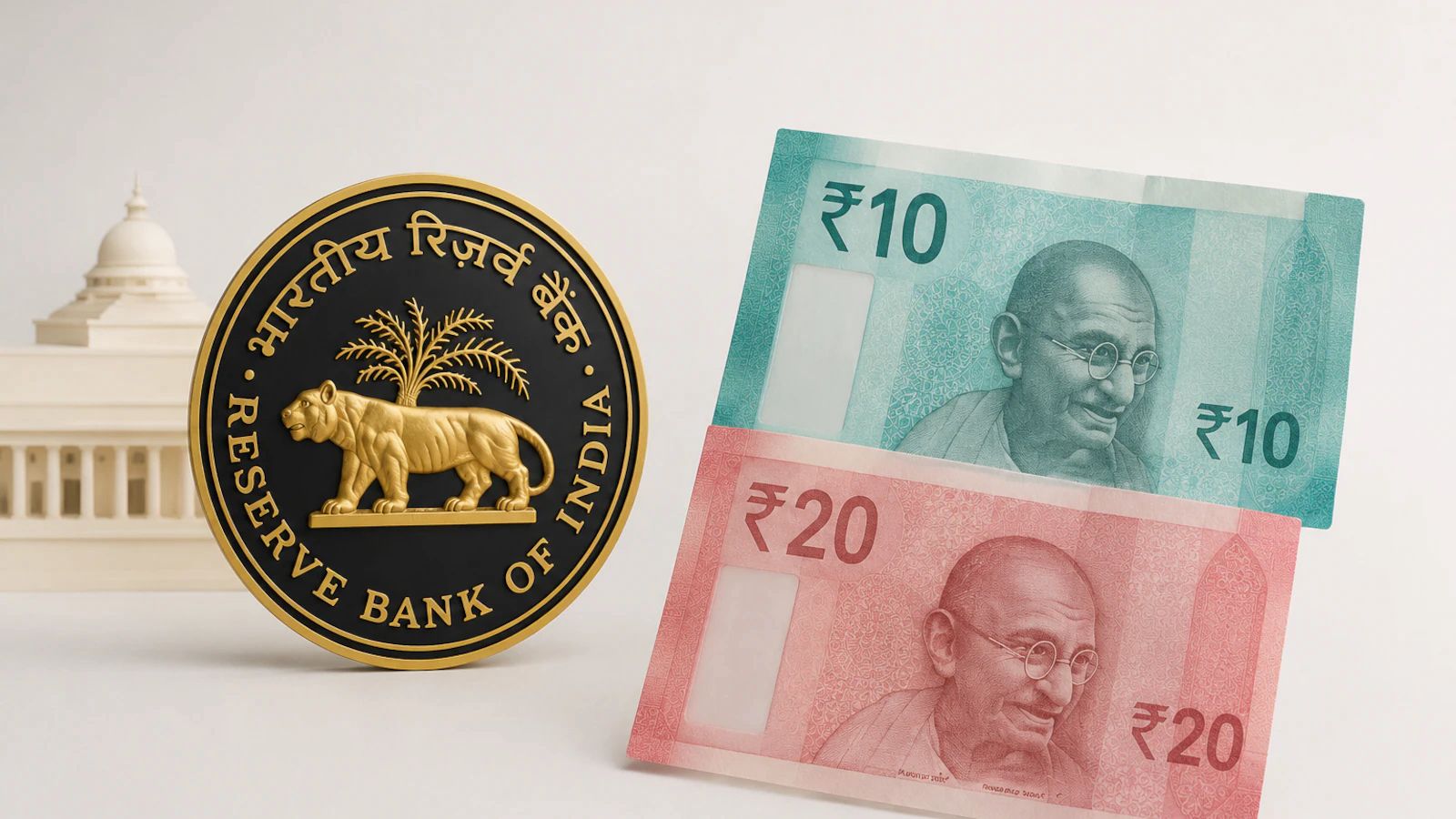
The government has approved the RBI's plan to test one billion pieces each of ₹10 and ₹20 polymer banknotes to evaluate durability and security. Officials reassured Parliament that traditional paper currency will not be replaced, ensuring both formats will circulate parallelly during and after the trial phase.
New Delhi gives the green light for Reserve Bank of India to pilot ₹10 and ₹20 plastic banknotes.
In a major development for India's currency management framework, the Union Government officially approved the Reserve Bank of India's (RBI) proposal to conduct extensive field trials for polymer-based banknotes. Announced in Parliament on Monday, July 27, 2026, by Minister of State for Finance Pankaj Chaudhary, the pilot program will introduce one billion pieces each of ₹10 and ₹20 polymer notes. However, the administration explicitly clarified that these plastic-substrate notes will circulate alongside existing paper money, putting to rest any speculation regarding a blanket replacement of conventional paper currency.
Evaluating Durability and Security Under Indian Conditions
According to official disclosures shared in the Lok Sabha, the pilot phase is designed to rigorously test how polymer banknotes perform under local handling patterns, climatic variations, and intense daily circulation.
Extended Lifespan: International research cited by the central bank indicates that polymer notes possess a significantly higher structural durability than traditional cotton-paper substrate, potentially reducing long-term replacement costs.
Advanced Anti-Counterfeiting: Plastic banknotes allow for sophisticated security elements—such as transparent windows, shadow images, and iridescent patterns—that are exceptionally difficult to replicate.
Parallel Circulation: The RBI emphasizes that physical cash and digital payment modes will continue to operate as complementary systems, with polymer notes being gradually integrated rather than forced as an immediate substitute.
Background and Preparatory Procurement Steps
The government's formal endorsement follows active groundwork by the central bank's currency-printing subsidiary, Bharatiya Reserve Bank Note Mudran Private Limited (BRBNMPL). Earlier in July 2026, BRBNMPL floated a global Expression of Interest (EOI) to source opacified Biaxially Oriented Polypropylene (BOPP)-based polymer substrate sheets embedded with strict national security stipulations. While global central banks in countries like Australia, the UK, and Canada have long transitioned portions of their currency to polymer, India’s previous exploratory initiatives—such as limited trials first mooted over a decade ago—did not culminate in a full rollout. This newly sanctioned trial marks the most concrete step toward testing plastic currency in modern Indian financial history.
Why It Matters
For citizens, consumers, and financial institutions, the introduction of trial polymer notes signals a potential long-term reduction in currency waste caused by the rapid wear and tear of lower-denomination paper bills. Because paper currency will continue to circulate side-by-side with the new plastic notes, everyday transactions will experience zero disruption while the RBI evaluates public acceptance.
Key Facts at a Glance
Approved Denominations: ₹10 and ₹20 polymer banknotes.
Trial Volume: One billion pieces for each denomination.
Core Objective: Assess durability, security enhancements, and public utility under Indian conditions.
Paper Currency Status: Existing paper notes will remain legal tender and continue circulating alongside polymer notes.
Frequently Asked Questions
What denominations are included in the RBI's polymer note trial?
The government has approved field trials for ₹10 and ₹20 polymer banknotes.
Is existing paper currency going to be replaced by plastic notes?
No. The Ministry of Finance has explicitly clarified that there are no plans to phase out or replace existing paper currency, and polymer notes will circulate alongside them.
How many polymer notes will be issued for the trial?
The RBI plans to introduce one billion pieces each of the ₹10 and ₹20 polymer denominations for the pilot phase.
Source: Ministry of Finance, Reserve Bank of India, The Economic Times, Hindustan Times