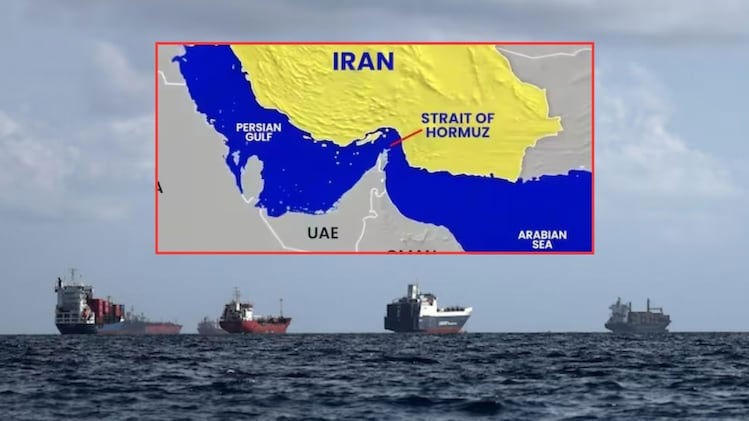
Maritime traffic through the critical Strait of Hormuz is recovering, rising to 30 daily transits under an interim US-Iran truce. Amid the historic 15 million bpd disruption, Indian refiners demonstrated exceptional resilience by diversifying supply lines via increased Russian and Atlantic basin crude purchases to secure domestic fuel continuity.
NEW DELHI — Maritime transit through the strategically critical Strait of Hormuz is showing early signs of recovery following a recent diplomatic breakthrough between the United States and Iran. Simultaneously, data reveals that Indian oil refiners have shown remarkable commercial agility, sustaining high operations by rapidly diversifying their portfolios despite historic maritime blockades.
The disruption, triggered by intense regional tensions that led to an effective closure of the waterway, removed roughly 15 million barrels per day (bpd) of liquid energy from the global market, marking the largest crude oil supply disruption recorded in history. However, an interim bilateral memorandum of understanding signed on June 17, 2026, has initialized a 60-day stabilization window. This has triggered a gradual resumption of commercial tanker traffic and stabilized global energy indices.
Maritime Resumption in the Strait of Hormuz
According to data compiled by S&P Global Commodity Insights, vessel traffic through the primary choke point has risen significantly over the past week. The waterway is now averaging approximately 30 transits per day. While this remains well below the pre-conflict average of 135 daily transits, it marks a significant rebound from the baseline of just 12 transits per day maintained during the peak of the blockade.
Underscoring this localized recovery, tracking data indicated that multiple stranded supertankers successfully completed transits earlier this week. Furthermore, seven empty Qatar-linked liquefied natural gas (LNG) carriers entered the waterway, an initial signal that broader natural gas shipments from Gulf producers are poised to safely resume.
Indian Refining Sector Demonstrates Supply Flexibility
Amid the global logistics squeeze, India’s domestic refining complex successfully mitigated severe feed shortfalls. S&P Global Energy assessments noted that while Indian refiners faced a net loss of 20% of their traditional, pre-conflict Middle Eastern crude baselines, they adjusted dynamically.
Data from maritime intelligence firm Kpler showed that Indian refiners rapidly accelerated intake from non-Gulf sources. Crude imports from Russia surged to an average of 2.66 million bpd in June, solidifying Moscow’s role as India's primary supplier. Additionally, refiners expanded procurement of West African, Brazilian, and US crude grades, alongside near-record volumes of 636,000 bpd from the UAE to optimize supply lines before the full restoration of the corridor.
Official Sources Section
The current framework governing the waterway operates under official declarations from the participating states and international tracking bodies:
Ministry of External Affairs (MEA), India: Confirmed that 11 India-bound vessels, including three large crude oil tankers and bulk fertilizer carriers, successfully cleared the Strait of Hormuz post-agreement.
S&P Global Commodity Insights: Released detailed transit metrics tracking the shift from 12 to 30 daily transits.
U.S. Department of State: Announced a formal sanctions waiver valid until August 21, 2026, intended to facilitate immediate energy flow normalization.
Executive Quotes
"We are cautiously optimistic about a Strait of Hormuz reopening. We have seen transits go up over the past week... Of course, this is still a far cry from the 135 daily transits we witnessed before the war. Meanwhile, Indian refiners have been performing remarkably well. They have been highly dynamic, successfully sourcing crude from various alternative markets."
— Benjamin Tang, Director and Global Head of Liquid Bulk, Commodities at Sea, S&P Global Energy
"The effective closure of the Strait of Hormuz was the largest oil supply disruption in history. It was and for the moment, still is extraordinary. If flows via Hormuz and Gulf production do begin to recover, it will take time and global oil inventories will continue to fall through June and July."
— Jim Burkhard, Vice President and Head of Research for Oil Markets, S&P Global Energy
Why It Matters
For global consumers and investors, the gradual reopening of the Strait of Hormuz has brought immediate downward pressure on energy costs, with Brent crude futures moderating near $78 per barrel.
For India, the containment of the crisis highlights an enduring structural shift from cost-optimization to structural energy resilience. Although the low-demand monsoon season currently insulates Indian inventories, S&P Global analysts warn that prolonged systemic reliance on emergency alternative routes underscores the country's urgent need to build deeper strategic petroleum reserves (SPRs) ahead of the high-demand fourth-quarter festive period.
Key Facts at a Glance
Traffic Recovery: Daily vessel transits through the Strait of Hormuz have risen from 12 to 30, though still down from the historical baseline of 135.
Disruption Scale: The conflict effectively choked off 15 million bpd of global liquid supply, impacting roughly 20% of Indian refiners' standard West Asian supply lines.
Indian Strategy: Refiners offset shortages by expanding Russian imports to 2.66 million bpd in June and diversifying into US and South American grades.
Bilateral Timeline: The interim US-Iran agreement provides a 60-day operational window with built-in provisions for extension as nuclear and regional policy negotiations progress.
FAQ Section
Q: Why is the Strait of Hormuz vital to global energy markets?
A: The Strait of Hormuz is the world's most critical maritime energy chokepoint, normally facilitating the transit of approximately 20% of global petroleum consumption and vital liquefied natural gas (LNG) supplies from major Gulf producers.
Q: How did Indian refiners avoid fuel shortages during the shutdown?
A: Indian refiners dynamically adjusted their sourcing portfolios by purchasing discounted Russian crude (averaging 2.66 million bpd in June) and pulling supply from the US, Brazil, and West Africa.
Q: Is the shipping crisis completely resolved?
A: No. While an interim 60-day agreement has initiated a partial traffic recovery to 30 transits per day, S&P Global experts note that a permanent resolution may take longer than 60 days due to unresolved regional and nuclear issues.
Sources: