China’s new LineShine system has dethroned the US-based El Capitan to become the world’s fastest supercomputer, reaching 2.198 exaflops. While the US still maintains the highest number of systems globally, India continues to expand its domestic capabilities, maintaining seven supercomputers on the June 2026 TOP500 list.
China has officially displaced the United States at the pinnacle of the global supercomputer race, unveiling a groundbreaking system capable of unprecedented processing speeds. On Tuesday, June 24, 2026, at the International Supercomputing Conference in Hamburg, Germany, the TOP500 project announced that China’s "LineShine" system is now the most powerful supercomputer on Earth. This development marks a significant geopolitical and technological milestone, highlighting Beijing's ability to advance its technological prowess despite ongoing US export restrictions on advanced semiconductors.
For governments, researchers, and tech industries worldwide, this shift in the exascale computing landscape dictates the future of artificial intelligence development, climate modeling, and national security infrastructure.
The Exascale Titan: China Overtakes the US
Built by the Shenzhen Cloud Computing Center and installed at the National Supercomputing Centre in Shenzhen, LineShine represents a unique architectural achievement in the global supercomputer race. The system achieved a performance of 2.198 exaflops—meaning it can perform more than 2 quintillion calculations per second.
This formidable processing power allowed LineShine to overtake the US Department of Energy’s El Capitan, which had held the number one spot since November 2024. Furthermore, LineShine diverges from current industry trends by relying entirely on general-purpose central processing units (CPUs), utilizing over 13.7 million Huawei LX2-ARMv9 cores, rather than the graphics processing units (GPUs) typically used to train massive AI models.
US Dominates in Volume Despite Losing the Crown
While China claims the single fastest machine, the United States continues to dominate the broader global supercomputer race in sheer volume. According to the June 2026 TOP500 list, the US hosts 162 of the world's 500 most powerful supercomputers, compared to China's 30.
The US also retains a commanding presence at the top of the performance charts. El Capitan (California), Frontier (Tennessee), and Aurora (Illinois) currently hold the second, third, and fourth positions globally. Germany's JUPITER rounds out the top five.
Where Does India Stand?
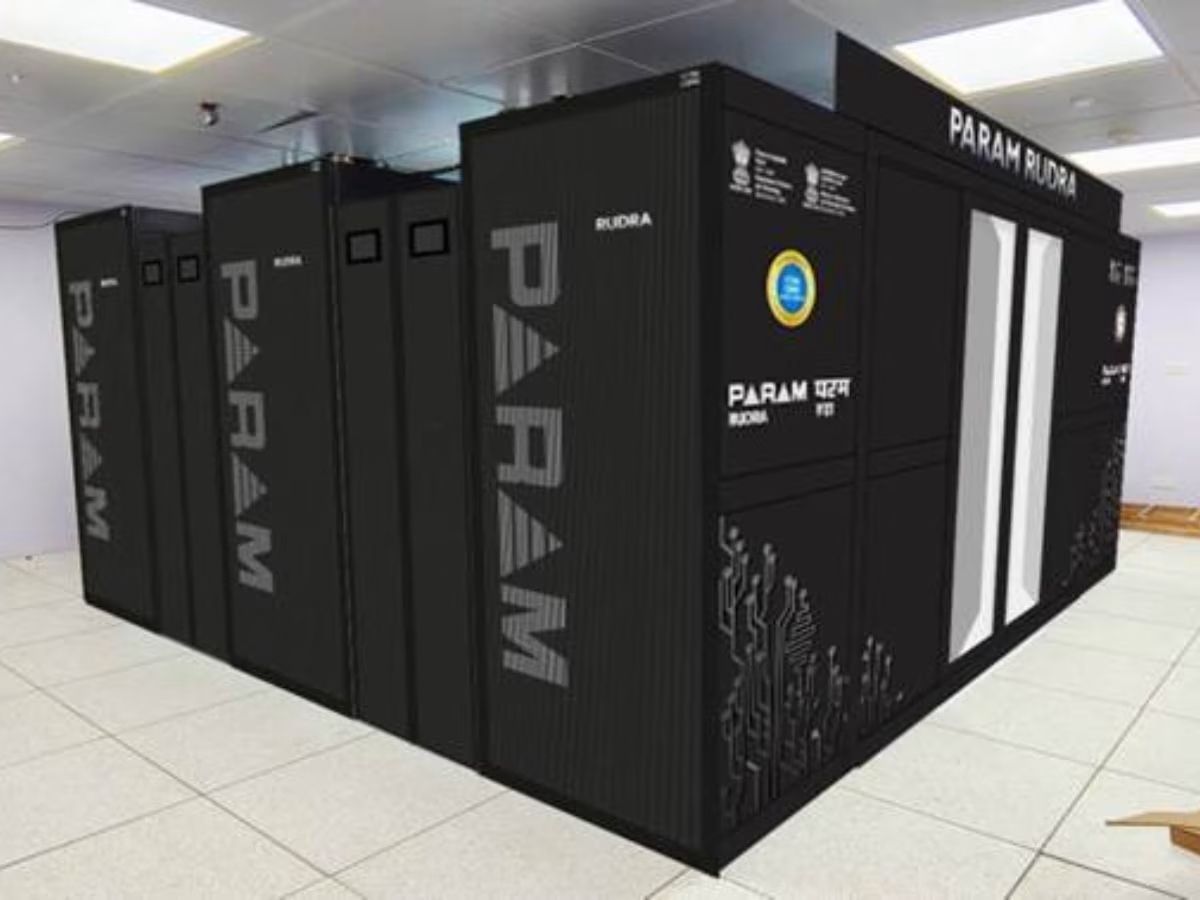
As the US and China battle for the top positions, India is actively carving out its space in the global supercomputer race through the National Supercomputing Mission (NSM). As of the June 2026 TOP500 list, India maintains seven supercomputers in the global rankings.
India's computing flagship remains the AI-focused AIRAWAT platform, installed at the Centre for Development of Advanced Computing (C-DAC) in Pune. Operating under the National Program on AI, AIRAWAT provides critical infrastructure for India's domestic AI research. Other prominent Indian systems on the list include Arka and Arunika, which are primarily utilized for advanced weather forecasting and climate modeling by the Ministry of Earth Sciences.
Quotes from the Tech Frontier
"According to officials organizing the TOP500 list, LineShine's debut increases the number of exascale systems from four to five and, for the first time, places exascale systems across Asia, North America, and Europe simultaneously."
"Organizers stated that LineShine’s performance showed China to be capable of holding its own in advanced computing despite US export restrictions on the most advanced chips."
Why It Matters
The global supercomputer race is not merely about national prestige; it directly impacts everyday technological progress. For citizens and consumers, exascale supercomputers accelerate the discovery of new life-saving pharmaceuticals and improve the accuracy of extreme weather predictions. For businesses and investors, these massive machines provide the underlying infrastructure required to train the next generation of artificial intelligence, optimize supply chains, and design more efficient aerodynamic vehicles. The country that controls the fastest computers often dictates the pace of global scientific innovation.
Key Facts at a Glance
World's Fastest: China's LineShine system (2.198 exaflops).
Unique Architecture: LineShine operates entirely on CPUs, using no GPUs.
Runner-Up: US-based El Capitan (1.809 exaflops) fell to second place.
Global Distribution: The US hosts 162 systems on the TOP500 list, followed by the European Union (131) and Japan (44).
India's Footprint: India currently has seven supercomputers on the TOP500 list, led by the AIRAWAT system.
FAQ Section
What is an exascale supercomputer?
An exascale supercomputer is a system capable of performing at least one exaflop, or one quintillion (1,000,000,000,000,000,000) calculations per second. They represent the highest tier of modern computing power.
Which is India's fastest supercomputer?
AIRAWAT, located at C-DAC in Pune, is currently recognized as India's fastest supercomputer. It is heavily utilized for artificial intelligence research and data analytics.
Why is LineShine unique compared to US supercomputers?
Unlike major US systems such as El Capitan and Frontier, which rely heavily on GPU accelerators to boost processing speeds, LineShine achieves exascale performance using a CPU-only design architecture.
Official Sources: