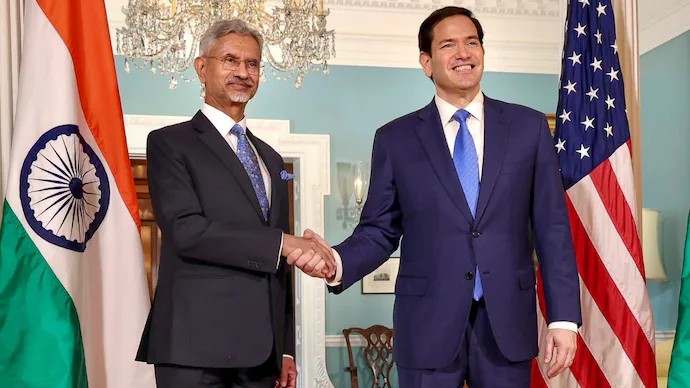
India’s Foreign Secretary Vikram Misri highlighted the need to resolve lingering uncertainties in trade negotiations with the United States. As both nations work to finalize an interim trade agreement, officials emphasized that maintaining economic stability and clear communication is essential to overcoming the natural fluctuations in the bilateral partnership.
NEW DELHI – India’s Foreign Secretary, Vikram Misri, has addressed the ongoing complexities in the economic dialogue between New Delhi and Washington, noting that recent trade negotiations have introduced a "certain amount of uncertainty" that both countries are now working to resolve.
The remarks come as India and the United States continue high-level discussions aimed at finalizing an interim trade agreement. The dialogue is viewed as a critical step in stabilizing bilateral relations that have seen significant shifts over the past year, particularly concerning tariff policies and market access.
Navigating Fluctuations in U.S.-India Relations
Addressing the nature of the diplomatic and economic partnership, Foreign Secretary Misri remarked that "leaders deal with the ups and downs in relations between nations," adding that such fluctuations are a natural part of international diplomacy.
The current diplomatic push seeks to move beyond recent friction points, which included a period where effective U.S. duties on Indian goods peaked at 50%. Following a series of negotiations, that figure has been substantially reduced, though both parties are still seeking a more permanent arrangement to provide clarity for businesses and investors.
"It was important that we move forward to some certainty," the Foreign Secretary stated, signaling a strategic intent to finalize the framework for an interim agreement that will solidify the roadmap for a broader Bilateral Trade Agreement (BTA).
Progress on the Bilateral Trade Agreement
The push for a trade deal gained renewed momentum following meetings at the G7 Summit in France, where both sides expressed optimism regarding the progress made on issues including non-tariff measures, customs facilitation, and investment promotion.
According to official Ministry of Commerce & Industry statements, the negotiations focus on creating a reciprocal and mutually beneficial framework. Indian negotiators have consistently maintained that the goal is to secure preferential market access that accounts for current global economic shifts and helps mitigate the impact of external supply chain pressures.
Why It Matters
For businesses and global investors, the finalization of this agreement serves as a bellwether for India-U.S. economic integration. Resolving trade uncertainty is expected to improve investor sentiment, potentially stabilizing equity markets and encouraging further foreign direct investment (FDI) into Indian manufacturing and technology sectors. For the general public, a successful agreement could lead to more stable supply chains and reduced volatility in the pricing of imported goods.
Key Facts at a Glance
Diplomatic Strategy: India and the U.S. are prioritizing an interim trade agreement to stabilize the broader bilateral economic framework.
Negotiation Focus: Discussions cover tariff adjustments, customs facilitation, and economic security alignment.
Official Stance: India continues to advocate for preferential market access to ensure its competitive standing.
Leadership Alignment: Both nations have reaffirmed their commitment to the process at the recent G7 summit, labeling the deal as "very close."
FAQ
What is the current status of the India-U.S. trade deal?
Negotiations are ongoing. A U.S. delegation visited New Delhi in early June 2026 to finalize details of an interim agreement, following an earlier round of talks in Washington D.C.
Why was there uncertainty?
The uncertainty stemmed from fluctuating tariff structures and regulatory investigations regarding fair trade practices, which impacted bilateral market sentiment for several months.
What are the primary goals of the agreement?
The agreement aims to lower trade barriers, simplify customs procedures, and promote investment, providing a predictable environment for both Indian and American companies.
Source: Ministry of External Affairs, Ministry of Commerce & Industry, The Hindu