The Indian government has launched a sustainable eco-trail framework targeting five major rainforests in India, including Silent Valley and Namdapha. The initiative implements strict visitor limits and plastic bans while training local communities as eco-guides, balancing increasing traveler interest with critical habitat conservation and regional climate resilience.
NEW DELHI — The Ministry of Environment, Forest and Climate Change, alongside the Ministry of Tourism, has announced a coordinated sustainable tourism framework to protect and regulate access to five primary rainforests in India. The joint initiative, finalized in June 2026, aims to counter rising threats from unstructured tourist footprints while financing localized conservation programs.
The policy shift addresses a growing influx of eco-travelers seeking areas of deep wilderness, unique biodiversity, and endemic wildlife. By designating specialized "Eco & Nature Trails"—backed by allocations from the Union Budget—the government plans to enforce community-led management models. These models will restrict total daily foot traffic and ban single-use plastics across these delicate evergreen environments.
Direct Conservation Protocols Set for 5 Ecological Zones
The new framework identifies five ecologically critical rainforests in India, distributing targeted funding across the Western Ghats, the Northeast frontier, and India's island territories.
1. Silent Valley National Park (Kerala)
Located in the Nilgiri Hills of the Western Ghats, Silent Valley represents one of the most undisturbed tropical rainforests in India. The ecosystem is a vital refuge for the endangered lion-tailed macaque, an endemic primate whose survival relies entirely on the continuous canopy of these ancient woods. Under the new directive, the Kerala Forest Department will strict-cap daily vehicle entries and expand community-managed border walks.
2. Namdapha National Park (Arunachal Pradesh)
Spanning the Eastern Himalayan biodiversity hotspot, Namdapha is globally recognized as an extensive, dense evergreen habitat. It is unique for sheltering four distinct big cat species: the Bengal tiger, Indian leopard, snow leopard, and clouded leopard. The new framework establishes dedicated low-impact trekking trails managed by indigenous community guides to minimize disruptions to these apex predators.
3. Dehing Patkai National Park (Assam)
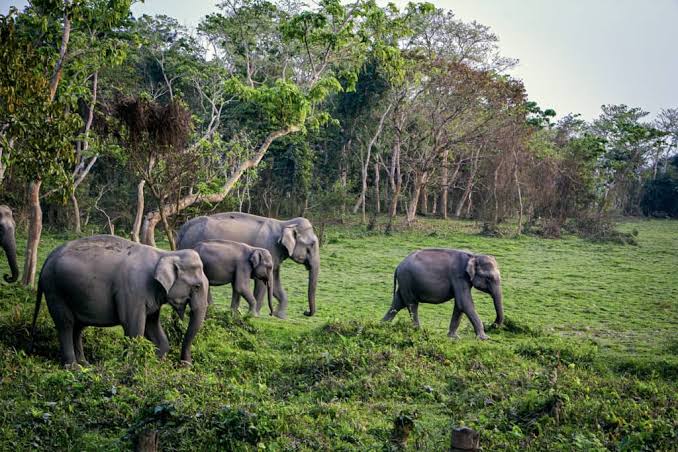
Often called the "Amazon of the East," Dehing Patkai is a lowland rainforest system stretching across the Dibrugarh and Tinsukia districts. It serves as a critical elephant corridor and supports rare canopy dwellers, including the hoolock gibbon—India's only native ape species. The government has prioritized this zone for increased anti-poaching patrols and strict buffer-zone regulations against surrounding commercial activities.
4. Great Nicobar Biosphere Reserve (Andaman and Nicobar Islands)
Situated at the southernmost tip of Indian territory, this equatorial island ecosystem hosts species found nowhere else on earth, such as the Nicobar megapode and the giant robber crab. Because of its extreme geographical isolation, the Ministry of Tourism will enforce highly restricted, research-oriented travel permits to prevent micro-climate degradation.
5. Periyar National Park and Wildlife Sanctuary (Kerala)
While widely known for its scenic lake, Periyar encompasses significant tracts of tropical evergreen forests. The reserve acts as a core watershed and habitats major herds of Asian elephants and gaurs. The updated policy utilizes Periyar’s existing community-based eco-tourism programs as the foundational operational model for the other four designated rainforest regions.
Infrastructure Reforms and Community Employment Integration
According to institutional project files from the Ministry of Environment, Forest and Climate Change, the initiative will directly integrate local forest-dependent populations into the formal tourism economy. A pilot training scheme organized in partnership with regional tourism boards will certify 10,000 local eco-guides by the end of the fiscal year, ensuring that commercial revenue directly supports nearby villages.
Financial records indicate that a portion of the project funding is allocated toward advanced digital monitoring equipment. The deployment includes automated camera traps and acoustic monitoring systems to track wildlife movements and instantly detect illegal loggers or poachers along the trail networks.
Official Sources Section
The operational directives, biodiversity census data, and territorial allocations outlined in this report are based on official policy updates from the Ministry of Tourism and statutory project tracking modules published via the central government’s environmental clearance network.
Quote Section
"Unchecked travel models pose an immediate threat to fragile evergreen topographies," stated an official representative from the National Afforestation and Eco-Development Board during the project layout. "This framework shifts our strategy from mere tourist accommodation to active ecosystem restoration, ensuring that visitors directly fund the preservation of the habitats they come to see."
Why It Matters
Tropical rainforests cover less than 10% of India's total geographical area but hold an overwhelming majority of its genetic biodiversity and act as massive carbon sinks essential for mitigating regional climate impacts. For travelers, the implementation of regulated trails provides a safe, highly educational avenue to experience these pristine landscapes. For local communities, it establishes stable, long-term conservation livelihoods that discourage illegal logging and poaching.
Key Facts at a Glance
Regulated Access: The new framework establishes strict visitor caps and online permit systems for five designated rainforests in India.
Economic Support: The plan aims to train and employ thousands of local residents as certified eco-guides and conservation wardens.
Endemic Protection: Immediate defensive measures are focused on preserving critical habitats for threatened species like the lion-tailed macaque and hoolock gibbon.
Technological Tracking: Real-time wildlife monitoring and border security will be upgraded using state-funded sensor arrays and camera traps.
FAQ Section
Why are these specific rainforests in India being targeted for regulated tourism?
These regions house some of the highest concentrations of endangered and endemic species in South Asia. Unregulated commercial travel leads to habitat fragmentation, plastic pollution, and wildlife distress, making state-enforced travel frameworks necessary.
How can a visitor obtain entry permits for these protected eco-trails?
Permits must be secured in advance through official state forest department online portals. Certain remote regions, such as the Great Nicobar Biosphere Reserve, require additional institutional security clearances.
What unique wildlife can be found in India's northeastern rainforests?
The northeastern evergreen canopies, particularly within Namdapha and Dehing Patkai, are famous for hosting rare species such as clouded leopards, hoolock gibbons, hornbills, and various exotic wild orchids.
Source: Ministry of Environment, Forest and Climate Change Portals, Press Information Bureau Delhi, India State of Forest Institutional Reports