The Trinamool Congress has plunged into a severe leadership crisis following its 2026 state election defeat. With 58 MLAs forming a rebel legislative bloc, three Rajya Sabha resignations, and ₹440 crore in party funds frozen by banks amid leadership disputes, the party faces potential fragmentation that could reshape Indian opposition politics.
KOLKATA — The All India Trinamool Congress (TMC) is facing an unprecedented institutional and organizational crisis following its defeat in the 2026 West Bengal Assembly elections. The ongoing turmoil escalated sharply over the weekend when a major banking institution executed a "debit freeze" on three primary party accounts containing approximately ₹440 crore.
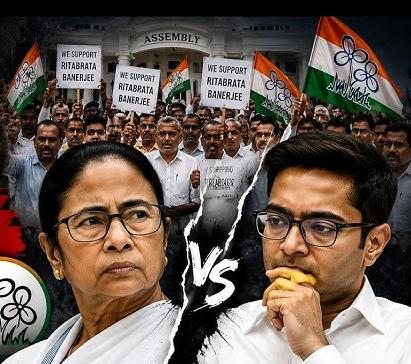
This financial freeze directly follows a widening political rebellion within both the legislative and parliamentary wings of the party. In early June, the TMC leadership took the drastic step of dissolving all organizational committees in West Bengal after a massive camp of 58 dissident legislators, led by expelled MLA Ritabrata Banerjee, revolted against the central authority of party supremo Mamata Banerjee. The internal power struggle now threatens a formal split akin to recent political realignments in Maharashtra.
₹440-Crore Bank Account Freeze Paralyses Party Operations
The financial standoff surfaced after former party treasurer Aroop Biswas formally communicated with banking authorities in Kolkata, demanding an immediate halt to all debit transactions to protect organizational funds. Biswas flagged the deepening rift within the party's legislative wings as the primary reason for requesting a status quo on the accounts.
However, the intervention sparked immediate blowback from internal loyalists. Senior MLA Kunal Ghosh publicly countered the move, stating that Biswas had been replaced as treasurer by Subhasish Chakraborty during an executive committee meeting on June 5. The dispute has left the party's leadership legally entangled, with the Bidhannagar City Police cyber crime unit actively reviewing complaints from rebel legislators regarding the authorized ownership and handling of the frozen funds.
Assembly Revolt and Resignations Fracture Legislative Base
The roots of the current crisis stem from the TMC losing power in West Bengal after 15 years in office. The electoral setback triggered open dissent against the leadership's post-election direction and campaign strategy. The friction culminated when West Bengal Assembly Speaker Rathindra Nath Bose formally recognized a bloc of 58 rebel TMC MLAs as the principal Opposition contingent in the house.
The rebel faction, which claims the support of up to 59 of the party's 80 total legislators, rejected the leadership’s official choice for Leader of the Opposition, Sobhandeb Chattopadhyay, alleging that their signatures had been forged on nomination documents. Instead, the dissident bloc threw its weight behind Ritabrata Banerjee, who was expelled from the party on May 31 alongside Sandipan Saha for alleged anti-party activities.
The rebellion has also severely impacted the party’s national parliamentary presence:
Three Rajya Sabha MPs—Manas Bhunia, Sushmita Dev, and Prakash Chik Baraik—resigned from their seats within a single week in June.
A Lok Sabha Faction of approximately 20 out of the party's 28 lower-house MPs, reportedly led by Barasat MP Kakoli Ghosh Dastidar, is exploring the formation of a separate legislative bloc.
Internal Power Struggle Challenges the High Command
The organizational collapse has exposed a severe rift between the old guard and the younger leadership structure. Senior MP Kalyan Banerjee issued a public challenge to National General Secretary Abhishek Banerjee, openly criticizing his administrative methodology and urging Mamata Banerjee to address the structural friction directly.
In a bid to control the damage and explore broader political safety nets, both Mamata Banerjee and Abhishek Banerjee have held high-profile meetings with senior Indian National Congress leaders, including Sonia Gandhi and Rahul Gandhi, in New Delhi. While the meetings fueled widespread speculation regarding a potential TMC-Congress organizational merger, senior spokespersons from both parties have firmly denied that any merger proposal is currently under institutional consideration.
Official Sources Section
The corporate actions, police complaints, and legislative shifts detailed in this report are verified by formal statements from the West Bengal Legislative Assembly Secretariat, official case entries filed with the Bidhannagar City Police Commissionerate, and regulatory organizational declarations broadcasted by the All India Trinamool Congress Communications Desk.
Quote Section
"The party remains committed to strengthening its organization and preparing it to meet future challenges with renewed vigor and purpose," stated the Trinamool Congress High Command in an official briefing regarding the dissolution of its regional panels. "A comprehensive exercise of introspection, performance review, and organizational assessment is underway at every level."
Why It Matters
The destabilization of the Trinamool Congress fundamentally alters the balance of opposition politics in India. For citizens of West Bengal, the fragmentation of the former ruling party creates governance uncertainties and shifts local municipal and panchayat control. For national political coalitions and investors, the potential splintering of a major regional force reshapes legislative voting alignments in Parliament and alters state-level policy stability.
Key Facts at a Glance
Financial Lockdown: Three principal TMC bank accounts holding ₹440 crore have faced a debit freeze amid a dispute over authorized signatories.
Mass Legislative Defection: Speaker Rathindra Nath Bose has recognized 58 dissident MLAs as a distinct legislative bloc, challenging Mamata Banerjee's floor authority.
Parliamentary Attrition: Three Rajya Sabha members resigned their seats in June, while a significant segment of Lok Sabha MPs are reportedly negotiating separate alignments.
Structural Dissolution: The TMC high command has dissolved all parent and frontal organizational committees across West Bengal to initiate a forced structural review.
FAQ Section
What triggered the massive internal crisis within the Trinamool Congress?
The primary catalyst was the party's defeat in the 2026 West Bengal Assembly elections after 15 years in power. The loss sparked widespread internal disputes over leadership accountability, campaign failures, and subsequent organizational appointments.
Who is leading the rebel faction inside the West Bengal Assembly?
The dissident faction is primarily aligned behind expelled legislator Ritabrata Banerjee. The bloc claims the active backing of nearly 60 legislators, which crosses the two-thirds threshold required to bypass standard anti-defection penalties.
Is the Trinamool Congress planning to merge with the Congress party?
While top leadership figures from both parties have met recently in New Delhi to discuss opposition strategies, senior leaders from both the TMC and the Indian National Congress have explicitly denied all rumors regarding a formal political merger.
Source: West Bengal Legislative Assembly Portal, Bidhannagar City Police Cyber Unit Logs, All India Trinamool Congress Briefings