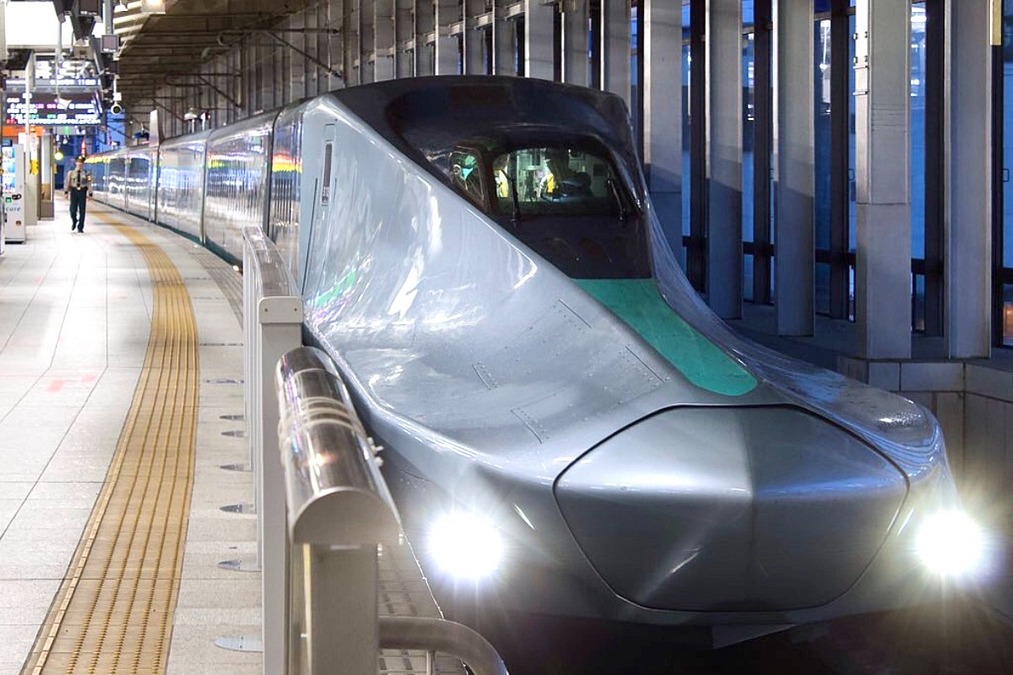
India and Japan are on the brink of finalizing a landmark agreement to jointly manufacture and deploy the next-generation E10 Shinkansen bullet trains, marking a transformative moment in India’s high-speed rail ambitions. The deal, expected to be announced during Prime Minister Narendra Mod...
India and Japan are on the brink of finalizing a landmark agreement to jointly manufacture and deploy the next-generation E10 Shinkansen bullet trains, marking a transformative moment in India’s high-speed rail ambitions. The deal, expected to be announced during Prime Minister Narendra Modi’s visit to Tokyo, will position India as a co-launch partner for the world’s fastest and safest train system, capable of reaching speeds up to 400 kilometers per hour.
This strategic partnership not only upgrades India’s existing Mumbai-Ahmedabad bullet train project but also signals a new era of transport and mobility cooperation between the two nations. The E10 Shinkansen, derived from Japan’s ALFA-X experimental platform, will be customized for Indian conditions and jointly launched in both countries by 2030.
Key Developments From The India-Japan Summit
- India and Japan have reached an in-principle agreement to manufacture E10 Shinkansen trains in India
- The E10 model is a significant upgrade from the previously planned E5 series, offering speeds up to 400 kmph
- The announcement is expected during PM Modi’s meeting with Japanese Prime Minister Shigeru Ishiba
- Both leaders will visit the Tohoku Shinkansen plant in Sendai to observe coach production
- The E10 launch will coincide in India and Japan, reinforcing bilateral technological cooperation
Why Japan Chose India As A Co-Launch Partner
Japan’s decision to co-launch the E10 Shinkansen with India stems from several strategic factors. India’s massive infrastructure push, cost-effective manufacturing capabilities, and strong diplomatic ties with Japan have made it an ideal partner for this high-stakes venture.
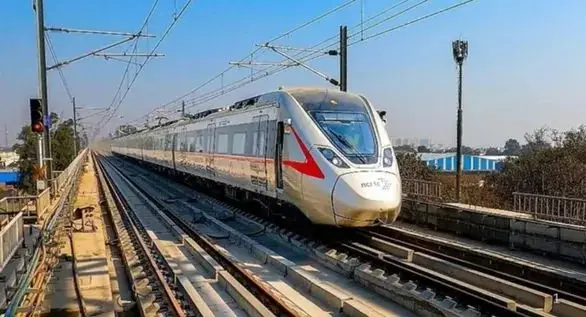
India’s ongoing Mumbai-Ahmedabad bullet train corridor, spanning 508 kilometers, has already benefited from Japanese technology and financing. With construction progressing steadily and the first 50-kilometer stretch in Gujarat expected to be operational by 2027, the timing aligns perfectly with the E10 rollout.
Strategic Advantages Of The E10 Shinkansen
1. Speed and safety: The E10 is designed to operate at 400 kmph and includes earthquake-resistant features and advanced safety systems
2. Technology transfer: India will gain access to cutting-edge rail engineering and manufacturing processes
3. Economic impact: The project is expected to generate thousands of jobs and boost ancillary industries
4. Export potential: India may eventually become a hub for exporting Shinkansen components to other countries
5. Infrastructure synergy: The E10 will integrate with India’s broader high-speed rail network, potentially extending beyond the Mumbai-Ahmedabad route
A Broader Mobility And Technology Partnership
The bullet train deal is part of a wider India-Japan transport and technology partnership. Discussions at the summit also include semiconductor manufacturing, artificial intelligence, and clean energy. Japan plans to invest heavily in these sectors over the next decade, with Indian talent and firms playing a key role in strengthening global supply chains.
Both countries are expected to launch joint initiatives in AI development, telecom innovation, and space exploration. Defence cooperation is also on the agenda, with upgrades to the 2008 security agreement and collaboration on maritime and cybersecurity technologies.
Economic And Diplomatic Significance
The E10 Shinkansen deal echoes the scale and strategic importance of the Maruti-Suzuki joint venture, which transformed India’s automotive landscape. This time, the focus is on revolutionizing public transport and positioning India as a global player in high-speed rail.
Japan’s commitment to safety and precision engineering, combined with India’s manufacturing scale and policy support, creates a powerful synergy. The deal also reinforces India’s role in the Indo-Pacific framework and strengthens its position as a preferred partner in infrastructure diplomacy.
Conclusion: A High-Speed Leap Into The Future
The upcoming E10 Shinkansen partnership between India and Japan is more than a transport upgrade—it is a symbol of shared ambition, technological trust, and strategic alignment. As both nations prepare to co-launch the world’s fastest train, the collaboration promises to redefine mobility, boost economic growth, and set new benchmarks in international infrastructure cooperation.
Sources: Financial Express, Business Standard, Hindustan Times, News18, MSN India, Economic Times