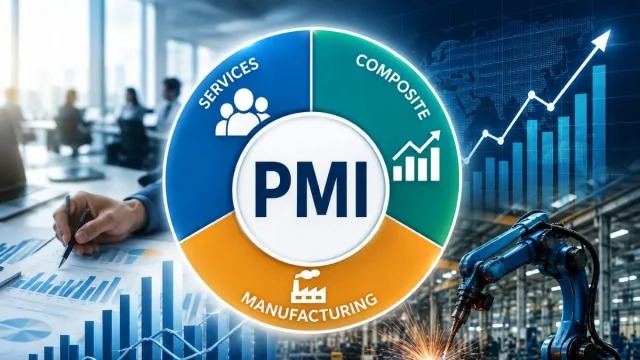
India's final HSBC Services PMI for August settled at 54.1, improving from July's 53.3 but dipping below the flash estimate of 54.5. Driven by strong export orders and accelerated hiring, the sector maintains steady expansion above the 50-point growth threshold.
India's service sector growth expanded moderately in August, with the final HSBC India Services PMI settling at 54.1, coming in slightly below earlier flash estimates.
India’s private service sector sustained its expansion through the middle of the third quarter, though growth moderated relative to preliminary estimates. According to survey data compiled by S&P Global and published by HSBC, the final HSBC India Services Business Activity Index registered at 54.1 in August. While tracking lower than the flash estimate of 54.5, the latest figure marks an improvement from July’s reading of 53.3, maintaining an unbroken sequence of growth above the critical 50-point threshold that separates expansion from contraction.
Output Growth and New Business Inflows
The final August data underscored steady domestic demand, though new business orders expanded at a softer trajectory compared to historical averages. Service providers pointed to competitive pressures and selective client spending, which curbed the velocity of incoming new work.
Conversely, international export sales remained a primary growth driver. Indian service firms reported stronger order inflows from key global markets across the Middle East, Europe, and North America. This sustained external demand helped offset domestic moderation, supporting backlogs and encouraging firms to expand their operational capacities.
Employment Trends and Cost Pressures
Job creation within the service economy accelerated to hit a robust multi-month high as companies onboarded additional staff to manage workloads and support ongoing expansion plans. On the pricing front, input costs increased due to higher outlays for technology, energy, and human resources. To protect operating margins, service providers continued passing these elevated expenses onto consumers through higher output charges, reflecting sustained corporate pricing power.
Official Sources Section
Data pertaining to the Purchasing Managers' Index, sub-indices, and economic commentary is based on official releases published by S&P Global and HSBC Holdings plc. Additional macro-financial validation is sourced via market reports tracked by the Reserve Bank of India.
Quote Section
"According to officials and survey compilers at S&P Global, the services sector continues to anchor broader economic resilience in India, supported by solid international sales and steady employment generation despite localized demand friction."
Why It Matters
As the services sector accounts for a substantial share of India's gross domestic product, the monthly PMI trajectory serves as a vital barometer for economic momentum. For investors and policymakers, an expansion reading of 54.1 indicates that domestic economic activity remains resilient, supporting employment growth and consumer spending despite global economic headwinds.
Key Facts at a Glance
Headline Index: Final August HSBC India Services PMI printed at 54.1 (compared to the flash estimate of 54.5 and July's 53.3).
Expansion Threshold: Any reading above 50 indicates ongoing growth in sector business activity.
Employment Impact: Job creation accelerated notably, reaching a multi-month high.
External Demand: Export orders from international markets remained a key catalyst for business growth.
Frequently Asked Questions
What does a PMI reading of 54.1 signify?
A score of 54.1 indicates that the service sector is continuing to expand robustly, as any figure above the 50 mark represents growth.
Why is the final figure lower than the flash estimate?
The flash estimate of 54.5 was based on early survey responses, whereas the final index incorporates comprehensive data collected across the entire respondent panel.
How does the PMI affect financial markets?
Investors and analysts monitor the PMI closely as a real-time indicator of economic health, influencing monetary policy expectations and equity market sentiment.
What drove the growth in August?
Growth was primarily supported by steady domestic demand and robust international export orders, alongside rising employment levels.
Source: S&P Global, HSBC Holdings plc, Reserve Bank of India