Ahead of the NEET-UG 2026 re-examination on June 21, the National Testing Agency conducted a successful nationwide mock drill to verify updated security protocols. The security measures include a three-tier protection framework, paramilitary escorts, and biometric identification to ensure a completely fair process for over 22.79 lakh candidates.
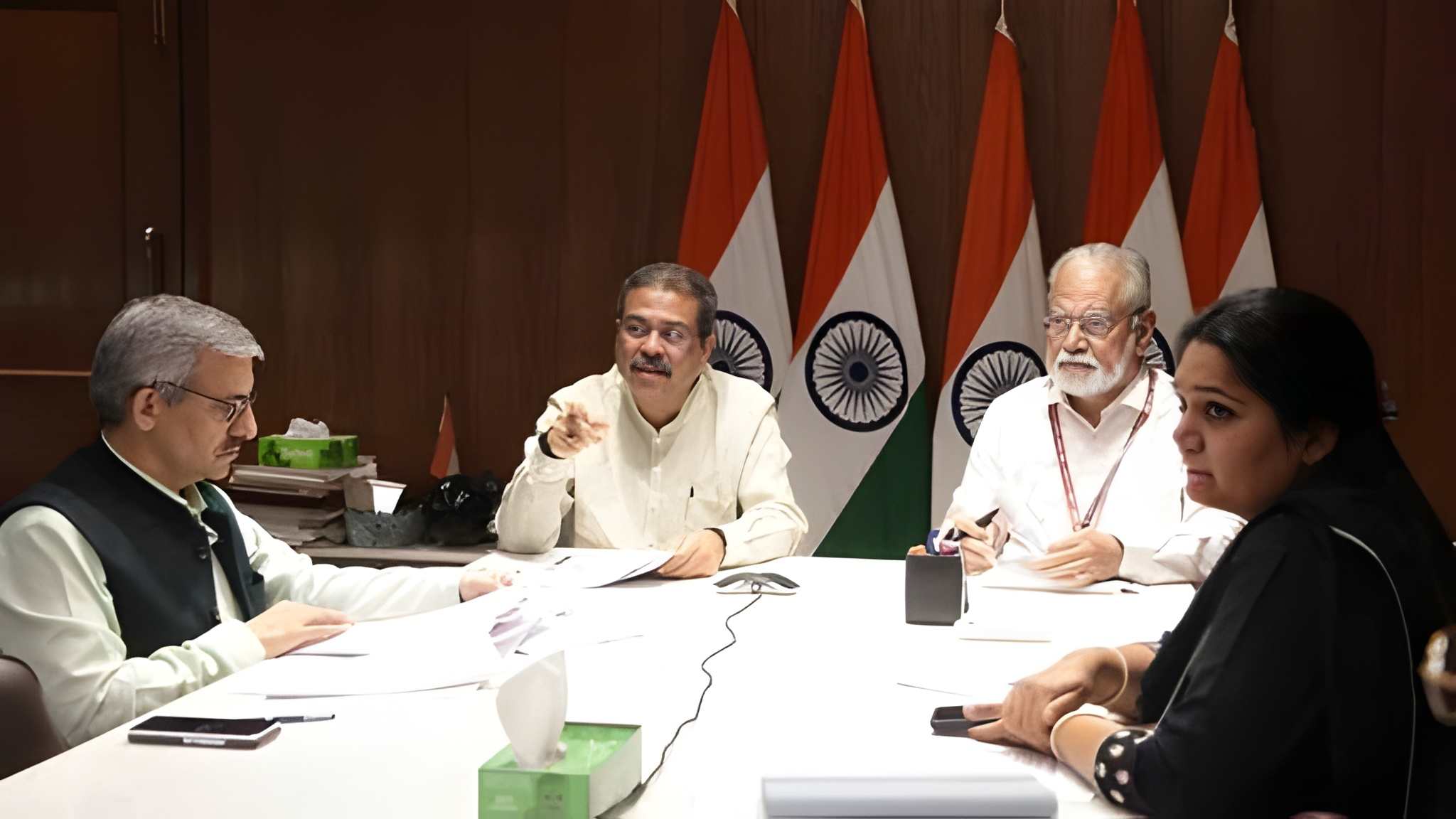
NEW DELHI — The National Testing Agency (NTA), in coordination with state administrations and central security agencies, executed a comprehensive, nationwide mock drill on Saturday, June 20, 2026. The dry run was designed to evaluate administrative readiness and iron out logistical workflows ahead of the National Eligibility cum Entrance Test Undergraduate (NEET-UG) re-examination.
The high-stakes medical entrance test, which is scheduled for Sunday, June 21, 2026, will see more than 22.79 lakh candidates appear across 551 domestic cities and 14 overseas testing locations. Following the cancellation of the initial May 3 exam due to widespread irregularities and suspected paper leaks, central authorities have instituted a massive overhaul of the test's operational protocols. Today's nationwide mock drill focused on verifying real-time tracking systems, double-layered biometric screening, and multi-agency communication networks to prevent malpractices.
Three-Tier Security Framework Activated Across Centres
According to operational blueprints released by the NTA, all designated examination venues have been formally handed over to security forces. On Sunday, these venues will function under a strict, three-tier security architecture. Central paramilitary forces have been given direct custody of confidential test assets, including sealed question booklets and OMR answer sheets, to ensure an uncompromised chain of custody.
The nationwide mock drill systematically tested the synchronization of these forces with local police units. In states like Assam, regional administrations confirmed that military and police escorts will accompany GPS-tracked vehicles transporting testing material. Furthermore, local officials have been instructed to enforce prohibitory orders under Section 144 within a 100-meter perimeter of all venues, preventing unauthorized public assembly on the day of the test.
Advanced Technological Defenses Against Malpractice
To eliminate electronic cheating and proxy candidate scams, the NTA is deploying advanced surveillance technologies across all 5,000+ testing facilities. Saturday's drill served as a live testing phase for continuous CCTV monitoring systems linked directly to a centralized control room in New Delhi.
State police departments have also finalized localized protocols. In Gujarat, Director General of Police GS Malik issued directives to monitor commercial photocopying shops near exam halls. Meanwhile, in states like Haryana, intelligence wings are inspecting nearby hotels and coaching institutes identified as highly sensitive zones.
Regulatory Safeguards Extended to Medical Colleges
The administrative tightening extends past the testing halls into professional medical institutions. In a public notice, the National Medical Commission (NMC) instructed all medical colleges nationwide to deny student leaves on June 20 and June 21, except under verified emergencies.
This unusual preventive mandate aims to deter senior medical students from participating as impersonators or proxies—an issue that compromised previous national tests. Deans and institutional heads have been ordered to maintain strict attendance registries over the 48-hour examination window.
Official Sources Section
Statements published by the National Testing Agency (NTA) and the Ministry of Education confirm that the re-examination will maintain a standard pen-and-paper format, running from 2:00 PM to 5:15 PM IST. The NTA has advised candidates to rely exclusively on verified communications distributed via the official portal or through authorized text messages carrying the designated sender ID "NICPEP".
Quote Section
"To ensure a fair and transparent examination, the NTA has put in place a multi-layered security framework, including end-to-end secure handling of confidential materials under sealed protocols," the National Testing Agency stated in an official safety advisory.
Why It Matters
The absolute integrity of the NEET-UG examination remains paramount for India’s medical education sector, determining admissions for all undergraduate MBBS and BDS seats. For millions of students and families, these exhaustive safety overhauls represent a critical step toward restoring institutional trust, eliminating systemic leaks, and ensuring an entirely level playing field for honest aspirants.
Key Facts at a Glance
Scale of Operation: Over 22.79 lakh candidates are registered to take the test across 551 Indian cities and 14 global testing hubs.
The Dry Run: A nationwide mock drill ran from 9:00 AM until late evening on Saturday to verify agency coordination, network jammers, and biometric validation systems.
Strict Logistics: Paramilitary forces are managing the physical custody of examination papers, which are moving via GPS-tracked vehicles under armed escort.
Institutional Lockdowns: The NMC has temporarily frozen student leaves at all domestic medical colleges to mitigate proxy-candidate risks.
Frequently Asked Questions (FAQ)
Q1: Why is the NEET-UG 2026 re-examination being conducted?
The re-examination was ordered after the credibility of the initial test, held on May 3, was compromised due to localized paper leaks and administrative discrepancies.
Q2: What items are strictly prohibited inside the testing hall?
Candidates cannot bring electronic items, including mobile phones, smartwatches, Bluetooth headphones, health bands, calculators, or metallic accessories. Only specific items detailed on the official admit card are allowed.
Q3: How will candidate identification be handled at the gates?
Every student will face two levels of physical frisking alongside mandatory Aadhaar-linked biometric scans and live facial matching to ensure identity verification.
Q4: What is the marking scheme for the upcoming test?
The test features 180 questions totaling 720 marks across Physics, Chemistry, and Biology. Correct answers earn four marks, while incorrect answers result in a one-mark deduction.