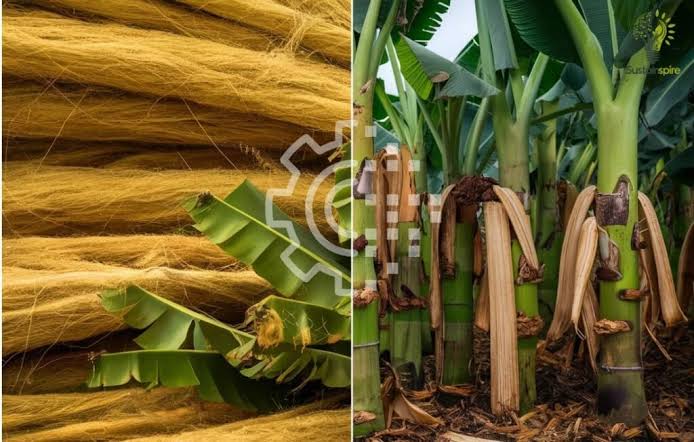







Banana trunks, once discarded as agricultural waste, are now being transformed into raw materials for textiles, paper, and bio-based composites. Through mechanical fiber extraction and controlled drying, industries are accelerating the shift toward sustainable production, creating eco-friendly alternatives that reduce waste and open new economic opportunities.
A quiet revolution is underway in the agricultural and industrial sectors. The tons of banana pseudostems left behind after harvesting are being repurposed into valuable raw materials, marking a significant step toward circular economy practices. Factories across regions are adopting mechanical extraction methods to process these trunks into fibers suitable for clothing, notebooks, packaging trays, and even bio-composites.
This innovation not only addresses the challenge of agricultural waste but also provides a renewable resource for industries seeking sustainable alternatives to conventional raw materials. The initiative is gaining traction in Brazil and other banana-producing regions, with potential ripple effects across global supply chains.
Key Highlights
-
Banana pseudostems, previously considered waste, are now standardized into industrial raw material for textiles and paper
-
Mechanical extraction and controlled drying processes are enabling large-scale industrialization
-
Applications range from clothing and notebooks to supermarket fruit trays and bio-based composites
-
Brazil is emerging as a hub for this transformation, with implications for other banana-growing nations such as Guyana
-
The initiative supports circular economy goals by reducing waste and creating eco-friendly alternatives to synthetic fibers and plastics
-
Potential economic benefits include new revenue streams for farmers and sustainable growth opportunities for local industries
This development underscores how innovation in waste management can reshape industries, offering both environmental and economic advantages. By turning banana trunks into usable fibers, the agricultural sector is not only reducing its ecological footprint but also contributing to a more sustainable future for manufacturing and consumer goods.
Sources: Energy News by Adrian Villellas, Impactful Ninja Circular Economy News