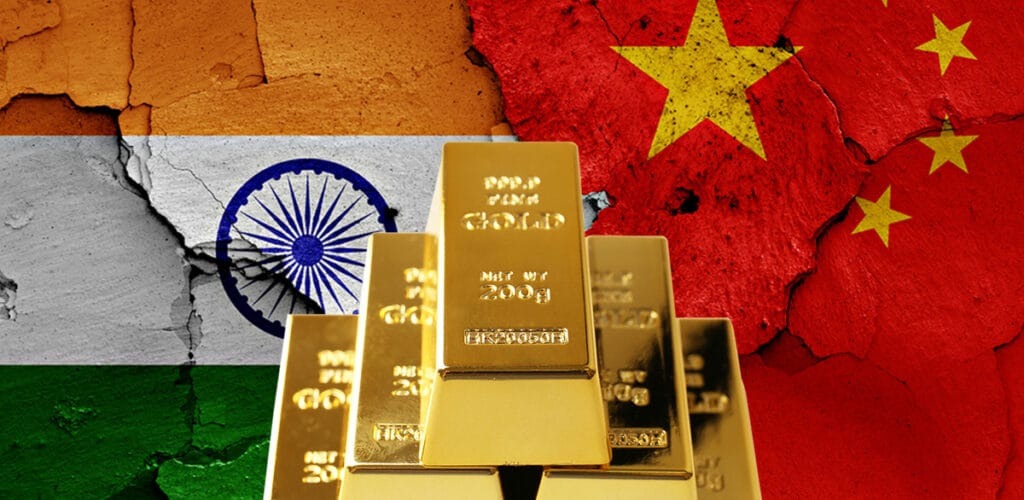

China and India remain the unrivalled engines of global gold jewellery demand, propelled by profound cultural traditions, auspicious festivals, and enduring wedding customs that transcend economic cycles. Their combined influence accounts for over half of worldwide consumption, blending heritage with modern investment appeal. This newsletter delves into their pivotal roles amid 2025's record prices.
Cultural Foundations
In India, gold embodies shubh (auspiciousness) and is mandatory for weddings, where brides receive stridhan, and festivals like Diwali and Akshaya Tritiya spark massive buying. China's traditions centre on gold as a wedding gift and Lunar New Year symbol of prosperity, with dragon motifs adorning intricate pieces.
Market Resilience
Despite 2025 price surges averaging $3,400 per ounce, volumes dipped but value hit records—India's jewellery demand fell 24% to around 430 tonnes, while China's balanced jewellery with surging bar investments. Festivals drove Q4 rebounds, with rural India and urban China sustaining momentum.
Global Ripple Effect
Their demand sets international benchmarks, countering Western weakness and stabilising prices through cultural inelasticity.
Key Highlights
-
Jewellery comprises 60%+ of India's total gold use, wedding-driven
-
China blends 50% jewellery with rising investment bars and coins
-
Both nations claim 52% global share despite high prices
-
Rural traditions and urban gifting ensure year-round stability
Sources: World Gold Council, Reuters, Economic Times