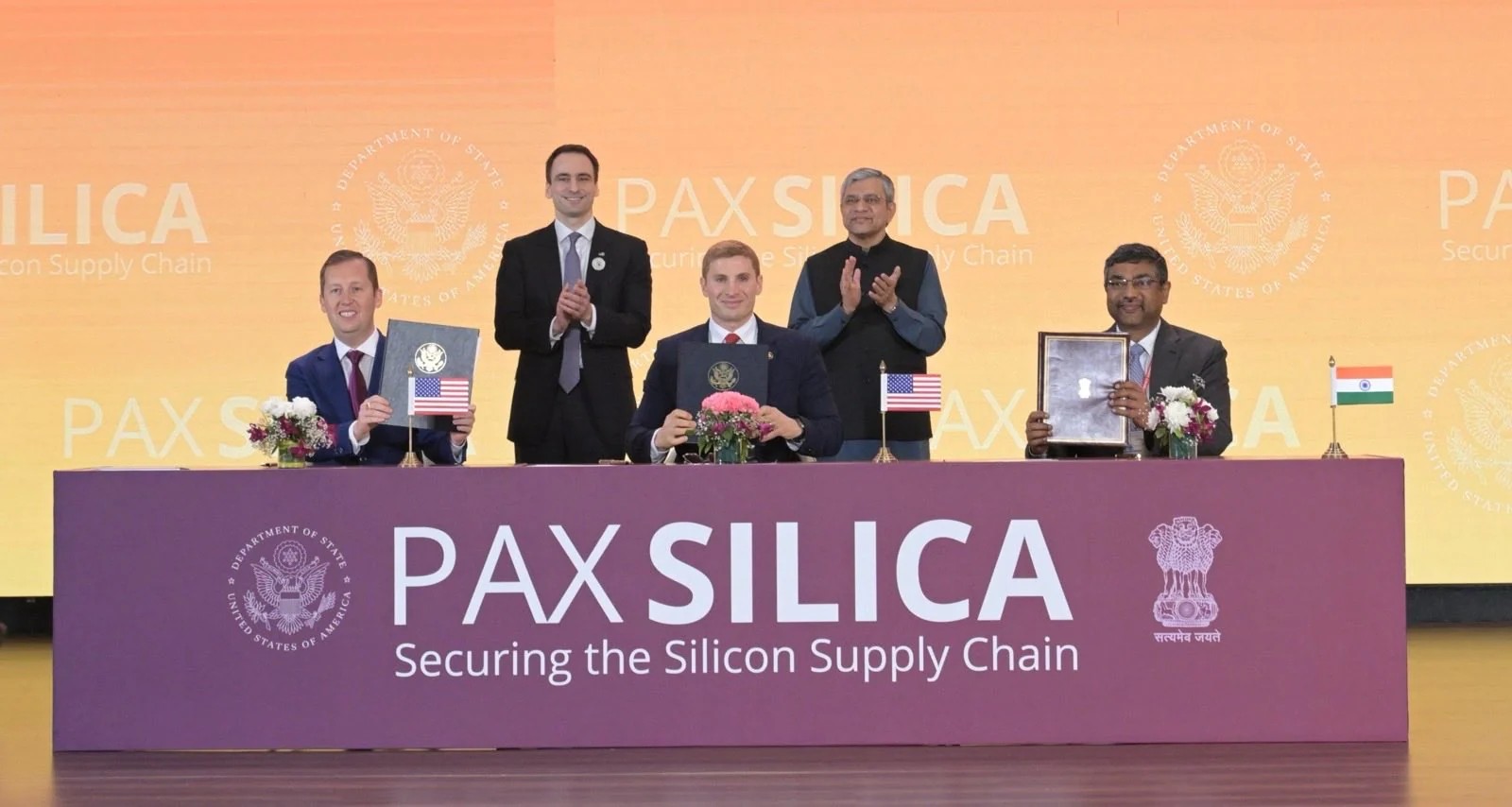








India joined the Pax Silica alliance on February 20, 2026, to strengthen semiconductor and AI supply chains. A day later, it signed a rare earth pact with Brazil, the world’s second-largest reserve holder. This strategic move enhances India’s resilience, diversifies supply sources, and challenges China’s near-monopoly in mineral processing.
India’s back-to-back announcements—joining Pax Silica and sealing a rare earth deal with Brazil—signal a bold recalibration of its global economic and technological strategy. The timing underscores New Delhi’s intent to secure critical minerals essential for AI, semiconductors, and renewable energy infrastructure.
India already holds the world’s third-largest rare earth reserves at 6.9 million tonnes. Partnering with Brazil, which boasts 21 million tonnes, strengthens India’s supply chain resilience while reducing dependence on China, which currently controls 90 percent of global processing capacity.
Key Highlights
-
India formally joined Pax Silica, a US-led alliance focused on building secure and innovation-driven supply chains for critical minerals and AI.
-
The Brazil pact, signed on February 21, 2026, emphasizes exploration, technology transfer, R&D collaboration, and investment in rare earth processing.
-
Brazil offers India a strategic alternative to China, ensuring diversified access to critical minerals for EV motors, wind turbines, solar panels, and semiconductors.
-
Both nations aim to move beyond raw material supply, focusing instead on developing processing capabilities to capture greater value in the global market.
-
The dual moves reflect India’s “strategic resilience” push, aligning with its semiconductor ambitions and green energy transition goals.
Sources: Mint, Bloomberg, Times of India