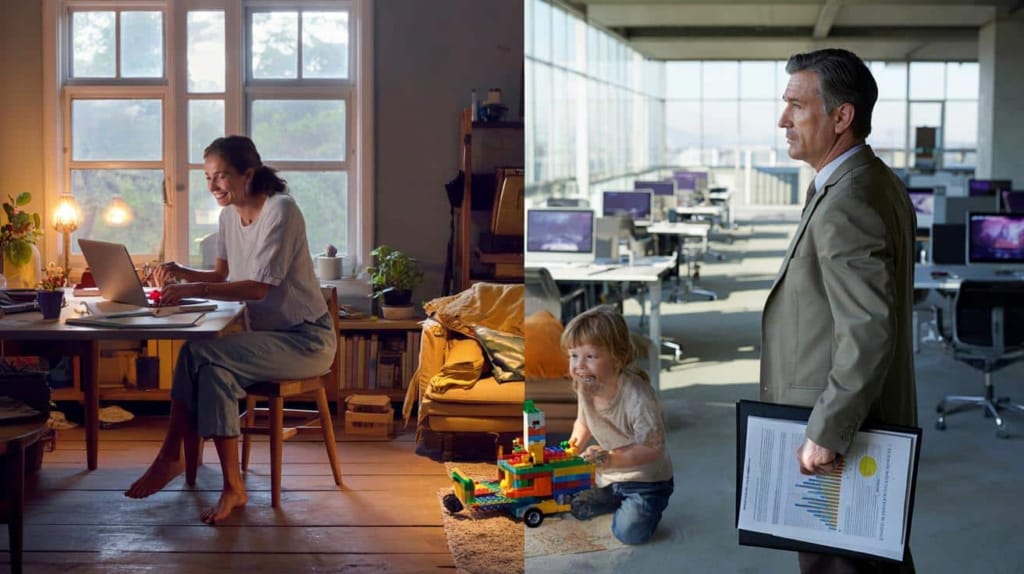





After four years of comprehensive research, scientists confirm that working from home significantly boosts happiness, reduces stress, and maintains productivity. The findings highlight that remote work is not just a temporary convenience but a long-term lifestyle shift that enhances well-being, sleep quality, and work-life balance across industries.
The global shift to remote work during the pandemic was initially seen as a temporary fix. However, four years of data now provide compelling evidence that working from home has transformed professional and personal lives for the better. Researchers from the University of South Australia and other institutions have concluded that remote work is a sustainable model that improves mental health, productivity, and overall satisfaction.
Key Highlights
-
More sleep and reduced stress levels are consistently reported by remote workers, with nearly 80% acknowledging improved well-being compared to traditional office routines.
-
Commute-free schedules save valuable time, allowing professionals to invest in family, fitness, and personal growth.
-
Productivity levels remain stable, dispelling myths that remote work reduces efficiency.
-
Flexibility in managing work hours contributes to healthier lifestyles and better mental resilience.
-
The psychological benefits extend beyond convenience, with studies showing deeper cognitive and emotional improvements when individuals control their work environment.
-
Remote work is increasingly seen as a permanent fixture in modern employment, reshaping corporate policies and employee expectations worldwide.
Conclusion
The research underscores that remote work is not a passing trend but a fundamental shift in how people live and work. By eliminating commutes, reducing stress, and fostering autonomy, working from home has proven to be a catalyst for happier, healthier, and more productive lives. As organizations adapt, the remote work revolution continues to redefine the future of employment.
Sources: Glass Almanac, LinkedIn, Health Academy