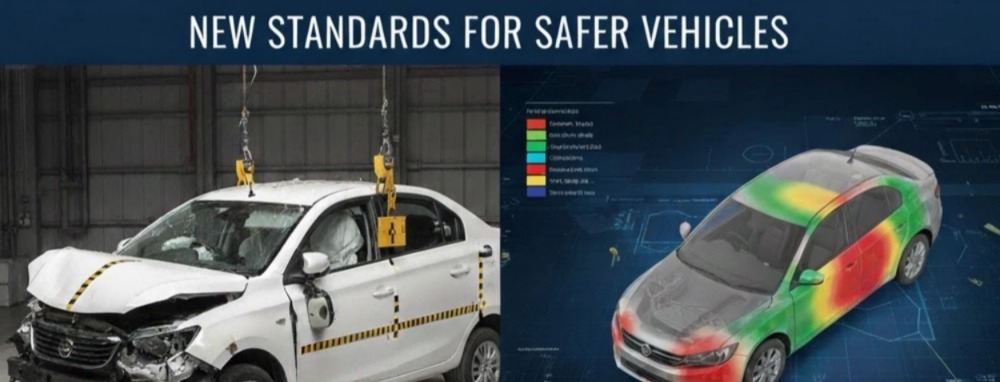

India is reinforcing its automobile testing ecosystem by focusing on four critical pillars-crashworthiness, crash avoidance, emissions compliance, and advanced safety technologies. These measures aim to align Indian vehicles with global standards, improve consumer safety, and enhance the country’s reputation in the international automotive market.
Crashworthiness And Safety
India is expanding crash test facilities to ensure vehicles meet stringent safety benchmarks. Frontal, side, and rollover tests are being standardized to improve passenger protection and reduce fatalities.
Crash Avoidance Technologies
The government is encouraging automakers to integrate advanced driver-assistance systems (ADAS), including lane departure warnings, automatic emergency braking, and collision mitigation features. These technologies are expected to reduce accidents and improve road safety.
Emissions And Compliance
India continues to strengthen its Bharat Stage (BS) emission norms, aligning them with global standards. Testing facilities are being upgraded to monitor real-world emissions, ensuring compliance and reducing environmental impact.
Advanced Innovations
Focus is shifting toward electric vehicle (EV) safety, battery testing, and autonomous driving technologies. India aims to position itself as a hub for innovation while ensuring consumer trust in new-age mobility solutions.
Key Highlights
-
Crashworthiness tests expanded for passenger safety
-
ADAS technologies promoted for accident prevention
-
Emission norms aligned with global standards
-
EV and battery safety testing prioritized
-
India aims to boost global automotive credibility
Conclusion
By strengthening the four pillars of car testing, India is building a robust framework for safer, cleaner, and smarter vehicles. These initiatives not only protect consumers but also enhance India’s competitiveness in the global automotive industry.
Sources: RushLane, IIHS-HLDI, Wikipedia