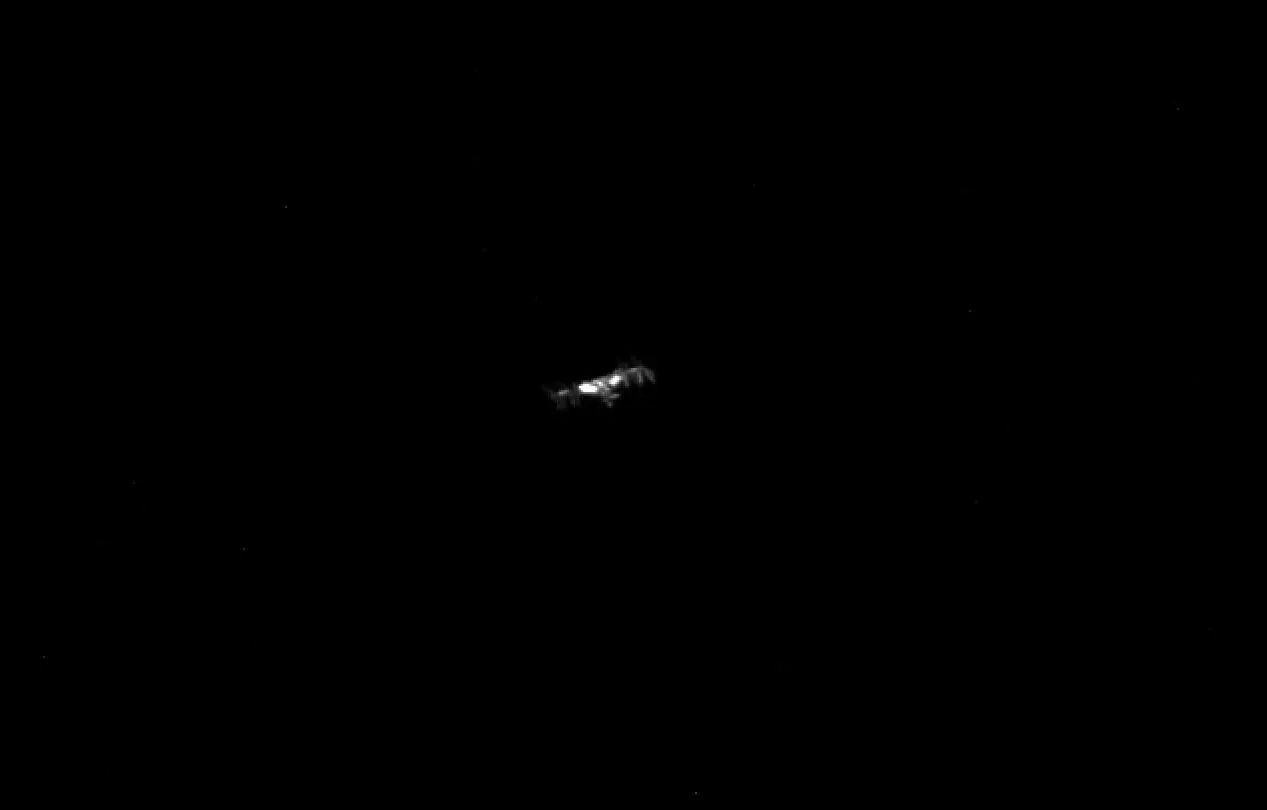








India achieved a major milestone as Azista Space’s Azista First Runner (AFR) satellite successfully captured high-resolution images of the International Space Station (ISS) from orbit. This marks India’s entry into non-Earth imaging, showcasing advanced tracking and surveillance capabilities with potential applications in space domain awareness, security, and global monitoring.
Earlier this month, Ahmedabad-based private space firm Azista Space announced that its AFR satellite, launched in 2023, had successfully imaged the ISS from distances of 250–300 km. The satellite tracked the ISS under sunlit conditions and captured 15 distinct frames across two separate attempts, both achieving complete success.
This achievement is being hailed as a technical milestone because photographing fast-moving orbital objects like the ISS requires precise tracking, advanced sensors, and stable imaging systems. Experts note that such capabilities are transferable to space surveillance, monitoring satellites, and defense-related applications, strengthening India’s role in global space security.
The milestone also highlights the growing role of India’s private space sector, with Azista Space becoming one of the few operators worldwide to demonstrate non-Earth imaging—a cutting-edge field in space technology.
Major Takeaways
-
Azista Space’s AFR satellite captured ISS images from 250–300 km orbit
-
First Indian private-sector demonstration of non-Earth imaging capability
-
Achieved 15 successful frames across two independent imaging attempts
-
Imaging orbital objects requires advanced tracking and sensor precision
-
Potential applications in space domain awareness and security monitoring
-
Marks India’s entry into global non-Earth imaging arena
Conclusion
The successful imaging of the ISS by Azista Space’s AFR satellite underscores India’s growing technological prowess in space surveillance. Beyond its symbolic value, the milestone strengthens India’s strategic capabilities in monitoring orbital assets, positioning the country as a serious player in the emerging field of space domain awareness.
Sources: The Indian Express, India TV, Orbital Today