
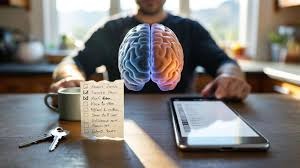
Neuroscientific research reveals that handwriting lists activates richer brain connectivity and memory regions compared to typing on digital devices. Handwriting boosts retention through tactile feedback and spatial cues, while digital input often leads to shallower processing. This analog advantage persists across tasks like to-do lists and note-taking.
Brain Activation Differences
Studies using fMRI scans show handwriting triggers widespread activity in motor, sensory, and cognitive areas, including the hippocampus for memory and precuneus for visualization. Typing, by contrast, confines activation to narrower zones, resembling mere transcription without deep encoding. Paper's texture and irregular strokes provide unique spatial details that digital screens lack, enhancing recall by 25% in controlled tests.
Memory and Learning Impact
Handwritten lists promote conceptual understanding as writers summarize and rephrase, slowing input to aid comprehension. Digital lists enable verbatim copying at higher speeds, but this reduces long-term retention. Norwegian and Japanese studies confirm paper users outperform on recall tests, with stronger neural links forming during encoding and retrieval phases.
Practical Applications
Professionals and students benefit from hybrid approaches: handwrite drafts for ideation, then digitize for sharing. Personalizing digital notes with drawings or highlights mimics analog benefits. As screens dominate, reviving handwriting counters cognitive overload in fast-paced environments.
Key Highlights
-
Handwriting activates hippocampus and language areas more intensely than typing
-
Paper provides tactile, spatial cues absent in uniform digital interfaces
-
25% faster task completion on paper, plus superior memory retention
-
Deeper processing from handwriting's slower pace fosters comprehension
-
Ideal for lists, brainstorming, and learning in hybrid workflows
Sources: Frontiers in Psychology, University of Tokyo, Scientific American