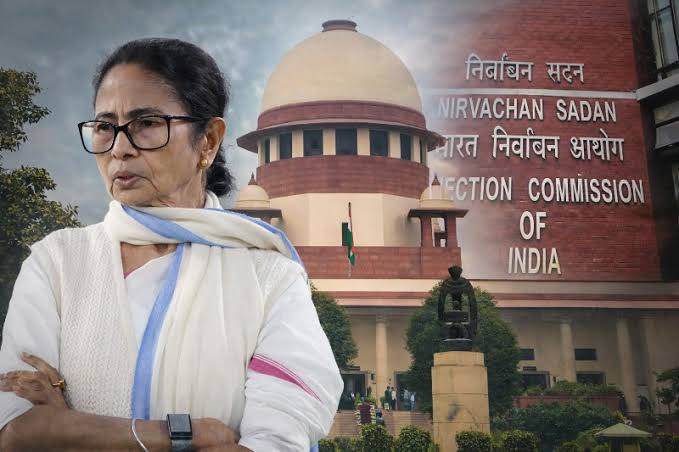





The Supreme Court has taken an unprecedented step by directing the Calcutta High Court to appoint serving and former additional district judges to oversee West Bengal's Special Intensive Revision (SIR) of electoral rolls, addressing a trust deficit between the state government and Election Commission of India (ECI). This intervention ensures fair voter list verification amid ongoing disputes, with final lists set for release on February 28, 2026.
Background on Bengal SIR Dispute
The Supreme Court intervened in the ongoing Special Intensive Revision process in West Bengal, triggered by allegations and counter-allegations between the Mamata Banerjee-led state government and the ECI. A bench led by Chief Justice Surya Kant highlighted an unfortunate blame game over the deployment of sufficient Group B officers as Electoral Registration Officers (EROs). The state objected to ECI's use of micro-observers, prompting the court to deem judicial oversight essential for impartial adjudication of voter claims and discrepancies.
This real-time development, reported on February 19-20, 2026, underscores efforts to maintain electoral integrity ahead of future polls in the state.
Key Developments from Hearing
-
Court flags trust gap between state and ECI as primary concern for SIR completion.
-
Judicial officers in rank of additional district judges to handle pending claims on logical discrepancies, assisted by micro-observers and state-deputed staff.
-
Calcutta High Court Chief Justice to select officers and arrange interim court transfers to avoid case backlogs.
-
District collectors and SPs directed to provide full logistical support for smooth operations.
-
Final voter lists for completed areas to publish on February 28; supplementary lists allowed post-deadline.
-
Bengal DGP to submit affidavit on threats to SIR officers.
Implications for Electoral Process
This extraordinary order minimizes bias in voter inclusion or exclusion decisions, boosting transparency in West Bengal's voter rolls update. It sets a precedent for judicial involvement in poll preparations during institutional conflicts, potentially influencing similar processes nationwide. Stakeholders anticipate faster resolution of over 35 lakh pending claims, ensuring robust democracy ahead of elections.
Sources: India Today, LiveLaw, NDTV, Times of India.