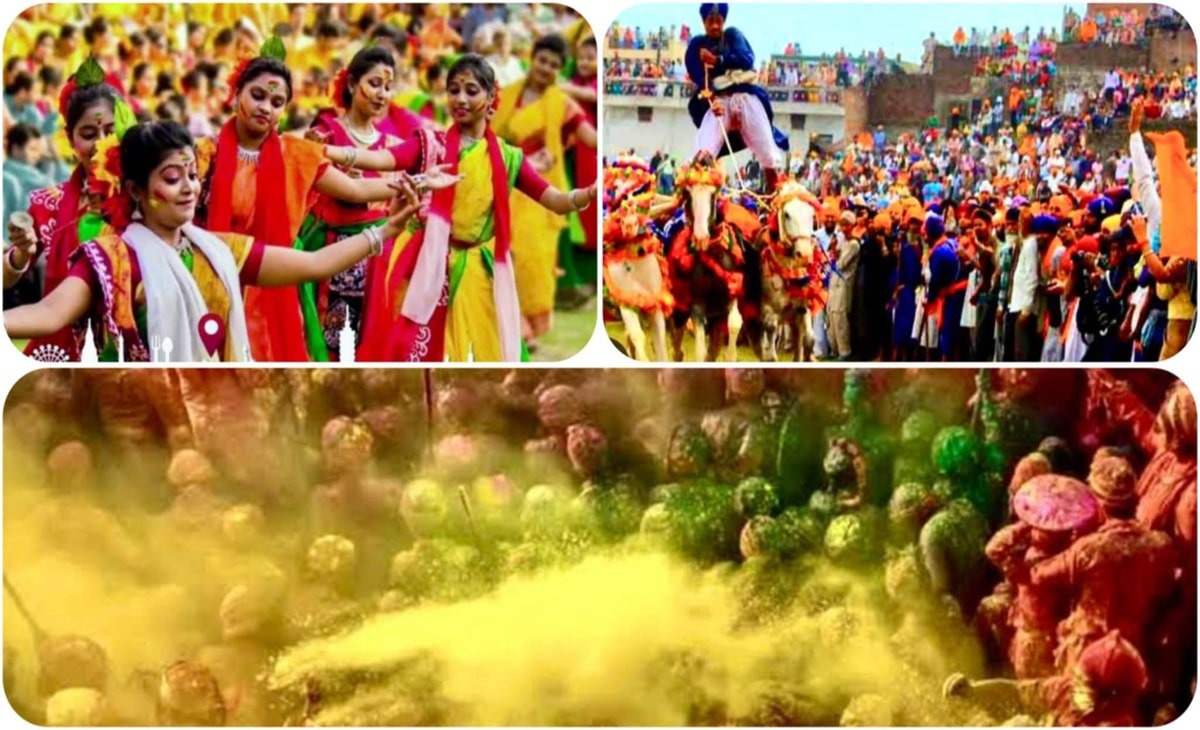






Holi, the festival of colors, is celebrated in diverse ways across India. From the playful Lathmar Holi of Barsana to the fragrant Phoolon Ki Holi of Vrindavan, each region adds its own cultural flavor. These traditions blend mythology, devotion, and joy, making Holi one of India’s most vibrant festivals.
Holi, celebrated on March 4, 2026, is more than just colors it is a festival of vibrancy, prosperity, and tradition. Across India, communities mark the occasion with unique rituals that reflect local culture and mythology.
In Barsana, Uttar Pradesh, the famous Lathmar Holi sees women playfully hitting men with sticks, symbolizing Radha and Krishna’s playful banter. In Vrindavan, devotees celebrate Phoolon Ki Holi, showering petals instead of colors, creating a spiritual and fragrant atmosphere. Punjab’s Hola Mohalla showcases martial arts and valor, while Shantiniketan in West Bengal celebrates Basanta Utsav, blending poetry, dance, and music.
These diverse forms of Holi highlight India’s cultural richness, where each region adds its own interpretation to the festival of colors.
Key Highlights
-
Lathmar Holi (Barsana): Women playfully hit men with sticks.
-
Phoolon Ki Holi (Vrindavan): Devotees shower flower petals.
-
Hola Mohalla (Punjab): Martial arts and community valor.
-
Basanta Utsav (Shantiniketan): Poetry, dance, and music.
-
Regional Diversity: Each state celebrates Holi with unique traditions.
Holi’s varied celebrations across India reflect the country’s unity in diversity, making it not just a festival of colors but a celebration of culture, devotion, and joy.
Sources: JND Lifestyle Report; Team Siksha Cultural Features; Holi 2026 Coverage – The Hindu BusinessLine.