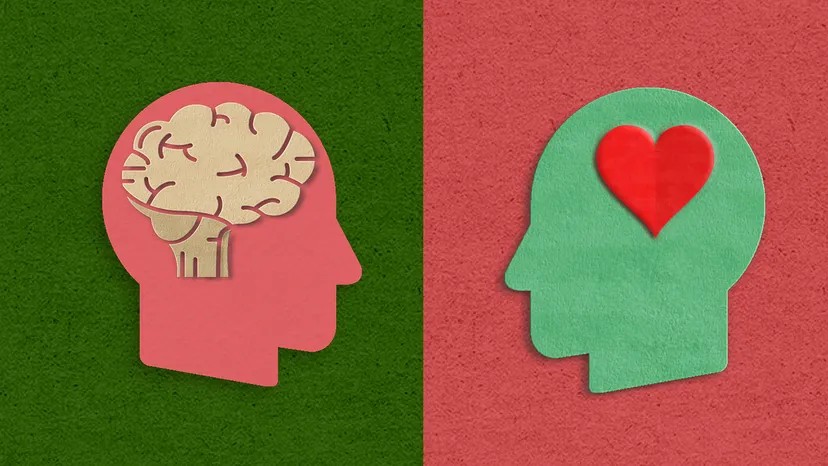
Emotional memory often drives human reactions more than rational thought, according to recent psychological research. Studies reveal that past emotional experiences can override logical reasoning, shaping responses to everyday situations. This phenomenon explains why certain triggers evoke disproportionate reactions, highlighting the deep influence of memory on behavior and decision-making.
Emotional memory has emerged as a powerful determinant of human behavior, often overshadowing logical reasoning. Recent findings in psychology and neuroscience suggest that our reactions are not always guided by present circumstances but by echoes of past emotional experiences. This dynamic interplay between memory and emotion explains why individuals sometimes respond intensely to seemingly minor triggers.
Key Highlights
-
Emotional memories act as anchors, shaping how people perceive and react to current events.
-
Research published in Nature Human Behavior shows that emotional experiences strengthen memory by altering how the brain’s networks interact, making such memories more vivid and long-lasting.
-
Negative emotional memories, in particular, can resurface unexpectedly, influencing reactions in ways that logic cannot easily override.
-
Everyday scenarios, such as a sharp sound or a casual remark, can trigger emotional recall, leading to responses that appear disproportionate to the situation.
-
Neuroscientists emphasize that emotional memory is “sticky,” often becoming milestones in life, whether positive or negative, and guiding future decision-making patterns.
-
The phenomenon demonstrates that while logic is present, it often takes a backseat when emotional memory resurfaces, steering behavior in directions that may surprise even the individual.
-
Understanding this mechanism is crucial for fields such as therapy, conflict resolution, and leadership, where recognizing the role of emotional memory can help manage reactions more effectively.
-
Experts argue that acknowledging the dominance of emotional memory over logic can foster greater empathy, as it reveals that human responses are deeply rooted in personal history rather than immediate rational assessment.
The growing body of evidence underscores that emotional memory is not just a psychological curiosity but a central force in shaping human behavior. By recognizing its influence, individuals and organizations can better navigate interpersonal dynamics, making room for empathy and awareness in decision-making processes.
Sources: Nature Human Behavior, Department of Psychology research updates, Moorcroft Dominic feature analysis