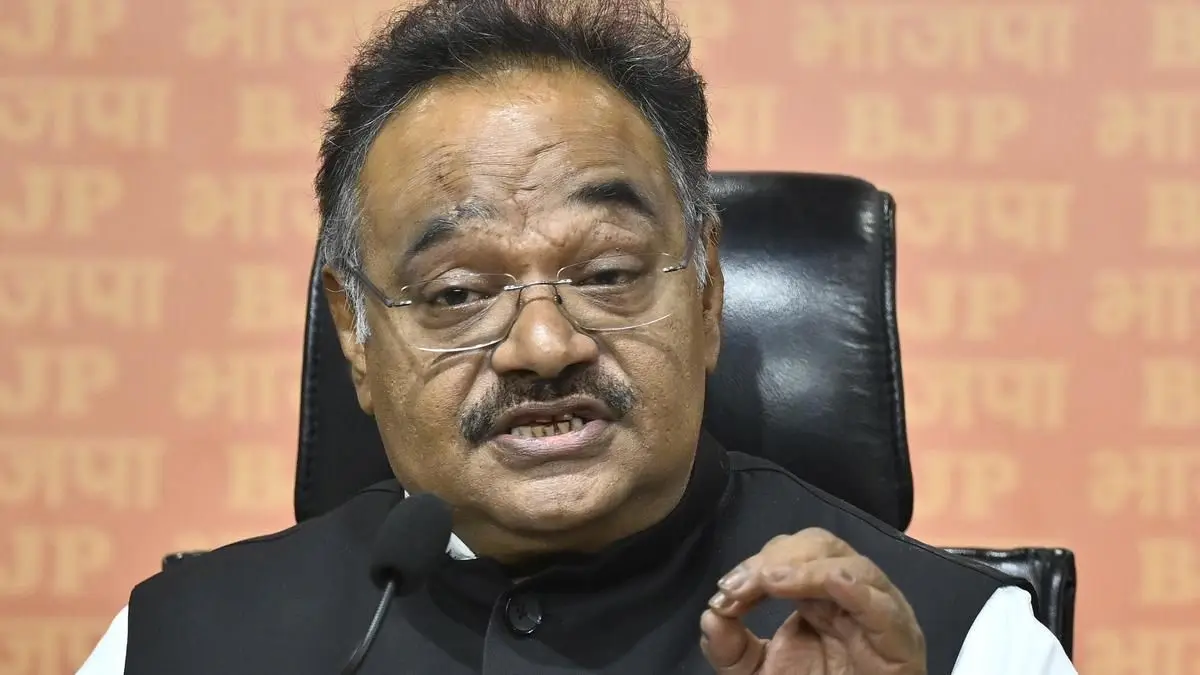
Union Minister Chirag Paswan announced a strategic shift toward value-added seafood exports at a national workshop in Visakhapatnam. The initiative aims to transition India from raw marine exports to high-margin, processed products like ready-to-eat meals, supporting a multi-ministerial roadmap to boost annual fisheries exports to $30 billion within five years.
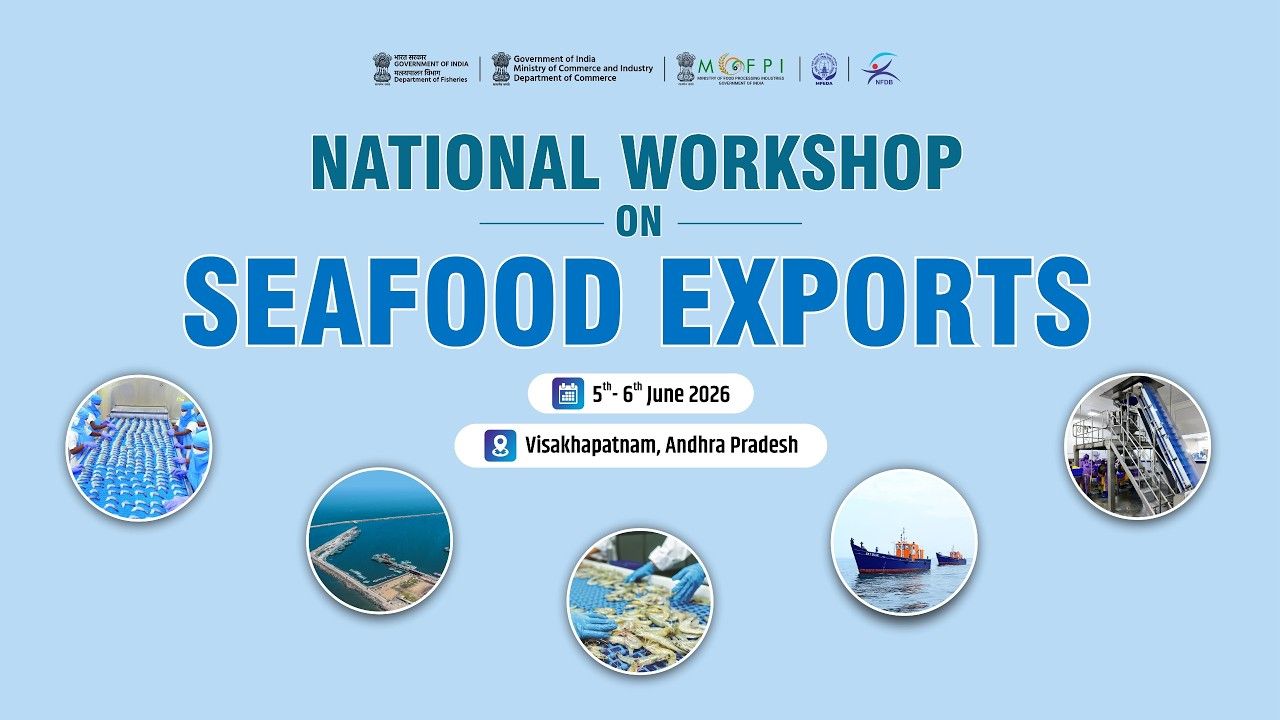
VISAKHAPATNAM — India must aggressively transition from exporting raw marine commodities to manufacturing high-margin, value-added seafood products, Union Minister for Food Processing Industries Chirag Paswan announced on Friday. Speaking at the inaugural session of the two-day National Workshop on Seafood Exports in Visakhapatnam, Andhra Pradesh, Paswan detailed a central government strategy designed to reshape India’s supply chain, strengthen processing ecosystems, and position the nation as a premier global food basket.
The high-level policy forum convened senior cabinet leaders, including Union Minister of Commerce and Industry Piyush Goyal, Union Minister for Fisheries Rajiv Ranjan Singh, Union Minister of Civil Aviation Kinjarapu Rammohan Naidu, and Andhra Pradesh Chief Minister N. Chandrababu Naidu, alongside micro, small, and medium enterprises (MSMEs), global exporters, and aquaculture startups.
Shifting From Raw Commodities to High-Value Products
The Ministry of Food Processing Industries has mandated a fundamental structural evolution for domestic marine trade, urging stakeholders to pivot from low-margin raw fish exports toward specialized, secondary processing.
Global demand has systematically transitioned toward ready-to-eat and ready-to-cook seafood categories. India's current processing infrastructure remains underutilized for consumer-packaged items, leaving a significant gap that international competitors routinely exploit.
By enhancing local manufacturing capabilities, the federal government aims to systematically eliminate intermediate logistics steps, optimize shelf life through flash-freezing technologies, and capture multi-billion-dollar retail markets across North America, Europe, and East Asia.
Ambitious Targets and Multi-Ministerial Infrastructure Backing
The policy workshop acts as an operational foundation to elevate India’s current seafood exports from $8.45 billion (approx. ₹73,890 crore) recorded in the 2025–26 fiscal year to an ambitious $30 billion within the next five years. To accelerate this transition, the Department of Fisheries is actively evaluating a dedicated Production-Linked Incentive (PLI) scheme explicitly tailored for MSMEs operating within the seafood processing sector.
Union Commerce Minister Piyush Goyal noted that India’s seafood sector demonstrated massive systemic resilience, expanding by 70% in dollar terms between 2014 and 2025, outperforming global international seafood trade growth which hovered near 12%.
Concurrently, Civil Aviation Minister Kinjarapu Rammohan Naidu committed to optimizing air cargo networks, streamlining transshipment procedures, and establishing dedicated cold-chain cargo hubs at vital international airports under the "One Airport, One Product" framework to dramatically slash cold-chain transport times.
Andhra Pradesh Establishes Baseline Hub for Marine Aquaculture
As the undisputed leader in domestic aquaculture production—yielding over 55.39 lakh tonnes of fish and seafood in the 2025–26 fiscal cycle—Andhra Pradesh has committed to generating 30% of the country’s total $30 billion export objective. Chief Minister N. Chandrababu Naidu confirmed the immediate resolution of pending infrastructure bottlenecks at the critical Visakhapatnam Fishing Harbour.
Backed by the central government's flagship Pradhan Mantri Matsya Sampada Yojana (PMMSY) and the Pradhan Mantri Matsya Kisan Samridhi Sah-Yojana (PMMKSSY), Andhra Pradesh is deploying over ₹1,352 crore toward the modernization of marine infrastructure. Current state initiatives include:
Three major fishing harbours undergoing modernization at Pudimadaka, Budagatlapalem, and Kothapatnam.
Six integrated fish landing centers to streamline local catches.
A state-of-the-art integrated aqua park in Bapatla to transition aquaculture into a sustainable, circular economy model.
Official Sources Section
Statements, operational metrics, and economic performance data presented during the summit were corroborated directly via official ministerial reports issued by the Ministry of Food Processing Industries, public sector announcements by the Ministry of Commerce and Industry, and statutory data registries curated by the Department of Fisheries under the Ministry of Fisheries, Animal Husbandry and Dairying.
Executive Quotes
"After interacting with all the industry stakeholders, we have realized there is an immense, unmapped scope for processing in this sector. Rather than merely exporting raw fish, our primary economic focus must explicitly align with growing global demands for ready-to-eat, ready-to-cook, and specialized value-added seafood products."
— Chirag Paswan, Union Minister for Food Processing Industries
"Take India’s fish across the world. Reduce the import of raw shrimp, aggressively manufacture value-added goods, and build iconic domestic brands that command global premiums."
— Piyush Goyal, Union Minister of Commerce and Industry
Why It Matters
The shift toward value-added processing translates directly to higher localized profit margins for domestic aqua-farmers, shielding them from volatile international commodity price fluctuations. By setting up local value-addition factories, the industry creates thousands of specialized manufacturing and cold-chain logistics jobs across coastal regions. For international consumers, it guarantees stringently monitored, traceable, and certified ready-to-cook products that adhere to strict global safety protocols.
Key Facts at a Glance
Export Target: Five-year goal set at $30 billion, scaling up from the current baseline of $8.45 billion (₹73,890.46 crore).
Growth Trajectory: Indian marine exports grew 70% between 2014 and 2025, sharply outpacing the global sector average of 12%.
State Leadership: Andhra Pradesh leads national aquaculture production with 55.39 lakh tonnes, targeting a 30% contribution to the national export goal.
Infrastructure Investment: Over ₹1,352 crore allocated for harbors, landing centers, and an integrated aqua park in Andhra Pradesh.
Policy Support: Government explores a seafood-specific PLI scheme for MSMEs alongside advanced air cargo network integrations.
Frequently Asked Questions
What are value-added seafood products?
Value-added products refer to marine raw materials that undergo advanced commercial processing, fileting, seasoning, or pre-cooking. This changes them from raw commodities into high-margin consumer products like ready-to-eat meals, portion-controlled fillets, and breaded items.
Why is the Indian government prioritizing value addition over raw fish exports?
Raw fish exports fetch lower prices on global markets and expose domestic fishers to extreme price volatility. Value-added items yield higher profit margins, generate extensive local employment, and fulfill growing international demand for convenient, packaged foods.
What role does Andhra Pradesh play in this national seafood strategy?
Andhra Pradesh is India's largest seafood producer. The state is investing ₹1,352 crore into upgrading its marine infrastructure and aims to provide 30% of India's total $30 billion seafood export target.
How will the Ministry of Civil Aviation support seafood exporters?
The Ministry of Civil Aviation is building dedicated cold-chain hubs at key airports and streamlining transshipment processes under the "One Airport, One Product" initiative to cut logistics costs and reduce transport times for perishable seafood.
Sources: Ministry of Food Processing Industries (MoFPI), Ministry of Commerce and Industry, Department of Fisheries, Government of India, Press Trust of India (PTI) & Asian News International (ANI) Event Registries, June 5, 2026.