TARAKESWAR, India - Prime Minister Narendra Modi declared that West Bengal has "broken free from its shackles" and is charting a course to create history through rapid industrial and social development. Speaking on June 20, 2026, at a state-level event marking Paschim Banga Dibas (West Bengal D...
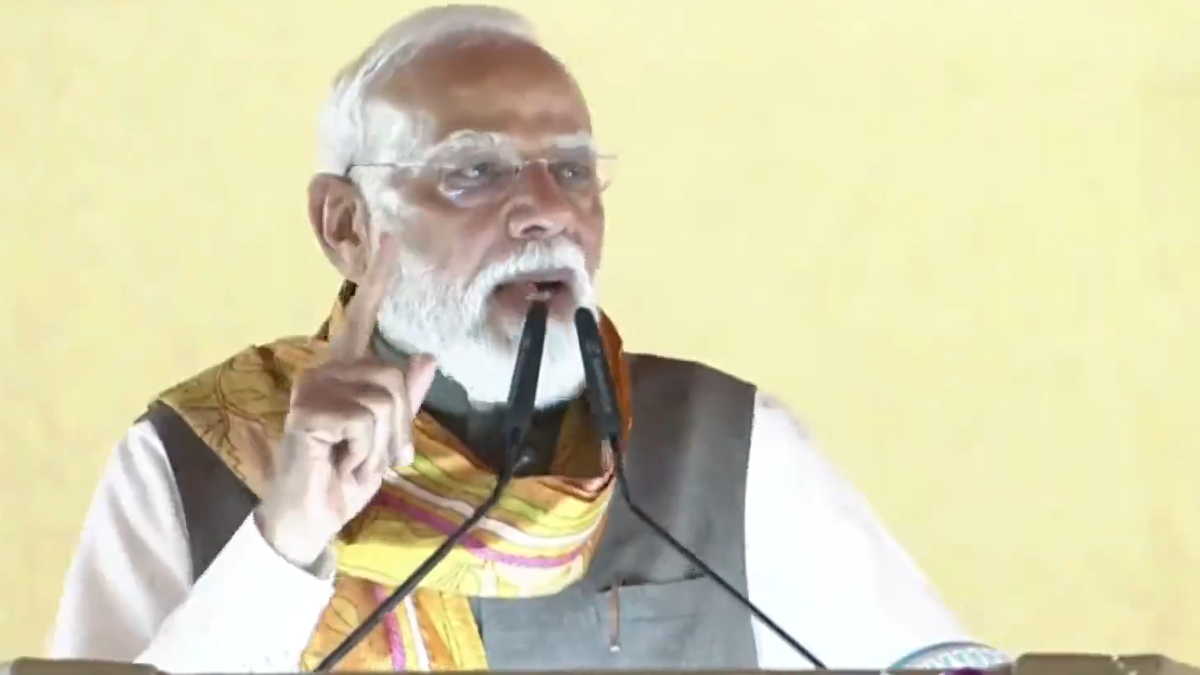
TARAKESWAR, India - Prime Minister Narendra Modi declared that West Bengal has "broken free from its shackles" and is charting a course to create history through rapid industrial and social development. Speaking on June 20, 2026, at a state-level event marking Paschim Banga Dibas (West Bengal Day) in Hooghly's historic town of Tarakeswar, Modi delivered his first major public address in the state since the Bharatiya Janata Party (BJP) formed its maiden government in West Bengal last month.
The visit marks a highly significant political shift in eastern India. Following decades of governance by Left parties and the recently unseated Trinamool Congress (TMC), the Prime Minister used the platform to showcase the immediate policy shifts of a newly established "double-engine" administration. He emphasized that local administrative changes are unlocking stuck infrastructure, ending systemic financial corruption, and securing international borders.
Accelerating Development and Welfare Infrastructure
A key focal point of the Prime Minister's address was the swift execution of long-delayed central welfare schemes. Modi congratulated the newly formed state government, led by Chief Minister Suvendu Adhikari, for rapidly adopting and implementing nationwide frameworks that were previously blocked or heavily modified by the prior administration.
The policy shift directly impacts several core public sectors:
Healthcare Access: Full implementation of the Ayushman Bharat health insurance scheme has begun, allowing millions of citizens access to tertiary healthcare networks.
Rural Utilities: The state has accelerated the Jal Jeevan Mission to expand piped, clean drinking water directly to rural households.
Agricultural Aid: During the event, Modi formally released the 23rd installment of the Pradhan Mantri Kisan Samman Nidhi (PM-KISAN), distributing 18,880 crore rupees ($2.26 billion) directly into the bank accounts of over 9.44 crore farmers nationwide, including major rural blocks across West Bengal.
National Security and Resolving Border Gridlocks
Beyond economic welfare, the Prime Minister highlighted crucial turnarounds in national security infrastructure along the India-Bangladesh international frontier. Under the previous state administration, the acquisition and transfer of critical land parcels required for border security infrastructure had faced years of diplomatic and bureaucratic stagnation.
According to federal security briefs, the newly installed state cabinet immediately expedited land clearances for the Border Security Force (BSF). This administrative action has allowed stalled border fencing projects to resume at a "superfast pace," effectively curbing illegal migration networks and stabilizing cross-border trade corridors in eastern India.
Official Sources Section
According to official event dispatches released by the Press Information Bureau (PIB) India, the Paschim Banga Dibas celebration was formally attended by state Governor R.N. Ravi and Chief Minister Suvendu Adhikari. State regulatory filings confirmed that the venue, Tarakeswar, was intentionally selected due to its historical significance; it was the site where Jana Sangh founder Syama Prasad Mookerjee organized a pivotal conference in April 1947 demanding that the western, Hindu-majority part of Bengal remain integrated with India during the Partition framework.
Quote Section
"There is now a new freshness in the air of Bengal. It feels as if Bengal has now broken free from its shackles, and the return of Bengal's glory has begun," Prime Minister Modi stated. "Decisions are being made at lightning speed, and work on stalled projects has begun moving forward. This time, Bengal will make history."
Why It Matters
The integration of West Bengal into the central ruling party's governance model has massive economic implications for corporate investors and industrial entities. Resolving structural gridlocks, eliminating local "cut-money" administrative extortions, and accelerating digital welfare distribution stabilizes the regional consumer market. For regional businesses and agricultural logistics providers, a streamlined, corruption-free bureaucracy directly reduces transaction costs and makes the state a viable hub for the greater Purvodaya (Eastern Development) economic initiative.
Key Facts at a Glance
Political Milestone: Prime Minister Modi’s first address in West Bengal since the historic formation of the state's first BJP government in May 2026.
Direct Farmer Welfare: Formally disbursed the 23rd PM-KISAN installment totaling 18,880 crore rupees to over 9.44 crore beneficiaries.
Security Breakthrough: Stalled land acquisition processes for the India-Bangladesh border fencing have been cleared and fast-tracked.
Historical Marker: The event marked the newly institutionalized Paschim Banga Dibas on June 20, celebrating the state's integration into the Indian Union.
FAQ Section
Q: What is the significance of the phrase "double-engine government" used by PM Modi? A: The term refers to a political scenario where the same political party holds power at both the central federal government and the individual state government level, which theoretically streamlines policy execution and funding allocations.
Q: Why was June 20 chosen as Paschim Banga Dibas? A: On June 20, 1947, the Bengal Legislative Assembly voted on the partition of Bengal, a critical historical juncture led by leaders like Syama Prasad Mookerjee to ensure West Bengal remained part of India rather than being entirely absorbed into Pakistan.
Q: How does the administrative change affect the border fencing projects? A: The current state administration has systematically removed local land-transfer bottlenecks, allowing security forces to rapidly construct fencing along vulnerable stretches of the India-Bangladesh border.
Source: Press Information Bureau (PIB) India, Government of West Bengal Portal