Swiss voters participate today in a historic referendum to cap the national population at 10 million by 2050. Backed by the right-wing SVP, a "Yes" vote mandates strict asylum blocks at 9.5 million and threatens to terminate free movement with the EU, risking crucial access to the European single market.
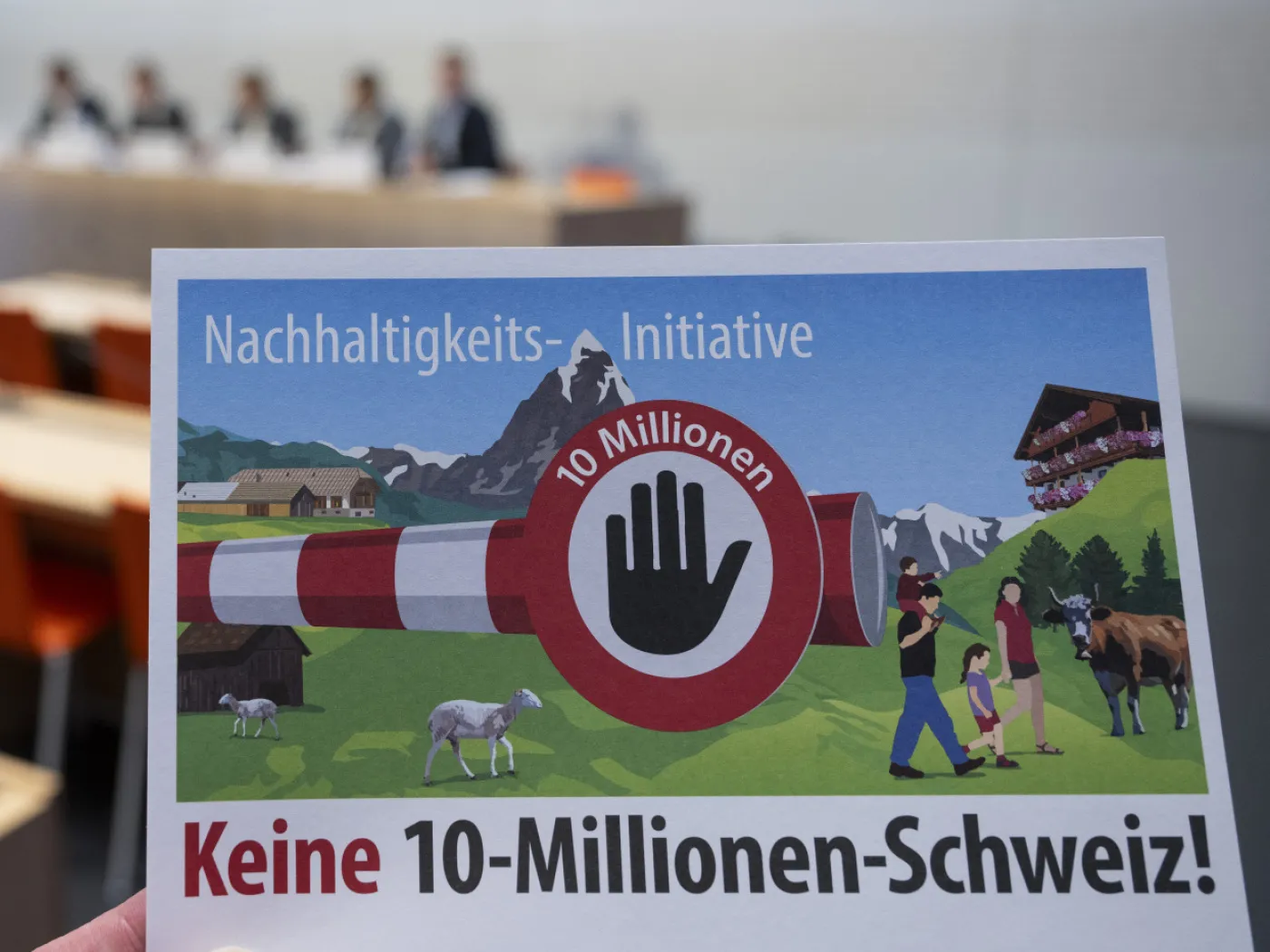
BERNE, Switzerland — Swiss citizens cast their ballots today in a historically unprecedented direct democracy referendum that could make Switzerland the first nation globally to place a hard numerical limit on its total population. Spearheaded by the right-wing Swiss People’s Party (SVP), the "Sustainability Initiative"—officially titled "No to a Switzerland with 10 million!"—proposes a strict constitutional cap on permanent residents.
The vote has polarized the alpine nation, exposing severe societal divisions over immigration policy, soaring metropolitan rents, and overstretched public infrastructure. Crucially, a majority approval would place Berne on an immediate collision course with Brussels, jeopardizing Switzerland's fundamental economic ties to the European Union (EU).
The Two-Tiered Population Enforcement Mechanism
Escalation Triggers Under the Swiss Sustainability Initiative
| Population Threshold | Estimated Arrival Window | Mandatory Constitutional Actions Required |
| 9.5 Million | 2029–2031 | Suspend family reunification; restrict asylum claims; negotiate EU safeguard clauses. |
| 10.0 Million | 2040–2042 | Terminate the 1999 Agreement on the Free Movement of Persons within two years. |
According to official federal directives published by the Swiss government, the constitutional amendment operates via a strict two-stage enforcement protocol. Switzerland’s permanent resident population stood at approximately 9.1 million at the end of 2025, fueled by a 23% expansion since the country signed its free movement pact with the EU in 2002.
If the referendum passes and the population rises to 9.5 million, the Federal Council and Parliament are legally required to suspend family reunification visas, limit new humanitarian asylum permits, and demand exemption clauses in international treaties. If these measures fail to prevent the population from reaching the absolute 10 million ceiling before 2050, the mandate obliges the Swiss government to completely dissolve its free movement framework with the EU.
Guillotine Clause Risks Broader Single Market Disruption
The direct political fallout of a "Yes" vote stretches far beyond labor market statistics due to the legal architecture of Switzerland’s treaties with Brussels. The 1999 Agreement on the Free Movement of Persons is bound to six other primary economic treaties under an institutional "guillotine clause."
If Switzerland unilaterally cancels free movement rights for EU citizens, the remaining six bilateral agreements automatically turn null and void after a two-year window. This mechanism would instantly strip Swiss businesses of preferential access to the EU single market, upend mutual recognition of industrial standards, and jeopardize Switzerland's participation in the common Schengen security and Dublin asylum networks.
Economic Deficits Confront Infrastructure Realities
The campaign has successfully reframed abstract macroeconomic policies into tangible quality-of-life concerns. Proponents of the cap point to increasingly gridlocked commuter trains, a nationwide housing shortage, and escalating carbon footprints as clear evidence that the country is exceeding its geographical carrying capacity.
Conversely, Switzerland's leading corporate coalitions have mounted a record-setting 15 million Swiss Franc counter-campaign. Business leaders argue that the export-driven economy, which boasts the sixth-highest GDP per capita globally, relies on foreign labor to survive. Because of a rapidly aging native workforce, foreign nationals now comprise nearly 28% of the permanent population and represent two-in-five Swiss corporate founders, particularly within the vital Basel pharmaceutical hub and Zurich financial sectors.
Official Sources Section
The statutory provisions, demographic projections, and treaty frameworks outlined in this dispatch are corroborated directly by official documentation from the Swiss Federal Council Portal, legislative tracking records issued by the Swiss Parliament, and economic impact studies released by the country’s main business federation, Economiesuisse.
Executive Statements
"Acceptance would immediately throw Switzerland's agreements with the European Union into question," warned Swiss Justice Minister Beat Jans during a final pre-ballot television brief, labeling the initiative an empty promise that fails to solve systemic housing issues.
"According to officials at the Swiss Federal Audit Office, total campaign spending reached historic parameters, demonstrating the profound structural stakes of this particular constitutional choice."
Why It Matters
The practical implications of a "Yes" outcome would drastically reorder Western European migration corridors. Cross-border commuters from France, Italy, and Germany who keep Swiss hospitals and factories functional would face immediate regulatory uncertainty. For international investors, a vote to restrict population growth would introduce significant long-term labor recruitment risks, potentially prompting multi-national corporations to reallocate future capital away from Swiss financial hubs.
Key Facts at a Glance
Constitutional Ceiling: The popular initiative seeks to cap the Swiss permanent resident population at 10 million until 2050.
EU Treaty Trigger: Exceeding the cap legally forces the termination of Switzerland's free movement accord with the European Union.
Guillotine Clause: Canceling free movement automatically collapses six adjacent bilateral trade pacts with Brussels.
Current Demographics: Switzerland’s current population is 9.1 million, with foreign nationals comprising approximately 28% of residents.
Frequently Asked Questions (FAQ)
What happens immediately if the initiative passes today?
The Swiss government must immediately alter the constitution to reflect the new limits, but actual immigration freezes will not trigger until the population reaches the first warning threshold of 9.5 million.
Why is the European Union involved in a Swiss internal vote?
Switzerland is not an EU member, but it enjoys full access to the EU single market by agreeing to accept the free movement of European citizens as part of a package deal.
How soon could Switzerland reach the 9.5 million warning limit?
Based on current federal demographic tracking data, demographers expect the country to hit the 9.5 million threshold between 2029 and 2031 if current immigration rates persist.
Can the Swiss Parliament dilute the referendum if it passes?
No. Under Switzerland's strict system of direct democracy, any approved popular initiative forces a binding amendment to the federal constitution that lawmakers cannot simply ignore.
Source: The Portal of the Swiss Government, Swiss Federal Auditing Office.
Featured Image
Description: A wide view of the iconic Federal Palace of Switzerland in Berne, featuring national flags blowing in the wind under a clear blue sky.
Caption: The Federal Palace of Switzerland in Berne.