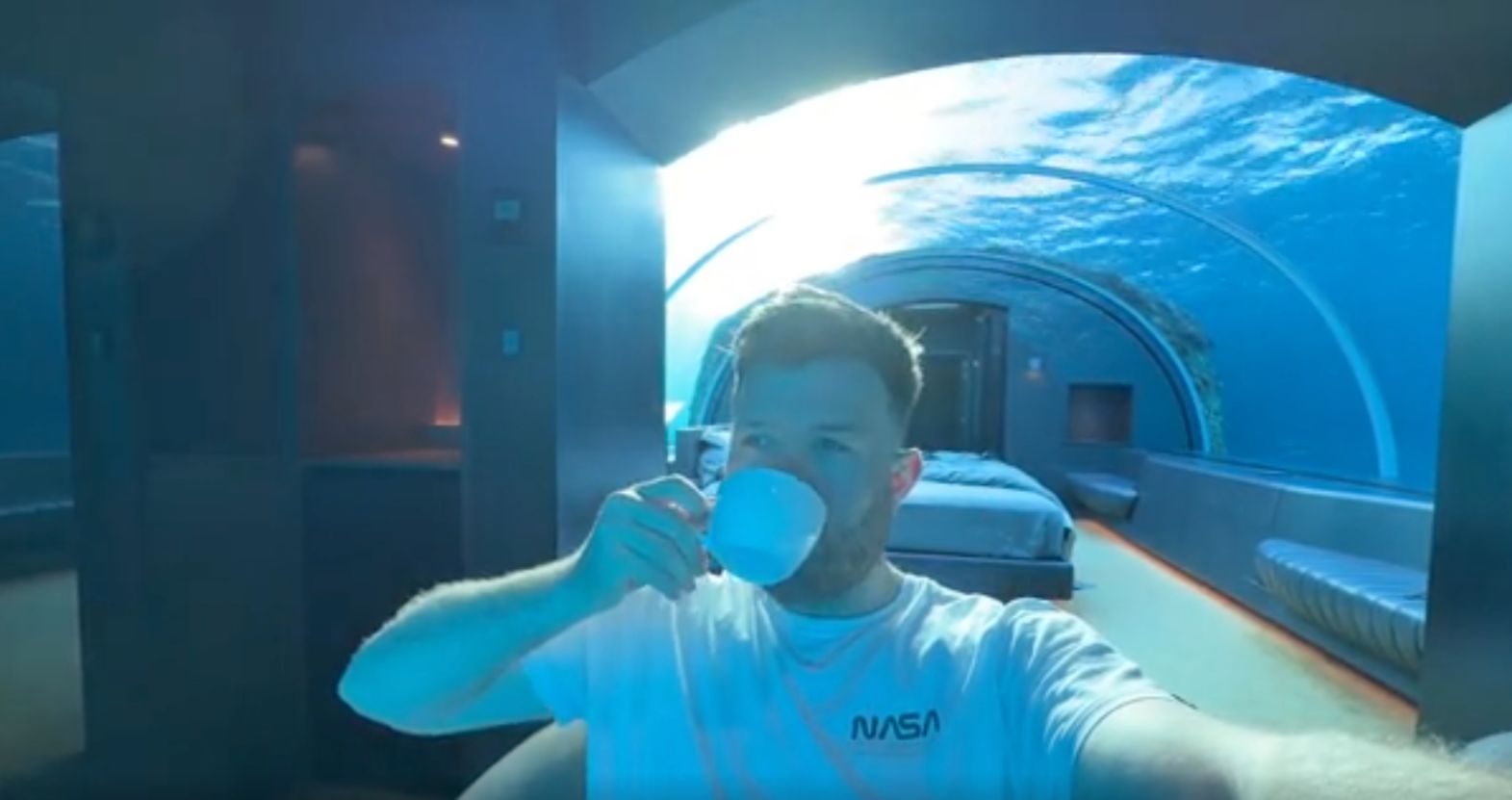
A traveler staying in a luxury $18,000-a-night underwater suite in the Maldives experienced a startling encounter when predatory sharks began circling the bedroom windows. The incident has prompted marine biologists and regulators to call for stricter lighting controls to prevent altering nocturnal wildlife behavior around submerged resorts.
MALE — A high-profile international traveler who paid $18,000 per night to stay inside a bespoke underwater hotel villa recounted a startling experiential encounter when apex predators began repeatedly circling and tracking against the structural glass panels. The incident occurred on June 3, 2026, at an exclusive deep-sea residential suite submerged five meters beneath the surface of the Indian Ocean in the Maldives. While architectural engineers emphasize that the reinforced acrylic viewing tunnels are structurally sound and rated to withstand extreme marine pressures, behavioral marine biologists are raising concerns over how the continuous interior ambient lighting affects nocturnal predatory species. The encounter has sparked an industry-wide discussion within the ultra-luxury hospitality sector regarding the environmental footprint, wildlife disruption, and structural safety codes governing experiential marine tourism.
Architectural Integrity Meets Apex Predator Encounters
According to structural logs filed by luxury resort engineering teams, the high-end underwater suite relies on three-inch-thick monolithic acrylic paneling, which is chemically bonded to a heavily reinforced steel structural frame anchored to the seabed. These marine structures are engineered to easily resist the hydro-mechanical impacts of passing megafauna, including large reef sharks, hammerheads, and manta rays.
However, the psychological strain reported by guests encountering these animals at close range highlights a growing issue in experiential tourism design. Guests paying premium rates of $18,000 to $50,000 per night expect an immersive, peaceful view of the coral ecosystem. Instead, sudden changes in local shark behavior can quickly turn a luxury vacation into an alarming ordeal, exposing the stark differences between theoretical structural engineering and real-world consumer comfort.
How Interior Lighting Alters Nocturnal Marine Behavior
Marine biology firms operating throughout the Maldivian atolls have noted that the issue stems primarily from artificial light pollution. Many deep-sea predatory fish species rely on subtle changes in low-light environments to navigate and hunt during the night.
The Phototaxis Feedback Loop: High-intensity interior luxury lighting systems create a beacon effect in dark ocean waters. This light attracts schools of small forage fish and squid, which are drawn directly to the transparent walls of the suite.
Predatory Consolidation: As prey gathers around the glowing glass, larger predators like grey reef sharks and nurse sharks follow. They begin swimming in circular hunting patterns right next to the guest windows, creating an unintended, intense display.
Repetitive Glass Contact: In some recorded instances, sharks pursuing quick-moving prey scrape or bump against the smooth acrylic surfaces. While these contacts do not threaten the structural integrity of the room, they generate loud, low-frequency vibrations that echo inside the guest suite.
Disruption of Natural Cycles: Behavioral researchers warn that constant exposure to artificial resort lighting disrupts the natural hunting rhythms of apex predators, potentially causing long-term changes to local coral reef food chains.
Regulatory Implications for the High-End Marine Tourism Industry
The growing popularity of underwater hotels, deep-sea restaurants, and submerged lounges is drawing closer scrutiny from international maritime regulators and environmental agencies. Following reports of close wildlife encounters, the Maldives Ministry of Tourism is considering updating its strict environmental building codes.
The proposed updates may require all underwater hospitality structures to install automated, external smart-tinting glass panels or implement mandatory black-out hours after midnight. These measures would protect the natural behaviors of nocturnal marine life while shielding premium travelers from unexpected close-up encounters with hunting predators.
Official Sources Section
The engineering specifications and safety compliance data for sub-surface resort facilities are monitored by international certification bodies like DNV GL Marine and local oversight agencies, including the Ministry of Environment, Climate Change and Technology.
In a technical bulletin reviewing structural safety standards for underwater tourist facilities, regional engineering inspectors stated:
"The architectural transparent acrylic components used in registered underwater luxury villas are designed to withstand pressures far exceeding standard marine conditions. These suites are entirely secure against any interaction with regional marine life. However, operators must balance guest comfort with ecological safety. Using polarized interior window treatments and reducing external light spill is highly recommended to prevent altering the natural behavioral patterns of local predatory species."
Why It Matters
This incident highlights a core challenge facing the future of eco-sensitive luxury travel: balancing high-end guest experiences with wildlife conservation. As wealthy travelers continue to seek out increasingly remote and immersive nature destinations, hospitality developers must design projects that avoid disrupting local ecosystems. Implementing smart architectural guidelines, such as low-impact lighting and glare reduction, ensures that luxury marine tourism can remain both safe for guests and respectful of the surrounding ocean habitat.
Key Facts at a Glance
Premium Pricing: Guests pay up to $18,000 per night to sleep inside these customized, sub-surface ocean structures.
Predatory Attraction: High-power indoor lights attract small baitfish, which subsequently draws large hunting sharks directly to the bedroom windows.
Robust Engineering: The underwater villas use three-inch-thick acrylic viewing panels rated to handle significant physical impacts from marine life.
New Regulations: Environmental agencies are drafting new policies to mandate late-night light blackouts, helping protect nocturnal coral reef ecosystems.
FAQ Section
Can a shark break through the glass of an underwater hotel room?
No. The windows are made from thick, multi-layered architectural acrylic rather than standard glass. These specialized panels are engineered to withstand immense underwater pressure and heavy impacts without cracking.
Why do sharks swim in circles around these submerged rooms?
Sharks are drawn by the small fish and squid that gather around the bright lights of the villa. The predators circle the room to hunt the prey concentrated against the transparent walls.
How deep are these underwater luxury suites typically built?
Most commercial underwater villas and restaurants are anchored between five to eight meters below the surface, keeping them easily accessible for guests while positioning them within vibrant coral reef zones.
Do these underwater structures harm the local marine ecosystem?
If unmanaged, the constant artificial light can disrupt the feeding and sleeping habits of local marine life. Environmental groups are advocating for the use of specialized window coatings to minimize light spill into the surrounding water.
Source: Structural engineering archives from DNV GL Marine, tourism policy updates via the Maldives Ministry of Tourism, and environmental safety logs from the Ministry of Environment, Climate Change and Technology.