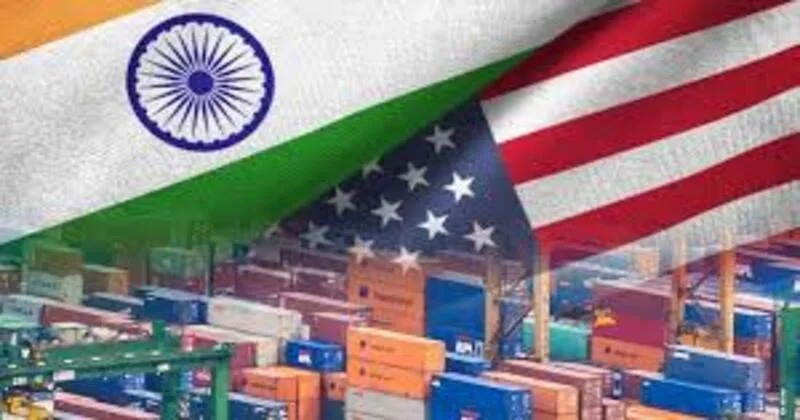
The U.S. and India are in final-stage talks to conclude a bilateral trade agreement aimed at reciprocal market access and economic security. Led by Commerce Minister Piyush Goyal and U.S. Trade Representative Jamieson Greer, the negotiations seek to resolve tariff issues before the July 24 deadline for new U.S. trade measures.
The United States and India have intensified high-level negotiations this week to finalize a landmark reciprocal trade deal, as both nations race to conclude an interim agreement before a critical July 24 deadline. U.S. Trade Representative Jamieson Greer arrived in New Delhi on June 23, 2026, for a two-day visit to lead the U.S. delegation in talks aimed at resolving outstanding tariff and market access issues.
The discussions, which are taking place at the Ministry of Commerce and Industry’s headquarters in Vanijya Bhawan, mark a significant step toward formalizing the trade framework originally announced in February 2026. Both Washington and New Delhi are focusing on creating a balanced, mutually beneficial economic partnership that addresses long-standing trade barriers and aligns with the strategic interests of both democratic powers.
Reworking the Trade Framework
The current round of negotiations follows high-level engagements between Prime Minister Narendra Modi and U.S. President Donald Trump on the sidelines of the G7 summit in France on June 17. The leaders expressed a shared urgency to finalize the pact, which has become even more critical following recent shifts in the U.S. tariff landscape.
According to official briefings, the talks are centered on reworking the initial framework to account for legal and policy changes in the United States, including recent U.S. Supreme Court rulings that impacted previous tariff policies. For India, the primary objective remains securing preferential market access and tariff concessions that ensure its exports remain competitive against other Asian economies.
Strategic Economic Alignment
The proposed agreement is designed to do more than just adjust tariffs; it aims to foster deep economic security alignment. Officials from both sides have indicated that the pact will cover:
Market Access: Reducing barriers for U.S. agricultural and industrial goods in India, while seeking lower U.S. tariffs for Indian exporters.
Digital Trade: Establishing rules to prevent discriminatory practices and encourage innovation in the technology sector.
Supply Chain Resilience: Strengthening cooperation on export controls, investment reviews, and technological collaboration, particularly in high-growth areas like data centers and semiconductors.
"The engagement is marked by a spirit of cooperation and pragmatism," the Ministry of Commerce stated following initial negotiator-level discussions held earlier this month. The goal is a comprehensive deal that solidifies the U.S.-India Bilateral Trade Agreement (BTA) roadmap, ensuring that the benefits of the partnership reach both American and Indian businesses.
Impact on Industry and Investors
For global businesses and investors, this deal represents a crucial stabilization of one of the world's most significant bilateral economic relationships. By addressing non-tariff barriers—such as those related to medical devices, ICT licensing, and food safety standards—the agreement aims to create a more predictable regulatory environment for investors.
The urgency for conclusion is partly driven by the impending expiry of temporary 10% tariffs on trading partners, scheduled for July 24, 2026. A successful deal would provide long-term certainty, allowing firms to better plan cross-border investments and supply chain movements.
Official Sources
Why It Matters
A finalized trade pact would mark a historic milestone in U.S.-India relations. By replacing uncertainty with a clear, reciprocal framework, both nations intend to significantly boost trade volumes, streamline customs procedures, and secure a technological partnership that bolsters their collective resilience in a rapidly changing global economy.
Key Facts at a Glance
Target Deadline: July 24, 2026, coinciding with the expiration of temporary U.S. tariff measures.
Strategic Goal: Finalizing a framework for reciprocal trade that lowers tariffs and addresses non-tariff barriers.
Negotiation Leads: Commerce Minister Piyush Goyal and U.S. Trade Representative Jamieson Greer.
Core Pillars: Market access for industrial/agricultural goods, digital trade rules, and economic security alignment.
Frequently Asked Questions
Why is the July 24 deadline significant?
It marks the expiration of a temporary 10% U.S. tariff on global trading partners, making it an essential target date to ensure a stable trade environment for Indian exporters.
What is the main challenge in these trade negotiations?
The negotiations have been complex due to legal and policy shifts in the U.S. tariff regime, necessitating a rework of the initial February 2026 framework to ensure the deal remains competitive for Indian industries.
How does this deal benefit American exporters?
The agreement aims to secure significant market access for U.S. agricultural products, medical devices, and ICT goods, which have faced long-standing restrictive licensing and tariff barriers in India.
Source: Ministry of Commerce & Industry, U.S. Embassy & Consulates in India, The White House.