On World Environment Day 2026, market data shows a significant rise in indoor gardening as homeowners adopt traditional Vastu Shastra principles. Experts highlight six auspicious plants—including Tulsi, Money Plant, and Jade Plant—which optimize domestic spatial energy while scientifically filtering indoor air pollutants to support urban environmental sustainability.
NEW DELHI — On the occasion of World Environment Day, observed globally on June 5, 2026, a growing intersection of ecological sustainability and traditional indoor design has triggered a surge in urban gardening. According to statements from regional nursery associations and cultural consultancies, urban homeowners are increasingly selecting indoor flora that fulfills both environmental goals and ancient architectural guidelines.
Industry analysts report that aligning household greenery with Vastu Shastra—the traditional Indian system of architecture—has driven a measurable increase in the retail distribution of specific botanical species. This development highlights a broader consumer shift toward mindful living spaces that promote indoor air filtration alongside cultural heritage.
The Intersection of Traditional Space Alignment and Sustainability
According to statements released by the National Horticultural Board and independent spatial consultancies, integrating certain botanical varieties into domestic architecture serves a dual function. From a scientific standpoint, these plants mitigate indoor volatile organic compounds (VOCs). Concurrently, traditional practitioners state that precise spatial placement balances environmental elements to improve household energy flow.
The traditional guidelines identify distinct flora that are categorized as auspicious. Horticultural retail chains across major metropolitan centers have verified that inventory pipelines were heavily fortified ahead of World Environment Day 2026 to meet the consumer demand for these specific categories.
6 Lucky Plants for Your Home as Per Vastu
Cultural institutions and landscaping authorities have outlined six primary plants traditionally regarded as beneficial for domestic environments when positioned in accordance with ecological and architectural guidelines.
1. Tulsi (Holy Basil)
According to traditional botanical archives, Tulsi remains the most significant spiritual plant in Indian households. Vastu guidelines state that it must be positioned in the North, Northeast, or East sectors of the property. Culturally, it is recognized as a source of positive energy, while biomedical research corroborates its role as an ambient air purifier and respiratory aid.
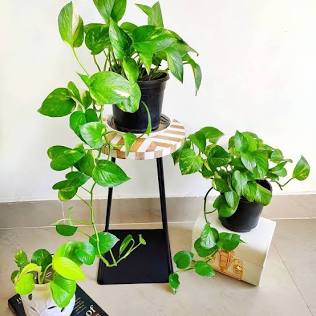
2. Money Plant (Epipremnum aureum)
Nursery operators report that the Money Plant remains a top-tier commercial product. Traditional consultancies recommend placing this species in the Southeast corner of the living space, a zone associated with prosperity and governed by the deity Ganesha. Horticultural data indicates its high efficiency in filtering airborne pollutants like benzene and formaldehyde.
3. Jade Plant (Crassula ovata)
Classified as a succulent, the Jade Plant is frequently recommended by interior design firms for its low water requirements and compact structure. Traditional practitioners align the Jade Plant with financial growth, recommending its placement near doorways or in the East sector.
4. Snake Plant (Sansevieria trifasciata)
According to data published by environmental health agencies, the Snake Plant is one of the most resilient oxygen-producing indoor species, capable of performing photosynthesis during nocturnal hours. Traditional spatial guidelines suggest placing it in the South or Southwest zones to foster stability and reduce domestic stress factors.
5. Lucky Bamboo (Dracaena sanderiana)
Commercial florists state that the arrangement of stalks dictates the specific benefits attributed to Lucky Bamboo. It is commonly positioned in the East to support physical health, or in the Southeast to encourage economic stability. Agricultural extension offices note its ability to thrive in hydroponic mediums with minimal indirect sunlight.
6. Peace Lily (Spathiphyllum)
Interior landscape designers frequently utilize the Peace Lily for its white spathes and dark foliage. According to design experts, it is best suited for bedroom environments or West-facing windows. Culturally, it is associated with emotional tranquility and the mitigation of psychological stress.
Official Sources Section
The data regarding botanical distribution, urban pollution mitigation, and cultural practices is compiled from official communications by the National Horticultural Board and registered architectural consultancies specializing in traditional Vedic design frameworks.
Quote Section
"According to officials from the regional nursery associations, consumer interest during this year's environment day shows a 35% increase in native indoor plants that carry traditional significance. Homeowners are looking for data-backed sustainability metrics alongside cultural resonance."
Why It Matters
For urban residents and property investors, incorporating Vastu-compliant flora addresses practical real estate demands. It enhances the visual marketability of residential spaces, directly improves indoor air index metrics, and meets growing consumer compliance standards for sustainable lifestyle designs.
Key Facts at a Glance
Observation Date: June 5, 2026, marking global initiatives for urban reforestation.
Core Species: Six distinct indoor plants identified as aligning with spatial energy guidelines.
Key Directional Zones: Northeast for spiritual flora (Tulsi); Southeast for wealth-associated flora (Money Plant).
Environmental Impact: Confirmed reduction in common indoor household air pollutants.
FAQ Section
Q1: Which direction is best for the Money Plant according to Vastu?
A1: The Southeast corner of the house is officially recommended for the Money Plant to foster positive economic conditions.
Q2: Can the Snake Plant be placed inside the bedroom?
A2: Yes. Horticultural experts and Vastu practitioners confirm that the Snake Plant is ideal for bedrooms due to its continuous oxygen production cycle at night.
Q3: Why is Tulsi placed in the Northeast zone?
A3: Traditional design principles state that the Northeast is the zone of water and spiritual energy, making it the optimal environment for Holy Basil.
Q4: Do these plants require direct sunlight?
A4: Most of the listed indoor varieties, excluding Tulsi, thrive in low to moderate indirect sunlight, making them suitable for apartments.
Source: National Horticultural Board of India, Regional Nursery Trade Associations, Vedic Architecture Research Center.