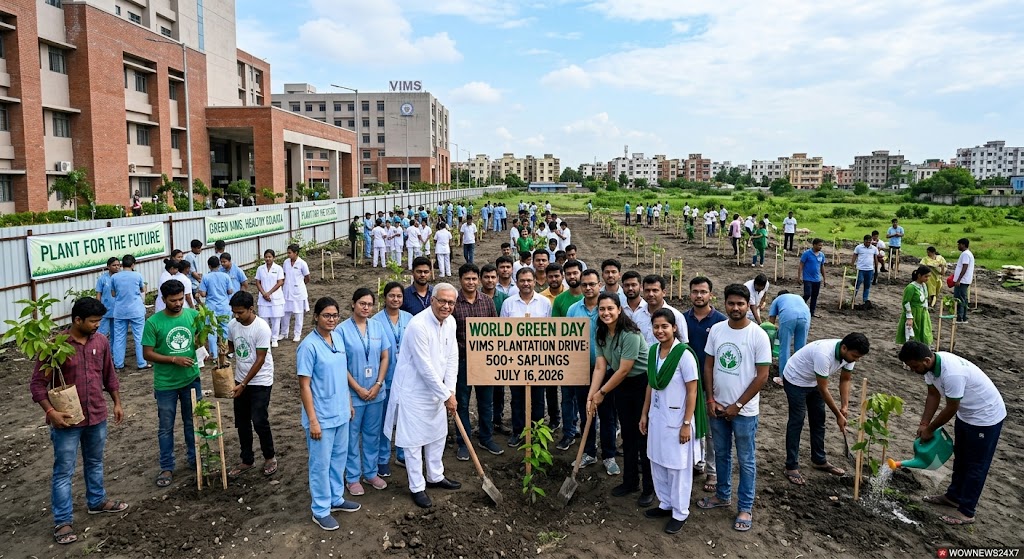
To celebrate World Green Day, VIMS in Newtown, Kolkata, planted over 500 native saplings. The mass planting aims to expand the medical institute's green cover, mitigate the urban heat island effect, and provide a cooler, healthier, and more therapeutic environment for patients, staff, and visitors.
NEWTOWN, KOLKATA — Marking the global observance of World Green Day, the Vivekananda Institute of Medical Sciences (VIMS) in Newtown inaugurated a major ecological initiative on July 16, 2026, by planting over 500 saplings across its expansive campus. The mass sapling plantation drive was organized by VIMS administration in collaboration with regional environmental agencies to address rising urban temperatures and promote a healthier, greener recovery space for patients. This development is significant today as Kolkata increasingly faces intense summer heatwaves, highlighting the urgent practical need for expanding urban green cover and ecological responsibility within public institutions.
Strategic Ecological Initiative at VIMS
The plantation drive at VIMS on World Green Day was not merely symbolic but part of a structured ecological strategy. The over 500 saplings were carefully selected from native species, including Neem, Jarul, Bakul, and Karanja, known for their resilience and high carbon sequestration capabilities in the tropical climate of West Bengal. VIMS horticulture experts designated specific zones across the campus—including boundary areas, near patient recovery wings, and staff quarters—for the planting to maximize future shade and air purification.
According to VIMS administrative officials, the initiative aims to create a sustainable "green lung" for the institution, which sees a daily footfall of thousands.
Addressing Urban Heat Islands
The mass planting of over 500 saplings at VIMS holds particular relevance for the Newtown area. Rapid urbanization in the periphery of Kolkata has led to the proliferation of concrete surfaces, creating "urban heat islands" where temperatures can be significantly higher than surrounding rural areas. Native trees serve as natural air conditioners, lowering ground-level temperatures through shading and evapotranspiration. VIMS representatives noted that this long-term environmental commitment aims to provide a tangible cooling effect for the campus, benefiting patients, medical staff, students, and visitors during extreme heat.
Community and Patient Wellbeing Impact
For citizens and patients, the ecological effort at VIMS offers direct benefits beyond temperature control. Numerous studies demonstrate that access to green spaces and views of nature can accelerate patient recovery times, reduce stress levels, and improve overall mental wellbeing in healthcare settings. VIMS administration emphasized that the enhanced green cover will create a more serene and therapeutic environment. Furthermore, the drive saw active participation from VIMS medical students and nursing staff, fostering a stronger sense of ecological responsibility within the future healthcare workforce.
Official Sources Section
According to official announcements and statements from:
The Office of the Principal, Vivekananda Institute of Medical Sciences (VIMS).
The Horticulture Department of Newtown Kolkata Development Authority (NKDA), which provided technical guidance.
The VIMS Environmental Welfare Committee.
Quote Section
"At VIMS, we recognize that human health is intrinsically linked to environmental health. This drive on World Green Day, where we have planted over 500 saplings, is a crucial step toward our goal of creating a 'Healing Garden' campus. We are committed to nurturing these trees, ensuring they provide a cooler, cleaner, and more therapeutic space for our patients and the entire VIMS community for decades to come."stated Dr. Arindam Bose, Principal, VIMS.
Why It Matters
The planting of over 500 saplings at VIMS is critically important because it provides a scalable model for how large public and private institutions can actively mitigate climate change impacts at a local level. For businesses and urban planners, it demonstrates that large-scale greening is achievable and essential for long-term climate resilience, potentially influencing future infrastructure policies in Kolkata.
Key Facts at a Glance
Location: VIMS Campus, Newtown, Kolkata.
Total Saplings: Over 500.
Species: Native varieties including Neem, Jarul, and Bakul.
Key Partners: Technical support from NKDA Horticulture Department.
Objective: To expand urban green cover, mitigate heat island effects, and enhance the patient recovery environment.
FAQ Section
Q1: Why did VIMS organize this plantation drive?
VIMS organized the drive to celebrate World Green Day, combat the urban heat island effect in Newtown, improve air quality, and create a healthier, greener environment that supports patient recovery.
Q2: How many saplings were planted?
Over 500 saplings of various native species were planted across the VIMS campus.
Q3: What types of trees were planted and why?
Native species such as Neem, Jarul, Bakul, and Karanja were selected for their resilience, shade potential, and ability to thrive in Kolkata's climate.
Source: VIMS Press Release, NKDA Environmental Guidelines, VIMS Campus Ecology Report.