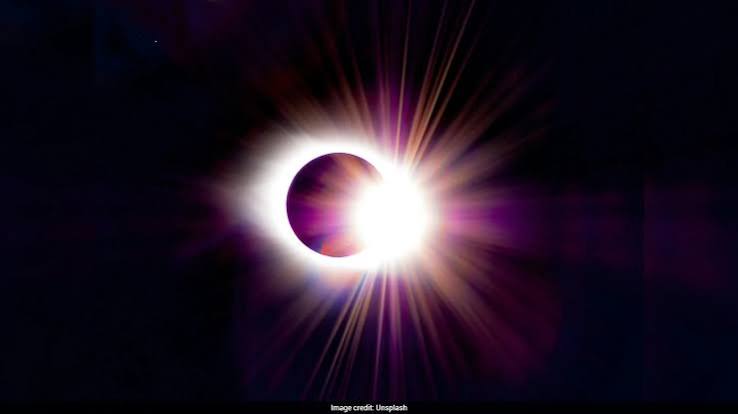
A rare total solar eclipse will sweep across the Northern Hemisphere on August 12, 2026, bringing totality to parts of Greenland, Iceland, and Spain. Astronomical authorities have confirmed that India will not witness the event, requiring local enthusiasts to watch official digital broadcasts of the celestial phenomenon
NEW DELHI — Skywatchers across the Northern Hemisphere are preparing for a rare astronomical milestone as a total solar eclipse races across the globe. Scheduled for Wednesday, August 12, 2026, the event will occur when the Moon passes directly between the Earth and the Sun, completely obscuring the solar disk for millions of people positioned along a narrow path of totality.
While the celestial alignment has triggered widespread international excitement—drawing thousands of astrotourists to prime viewing spots across the Arctic, Iceland, and the Iberian Peninsula—astronomers have confirmed that the eclipse will not be visible from the Indian subcontinent. Because the lunar shadow's trajectory bypasses the region entirely, local residents will need to rely on authorized live broadcasts to view the phenomenon.
The Path of Totality Across the Globe
The eclipse journey begins in northern Siberia before the Moon's shadow sweeps south across the Arctic Ocean, eastern Greenland, and western Iceland. According to orbital mechanics data released by NASA and international space agencies, the point of maximum duration will occur just off the western coast of Iceland, where totality will last for roughly two minutes and eighteen seconds.
From the North Atlantic, the shadow will continue across northern Spain and the Balearic Islands before ending over the Mediterranean Sea. Major European and North American regions outside this narrow 293-kilometer-wide corridor will experience a partial solar eclipse, with the Moon taking a visible "bite" out of the Sun.
However, due to geographic alignment and time zone conversions, the event falls completely outside the visual horizon for South Asia. While online calculations note that global timelines span late evening into the early hours of August 13 in Indian Standard Time (IST), local skies will remain entirely unaffected, meaning traditional viewing restrictions or community protocols associated with eclipses will not apply.
Official Sources Section
Quote Section
According to astronomical and scientific briefings issued by event organizers:
"Only skywatchers inside this relatively narrow path will experience totality, where day briefly turns to twilight and the sun's outer atmosphere, the corona, becomes visible to the naked eye."
Why It Matters
Total solar eclipses offer researchers rare opportunities to study the solar corona and upper atmospheric dynamics. For the travel and hospitality sectors, the 2026 event has sparked a massive wave of "eclipse tourism," driving substantial bookings across remote Arctic outposts and Spanish coastal cities, highlighting how celestial events continue to generate profound cultural and economic engagement worldwide.
Key Facts at a Glance
Event Date: Wednesday, August 12, 2026.
Path of Totality: Crosses northern Russia, Greenland, Iceland, the North Atlantic, and northern Spain.
Maximum Duration: Approximately 2 minutes and 18 seconds near western Iceland.
Visibility in India: Zero visibility; the eclipse path misses the Indian subcontinent entirely.
FAQ Section
Will the August 12, 2026 solar eclipse be visible in India?
No. India lies entirely outside the path of totality and the partial eclipse penumbra, meaning no phase of the eclipse will be visible in the Indian sky.
Where is the best place to view the total solar eclipse?
Prime viewing locations along the narrow path of totality include parts of eastern Greenland, western Iceland, and northern Spain.
How long will complete totality last?
At its point of maximum duration near the coast of Iceland, the total phase of the eclipse will last for 2 minutes and 18 seconds.
Why do total solar eclipses happen?
A total solar eclipse occurs when the Moon passes directly between the Earth and the Sun, perfectly blocking the solar disk due to an orbital coincidence where the Sun's larger size is balanced by its greater distance.
Source: NASA Scientific Visualization Studio, National Geographic, Space.com