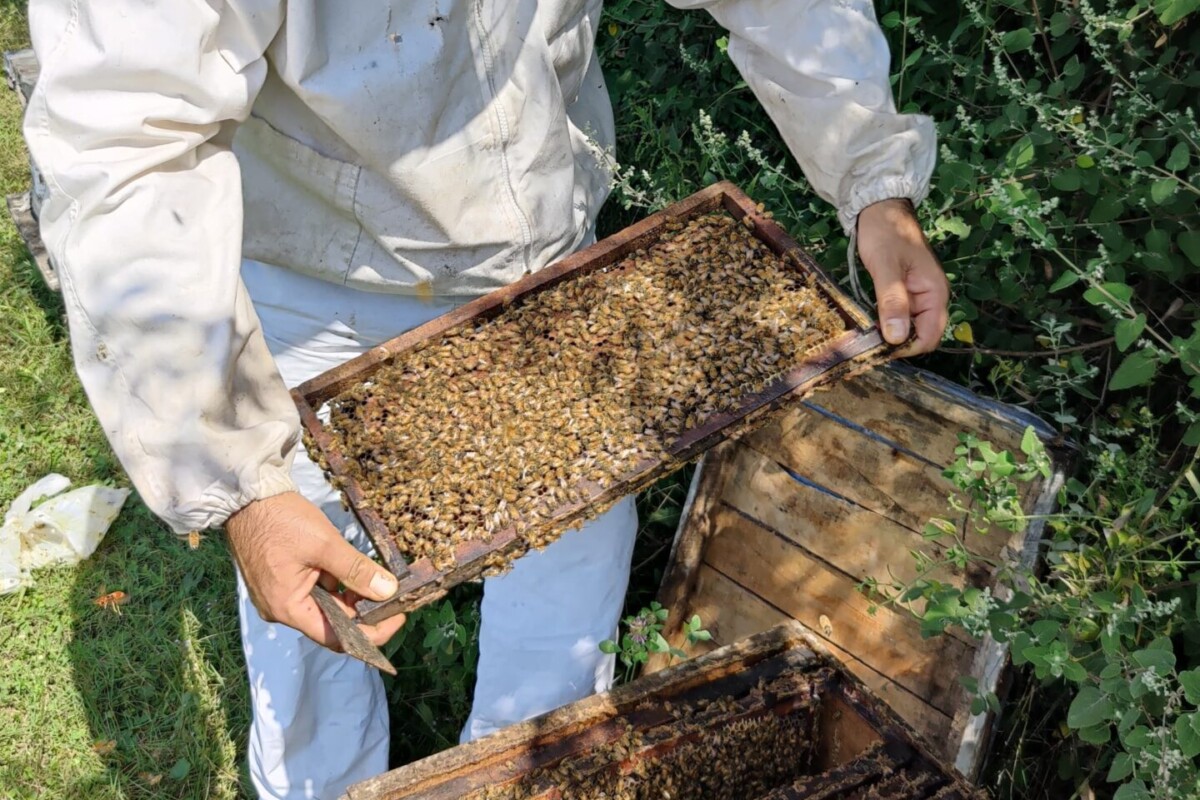

India’s migratory beekeepers travel across states with their hives, chasing seasonal blooms like mustard in Assam to sustain honey production. Despite long hours, stings, and months away from families, the practice remains vital for livelihoods. Climate change and ecological challenges threaten this tradition, yet government support keeps beekeeping resilient.
In India’s northeastern state of Assam, the sight of migratory beekeepers setting up wooden hives near mustard fields has become a seasonal ritual. These beekeepers, often from states like Bihar and Uttar Pradesh, move their colonies across regions to follow the flowers, ensuring a steady flow of honey.
Life of Migratory Beekeepers
At dawn, beekeepers rise early, eat a simple breakfast, and spend the day tending to hives. Using smoke to calm the bees, they carefully extract golden honeycombs destined for domestic and overseas markets. Stings are routine, and nights are spent under tarpaulins, far from families. For many, this demanding lifestyle is the only way to earn a sustainable income.
Key Highlights
Seasonal Migration: Beekeepers transport hives to blooming fields, such as mustard in Assam, to maximize honey yields.
Livelihoods: Migratory beekeeping provides crucial income for rural families, despite the hardships of travel and isolation.
Climate Challenges: Extreme weather events-floods, heatwaves, and shifting bloom cycles-are disrupting honey production and bee survival.
Ecological Concerns: The introduction of Western bee species raises concerns about impacts on native pollinators.
Government Support: Initiatives under India’s agricultural policies aim to sustain beekeeping as part of rural development and biodiversity conservation.
Why It Matters
Beekeeping is more than just honey-it supports pollination, which is critical for India’s agriculture. Migratory practices ensure crops like mustard, sunflower, and litchi benefit from pollination services, boosting yields and food security. Yet, the sector faces mounting risks from climate change and ecological imbalance, making innovation and policy support essential.
The Road Ahead
Experts believe migratory beekeeping will continue to thrive, supported by government schemes and growing demand for honey in domestic and international markets. However, adaptation is key-beekeepers must navigate shifting flowering seasons, invest in sustainable practices, and balance economic needs with ecological responsibility.
India’s migratory beekeepers embody resilience, tradition, and adaptation. Their journey across fields is not just about honey-it is about sustaining livelihoods, ecosystems, and a centuries-old practice that connects people to nature.
Sources: Associated Press, Economic Times, MSN, Yahoo News