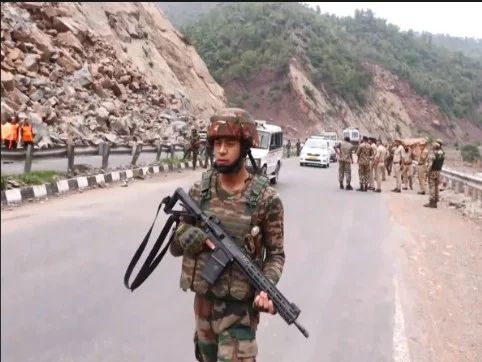
Multi-agency security forces in Jammu and Kashmir have intensified tactical mock drills and safety reviews ahead of the upcoming Amarnath and Buddha Amarnath pilgrimages starting July 3, 2026. Featuring elite NSG, SOG, and CRPF units, the joint exercises ensure comprehensive counter-terror and disaster response readiness across major highway grids.
JAMMU, India — In a major coordinated push to safeguard regional peace, multi-agency security forces on Wednesday sharply intensified tactical preparations and simulated operational responses across Jammu and Kashmir. Moving in lockstep ahead of the concurrent Shri Amarnath Ji Yatra and Buddha Amarnath pilgrimage cycles, unified command assets conducted large-scale joint mock drills at the sprawling Bhagwati Nagar Yatri Niwas base camp and along crucial arterial transport sectors. The synchronized security exercises, running under high-readiness protocols, are explicitly timed to bulletproof the 57-day-long Himalayan mountain treks against modern asymmetric disruptions before the initial wave of global devotees is officially flagged off next month.
High-Octane Simulations Safeguard Key Transit Hubs
The tactical simulations, which commenced at 8:00 AM across multiple sensitive locations, focused on testing the combined operational capabilities of specialized counter-terror units, static line defenders, and municipal disaster relief assets. At the Bhagwati Nagar transit hub in Jammu, advanced command elements from the elite National Security Guard (NSG) joined tactical squads from the Jammu and Kashmir Police Special Operations Group (SOG) and the Central Reserve Police Force (CRPF) to execute extensive combing, anti-sabotage sweeps, and building-clearing maneuvers.
Further up the transit spine, the security blanket was mirrored along the strategically vital Jammu-Srinagar National Highway (NH-44). In Ramban district, joint task networks comprising the Indian Army, Central Industrial Security Force (CISF), State Disaster Response Force (SDRF), and local fire crews set up localized containment rings around key community dining ("langar") sites at Chanderkote and Mehaar. These exercises subjected troops to complex emergency scenarios, including:
Rapid suppression of unexpected facility fires
Tactical neutralizing of suspicious low-flying drone incursions
Containment and evacuation protocols following simulated vehicle-borne improvised explosive device (Car IED) blasts
Logistical Scale and Axis Domination
The annual pilgrimage, which formally commences on July 3, 2026, and concludes on August 28, 2026, to coincide with the festival of Raksha Bandhan, draws hundreds of thousands of devotees globally. Pilgrims will navigate two geographically demanding axes simultaneously: the traditional 48-kilometer Pahalgam track running through south Kashmir’s Anantnag district, and the steeper, high-altitude 14-kilometer Baltal route managed within central Kashmir’s Ganderbal district.
To counter unpredictable high-altitude weather and potential highway disruptions, the Shri Amarnath Shrine Board has designated the mass-scale Yatra Niwas complex at Chanderkote as a central emergency haven. The fortified facility is structurally equipped to provide complete shelter, medical triage, and communications support for more than 5,000 travelers at a moment's notice should mountain passes freeze or face sudden closures.
Quote Section
"The core objective of these multi-tier exercises is to ensure a completely seamless, synchronized response across every defense element," stated an officer attached to the unified highway security grid. "According to officials, the inclusion of elite counter-terror formations alongside disaster management specialists creates a fail-safe operational loop. Organizers stated that every transit camp, route intersection, and high-altitude station will remain subject to real-time electronic surveillance to guarantee safety."
Why It Matters
For hundreds of thousands of religious pilgrims, tour operators, and hospitality businesses across Northern India, these tight security reviews provide essential peace of mind before traveling to high-altitude mountain locations. The direct cooperation between military combat units and civilian emergency groups guarantees that if unexpected flash floods, landslides, or security events occur, responses will be executed within minutes. For local businesses along the highway network, a peaceful, undisrupted pilgrimage season is critical to preserving the seasonal trade and tourism income that fuels the regional economy.
Key Facts at a Glance
Dual Shield Strategy: Simultaneous security protocols deployed to protect both the Amarnath and Buddha Amarnath pilgrimage corridors.
Specialized Force Mix: Drills feature a unified response chain involving the NSG, J&K Police SOG, CRPF, Indian Army, and the NDRF.
Complex Threat Drills: Simulated exercises actively tested rapid responses to vehicle bomb blasts, civilian fires, and unauthorized drone incursions.
High-Capacity Shelters: The Chanderkote Yatra Niwas is officially configured to hold over 5,000 travelers during sudden weather halts.
Extended Protection Timeline: High-alert operations will remain continuous throughout the entire 57-day pilgrimage cycle ending August 28, 2026.
FAQ Section
When does the annual Amarnath pilgrimage officially begin and end?
The 57-day trek officially begins on July 3, 2026, and will finish on August 28, 2026, matching the traditional festival date of Raksha Bandhan.
Which security organizations are involved in the multi-agency mock drills?
The specialized security grid combines assets from the National Security Guard (NSG), Jammu and Kashmir Police Special Operations Group (SOG), Central Reserve Police Force (CRPF), Indian Army, and disaster teams from the SDRF and NDRF.
What contingency plans exist if the main highway is closed due to bad weather?
Pilgrims will be routed to major, secure holding centers like the Yatra Niwas at Chanderkote. These facilities provide medical care, meals, and reinforced shelter for over 5,000 people until tracks are cleared.
Source: Official operational briefing logs distributed via the Jammu and Kashmir Police Portal, border management notices archived by the Ministry of Home Affairs, and route status updates published by the Shri Amarnathji Shrine Board.