
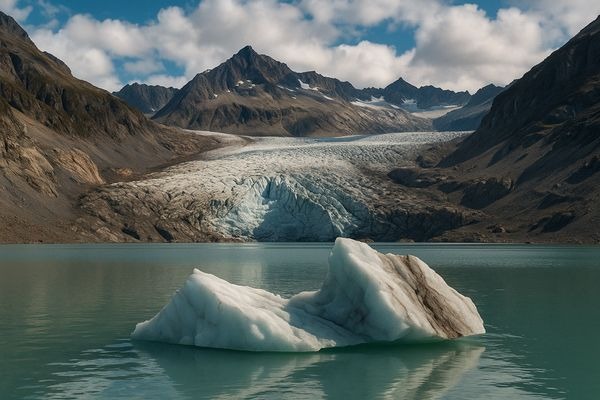
The Himalayas, often called the “water towers of Asia,” are facing rapid glacier retreat and declining snowfall. This trend threatens river flows, irrigation, and hydropower across India. Scientists warn that the ongoing snow drought and melting glaciers could trigger a severe water crisis impacting over a billion people.
Shrinking Glaciers And Declining Snowfall
Recent studies show Himalayan snowfall between November 2024 and March 2025 fell 23.6 percent below the long-term average. Glaciers are retreating under global warming, reducing the natural reservoirs that feed rivers like the Ganga and Yamuna. This decline directly affects agriculture, drinking water, and hydropower generation.
Impact On Agriculture And Energy
The reduced snowpack endangers irrigation across nearly 600,000 sq km of farmland. Hydropower projects generating around 26,000 MW are also at risk due to shrinking river flows. Farmers and rural communities dependent on Himalayan rivers face growing uncertainty about water availability.
Water Security Concerns
Late and insufficient snowfall in 2026 has already created a “snow drought,” raising alarms about future water shortages. Experts warn that billions of Indians could face increased demand pressures, especially in urban centers, if current trends continue.
Key Highlights
-
Himalayan snowfall declined by 23.6 percent in 2024-25
-
Glaciers retreating under global warming, reducing river flows
-
Irrigation across 600,000 sq km of farmland at risk
-
Hydropower generation of 26,000 MW threatened
-
Snow drought in 2026 raises alarm for billions of Indians
Conclusion
The melting Himalayas are more than an environmental issue—they represent a looming national crisis for India’s water security. Addressing this challenge requires urgent climate action, sustainable water management, and regional cooperation to safeguard livelihoods and ensure long-term resilience.
Sources: India Today, International Centre for Integrated Mountain Development, The Hindu Opinion